


Blue Pastoral Artwork
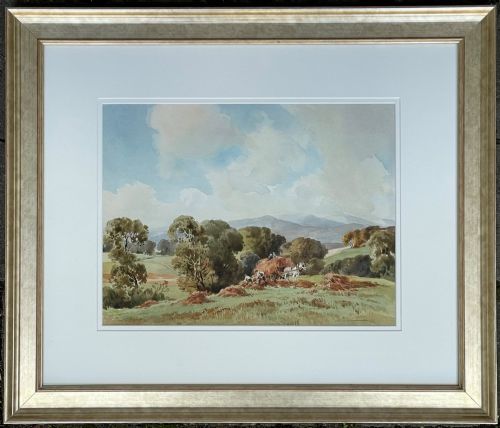
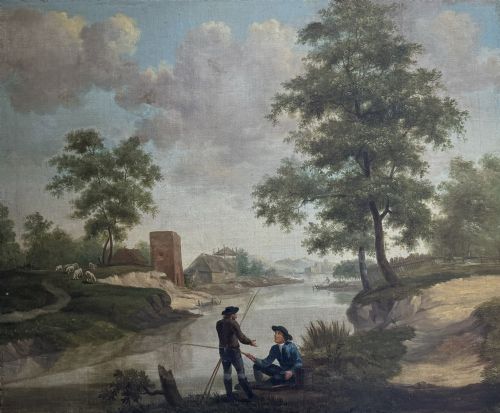
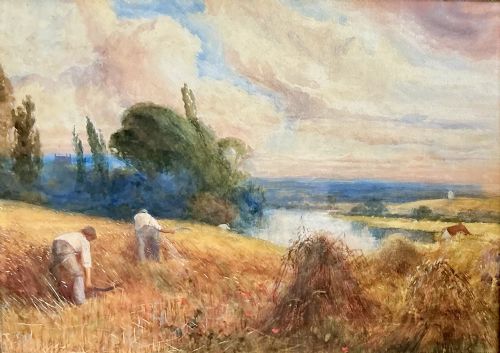
Blue pastoral artwork captures rural tranquility through countryside scenes rendered in watercolour and oil.
Blue Pastoral Artwork
When searching for blue pastoral artwork, buyers encounter framed watercolours, oil paintings and gouache works depicting rural landscapes, farm life and river scenes. These pieces originate from the eighteenth, nineteenth and early twentieth centuries, spanning Victorian, Edwardian and British Impressionist styles.
The selections most frequently met on this page are nineteenth and early twentieth-century watercolours and oil paintings on canvas or paper. Subjects range from harvesting scenes and riverside conversations to depictions of cattle, sheep and pastoral cottages.
Materials and technique
Artists created these rural compositions using watercolour pigment on paper or oil paint applied to canvas and panel. Some works utilise gouache, while others incorporate antique print or wallpaper panel media.
Framed works employ wood for their surrounds, protecting the paper and canvas supports. Painters of the British and English schools built their rural landscape views through layered brushwork and pigment washes.
Listings span the eighteenth century to the 1960s, utilising paper, canvas, wood and glass.
What varies in quality
Quality rests upon the handling of the medium and the sureness of the draftsmanship in capturing figures, livestock and rural topography. Stronger examples display confident pigment application and atmospheric depth rather than mechanical repetition.
The distinction between standard works and finer pieces lies in the articulation of light, shade and composition within the landscape. Works by recognised artists from the Victorian and Edwardian periods demonstrate superior command of the pastoral genre.
Percy Lancaster·Frederick Hines·Philip Richard Morris·Cornelius Pearson·Henry John Kinnaird·James William Booth·William Sydney Cooper·James Orrock·George Vicat Cole·Frederick W Jackson·George Soper·Florence Hess·William Greaves·Bernard Walter Evans·Will Anderson·Basil Bradley·John Inigo Richards·Thomas Sydney Cooper·Daniel Pasmore·A Winter Shaw·Peter Jackson·Frederick J Knowles·Henry Sylvester Stannard·Frederick George Coleridge·Thomas Rose Miles
The Blue Pastoral Artwork Glossary
- Watercolour
- A painting method where the paints are made of pigments suspended in a water-based solution. This technique creates transparent washes of colour on paper supports.
- Oil painting
- A procedure of painting with pigments that with an oil binder. These works are typically executed on canvas or wooden panels.
- Gouache
- An opaque water-based paint method that includes a white pigment added to the mixture. It produces a heavier, more solid surface than standard watercolour.
- Pastoral
- A genre of art depicting rural life, shepherds, farm hands and domestic animals in natural countryside settings. These scenes romanticise agricultural existence.
- British Impressionism
- An artistic movement focusing on light and everyday subjects captured outdoors. Painters in this style embraced loose brushwork and natural illumination.
Blue Pastoral Artwork: Frequently Asked Questions
What subjects appear in pastoral art?
These works depict rural vistas, farm laborers, rivers, cottages and grazing livestock such as cows and sheep. Scenes frequently capture agricultural activities like harvesting and haymaking.
The compositions focus on the quiet rhythm of the countryside, featuring figures tending fields or animals resting near pools and riverbanks.
How are these paintings framed?
Most works feature traditional wood frames that complement the period of the painting. Glazing typically protects paper supports and watercolours.
Heavier oil paintings on canvas often sit within moulded wooden surrounds without glass protection, highlighting the texture of the paint surface.
How do I date a pastoral painting?
Dating relies upon the costume of the figures, the style of the brushwork and framing materials. Victorian and Edwardian pieces show distinct shifts in palette and subject treatment.
Signatures, artist records and inscriptions on the reverse or mount provide additional chronological markers for eighteenth and nineteenth-century works.
Where were these landscape scenes painted?
Artists painted locations across Britain, including Welsh estuaries, Yorkshire, Kent, Berkshire and Scottish highland settings. Specific local landmarks often appear in the titles.
Painters travelled to rural villages, rivers and coastal landscapes to sketch and paint direct observations of the British countryside.