





Antique Italianate Landscape
These antique italianate landscape works bring sunlit classical ruins and pastoral idylls into your room.
Antique Italianate Landscape
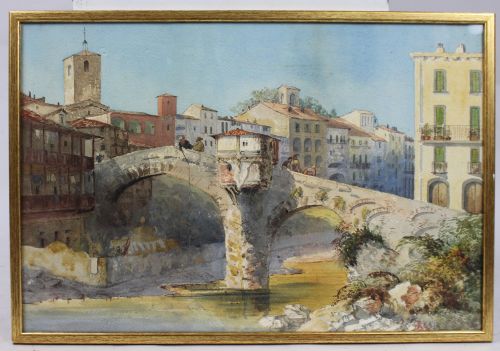
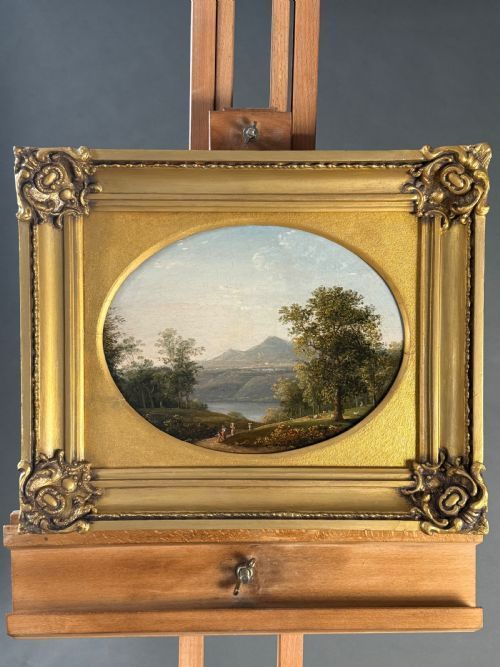
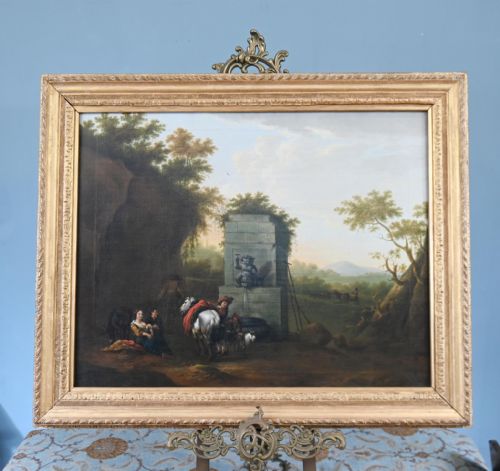
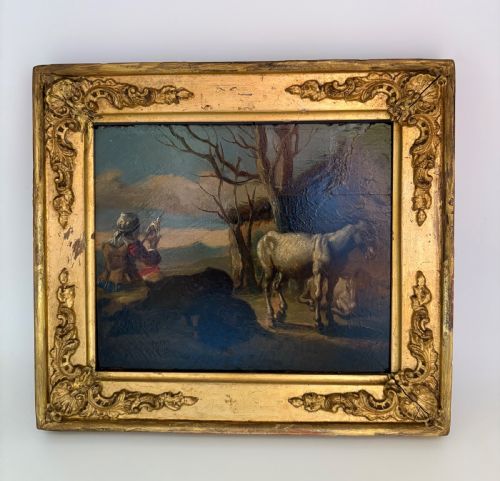
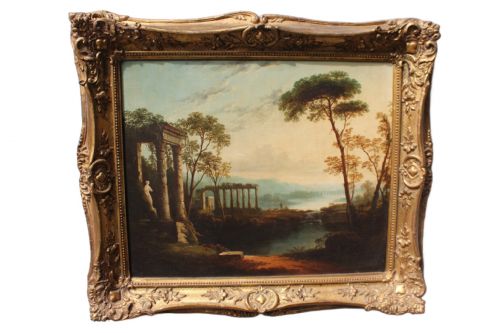
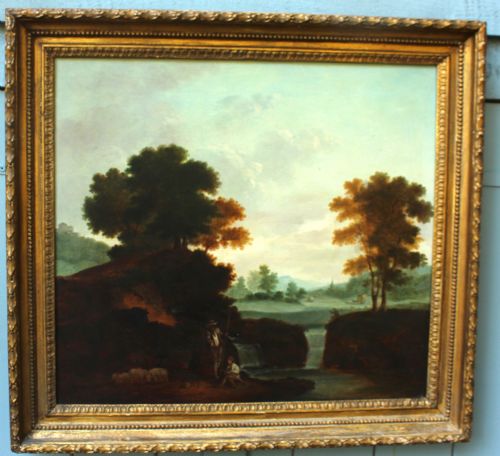
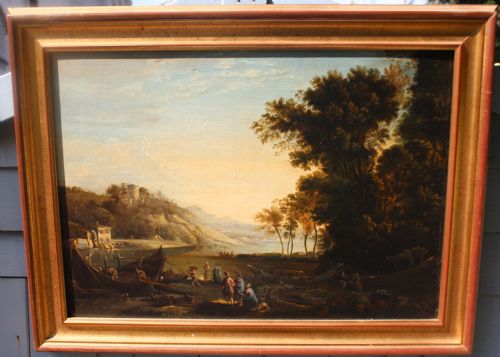
An antique italianate landscape captures the warmth and classical architecture of southern Europe, often featuring distant villas, ancient ruins and pastoral figures. You will regularly encounter oil paintings on canvas or panel alongside watercolours from the seventeenth century through to the nineteenth century.
The compositions frequently channel the visual traditions of Claude Lorrain and Dutch golden age travellers, presenting an idealized view of the Mediterranean countryside. These pieces range from grand cabinet works to smaller watercolours brought home by travellers on the Grand Tour.
How they were made
Artists built these scenes using oil paint on stretched canvas or oak panel, often layering translucent glazes to create luminous atmospheric skies and deep shadows. Watercolours on paper capture lighter, more immediate impressions of distant villas and river valleys.
Many of these works retain their original giltwood and gold leaf frames, which use moulded gesso ornament to frame the painted views. Ceramic pieces in the evidence utilise transfer printing on ironstone china to render similar classical scenes upon domestic platters.
Bathing nudes and stray cattle frequently interrupt the quiet contemplation of ancient Roman ruins across these sunlit river valleys.
What varies in quality
The sophistication of the draughtsmanship in the human figures and architectural elements defines the upper tiers of these works. Finer examples display a confident handling of light that unifies the distant hills, water and foliage into a cohesive atmospheric whole.
The depth of the framing adds another layer of distinction, with period giltwood mouldings enhancing the presence of the artwork. Weaker examples often rely on formulaic foliage and repetitive pastoral figures executed by followers rather than primary masters.
Jacob Philipp Hackert·Cornelis Van Poelenburgh·Philipp Peter Roos·Richard Wilson·Thomas Jones·William Crouch·Peter de Wint·Franz Joachim Beich·Louis Bélanger·John Varley
The Antique Italianate Landscape Glossary
- Grand Tour
- An extended journey through Europe undertaken by wealthy young men to study classical art and antiquities. This travel generated a strong demand for portable landscape paintings.
- Giltwood
- Timber carved and coated with gold leaf or metal leaf to create a brilliant metallic surface. It remains the traditional framing material for fine paintings.
- Ironstone
- A heavy, durable type of ceramic patented in the nineteenth century that accepted printed transfers easily. It was widely used for tableware decorated with scenic views.
- Pastoral
- A style of art that romanticises rural life, typically showing shepherds, cattle and fishermen in harmonious natural settings. These figures provide scale to vast classical landscapes.
Antique Italianate Landscape: Frequently Asked Questions
What is an italianate landscape?
It is a European artwork depicting an idealized southern landscape, usually featuring classical architecture, ancient ruins and pastoral figures. These scenes reflect northern artists' fascination with the light and topography of Italy.
Such works often combine real topographical elements with imagined classical compositions to evoke a golden age of antiquity.
How old are these paintings?
The pieces span from the seventeenth century through to the nineteenth century, reflecting enduring artistic interest in classical themes. Many date from the eighteenth century when Grand Tour travel was at its height.
Earlier works often show Dutch influence, while later nineteenth century examples lean towards atmospheric watercolours.
How should I hang them?
Give these paintings adequate wall space away from direct sunlight to protect the oil pigments and paper watercolours. Pairing them with traditional period giltwood frames helps anchor their historical character in a room.
Ensure they hang at eye level so the fine details of the distant villas and figures can be appreciated properly.
Are they all oil paintings?
While oil on canvas or panel forms the majority of the fine art, the category also includes delicate watercolours on paper. You will even find nineteenth century transfer printed ironstone china platters bearing these pastoral scenes.
Each medium offers a different perspective on the enduring popularity of classical European scenery.