

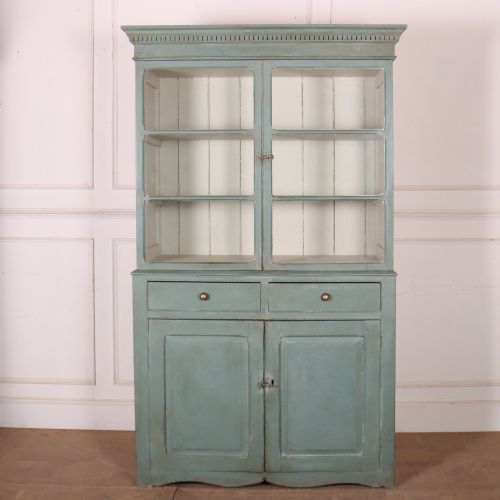
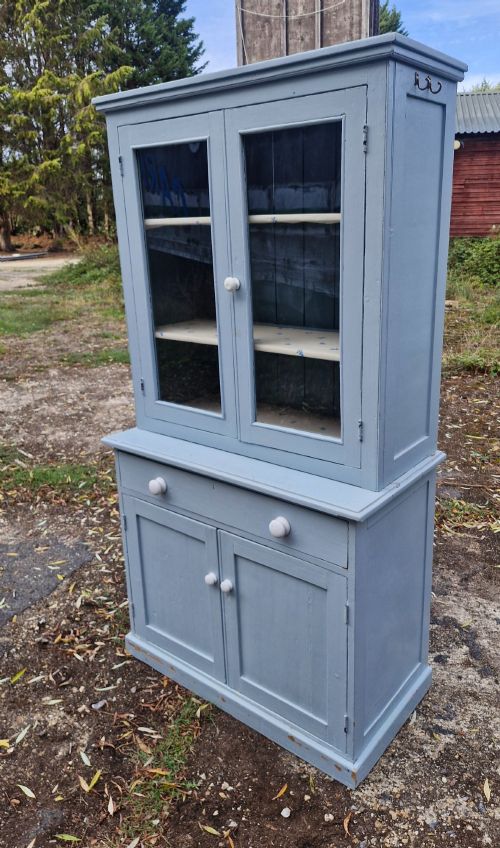
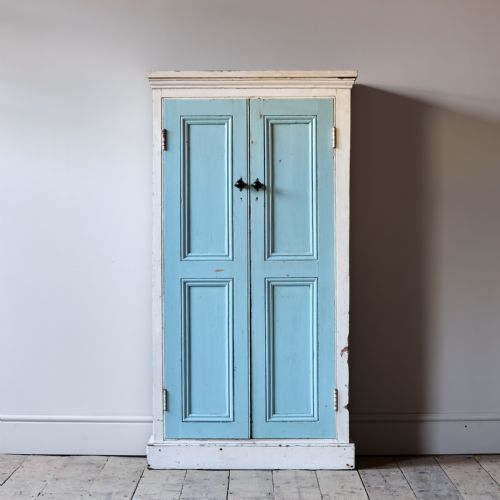
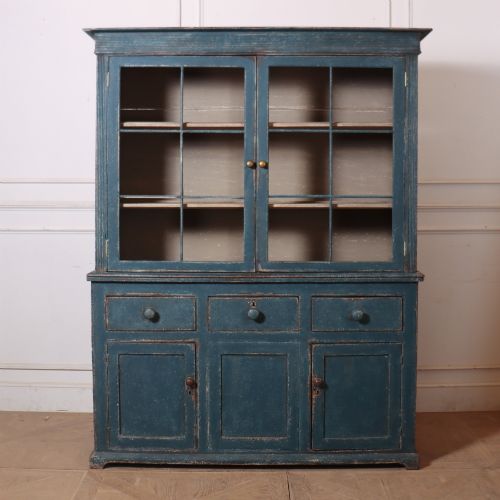



Blue Painted Country Cupboard
A blue painted country cupboard brings immediate rustic warmth and practical storage to a room through regional vernacular forms and weathered pigments.
Blue Painted Country Cupboard
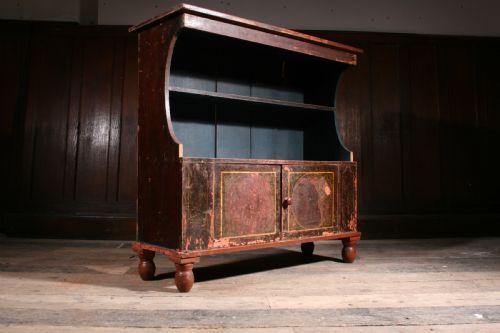
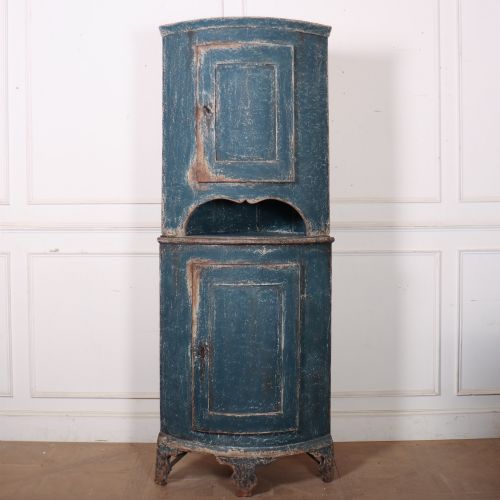
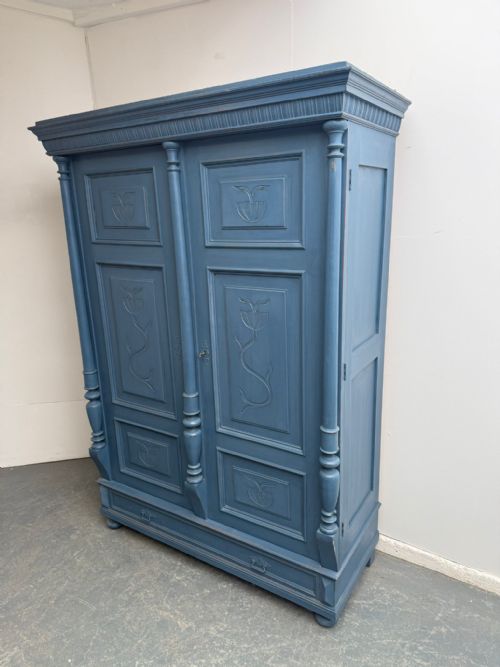
A blue painted country cupboard represents domestic storage shaped by regional workshops across Britain, Scandinavia, and continental Europe. These pieces include tall kitchen dressers, corner units, linen presses, and smaller wall-mounted cabinets intended for everyday utility.
The versions most commonly found here date from the eighteenth and nineteenth centuries, spanning Georgian, Regency, Victorian, and Gustavian stylistic traditions. Pine serves as the primary timber beneath layers of historic blue paint, scrapwork finishes, or original decorated surfaces.
Regional variations span from West Country and Welsh dressers to Swedish folk art cupboards and French buffets. Each piece reflects the vernacular furniture-making traditions of its local area rather than metropolitan workshop standards.
How they were made
Carpenters constructed these cupboards predominantly from solid pine, utilising pegged joints, panelled doors, and boarded backs suited to utilitarian domestic demands. Iron and brass hardware such as hinges, latches, and pulls secured the heavy timber doors and drawers.
Surface treatment relied on lead-based or oil paints mixed with local pigments to achieve distinctive blue hues. Over generations, these painted finishes acquired natural wear, craquelure, and patination through continuous household use.
Blue Painted Country Cupboard Retail Price Guide 2026
Typical asking prices for blue painted country cupboard among the pieces listed under this phrase on Sellingantiques today, from the lower quarter to the upper quarter. They describe what is for sale here now, not the wider market.
Several Swedish cupboards wear coats of ragwork paint applied by hands long since forgotten.
What varies in quality
The survival of original surface paint distinguishes exceptional examples from those stripped or repounded in later decades. Original scraped paint and undisturbed folk art decoration retain historical integrity that heavy restoration diminishes.
Proportion and regional character dictate the visual strength of each piece, ranging from robust provincial utility to refined Gustavian restraint. The harmony between the vernacular architecture of the cupboard and the depth of its aged blue pigment establishes its standing.
The Blue Painted Country Cupboard Glossary
- Ragwork paint
- A decorative paint technique where rags or cloths are used to manipulate wet colour on a surface, creating mottled patterns popular in Scandinavian folk furniture.
- Scraped paint
- A conservation term describing an original painted surface revealed by carefully removing later overcoats down to the earliest historic layer.
- Linen press
- A tall storage cabinet traditionally built with sliding trays or shelves in the upper section for folded textiles, standing above a base of drawers.
- Buffet à deux corps
- A large two-part cupboard originating in France, featuring an upper cabinet set upon a deeper lower buffet base.
- Gustavian
- The Swedish interpretation of neoclassical design, defined by lighter proportions, symmetrical forms, and subdued painted finishes.
Blue Painted Country Cupboard: Frequently Asked Questions
Where were country cupboards used?
These cupboards served working domestic roles in farmhouse kitchens, sculleries, halls, and bedchambers. They held provisions, crockery, linens, and household stores.
Their sturdy pine construction allowed them to withstand the heavy demands of rural family life over generations.
How do I identify original paint?
Original painted surfaces show natural wear, softening around edges, and microscopic craquelure consistent with age. Multiple underlying layers often emerge through areas of friction.
Modern synthetic emulsions lack the chalky depth and subtle tonal variation found in historic oil or milk paints.
What is Gustavian style?
Gustavian design emerged in Sweden during the late eighteenth century under King Gustav III. It combined French neoclassical elegance with simplified, functional Scandinavian lines.
Pieces from this tradition typically feature pale blue or grey painted finishes and restrained carved details.
How do I live with one?
A painted country cupboard provides deep, enclosed storage while introducing strong colour and historic texture to modern or traditional interiors. Position them away from direct heat sources to protect the aged timber and paint.
Interior shelves accommodate books, tableware, or everyday objects while keeping rooms visually grounded.