




Blue Oriental Lamp Base
A blue oriental lamp base brings rich hand-painted pigment and centuries of craftsmanship into a room, offering both ambient light and sculptural presence.
Blue Oriental Lamp Base
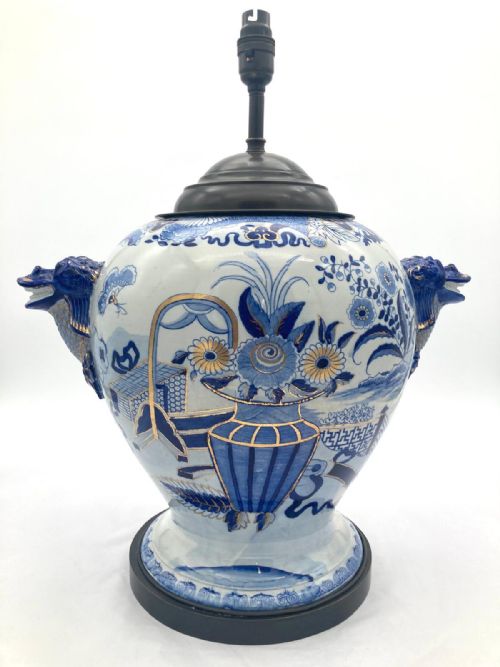
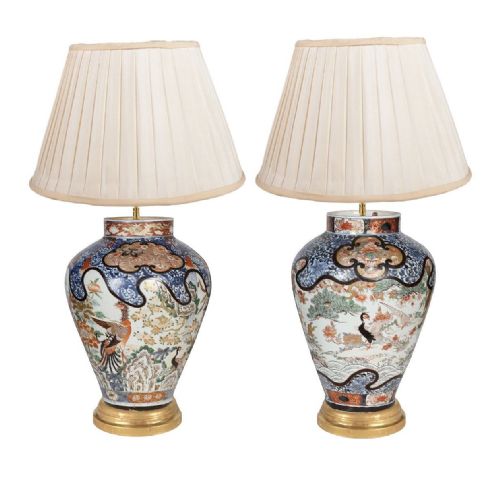
When you search for a blue oriental lamp base, you are looking at antique vessels from China and Japan that have been converted into table lamps. These pieces range from ginger jars and baluster vases to twin-handled vessels and larger display pieces.
You are most likely to meet 19th-century Chinese porcelain examples on this page, alongside earlier Japanese export wares. Many retain traditional motifs in cobalt blue, celadon, or powder blue glaze.
The forms span several distinct periods, including the Regency era, the Edwardian period, and the late Qing Dynasty. Each piece bears the distinct aesthetic of its original manufacturing period, adapted for modern interior lighting.
How they were made
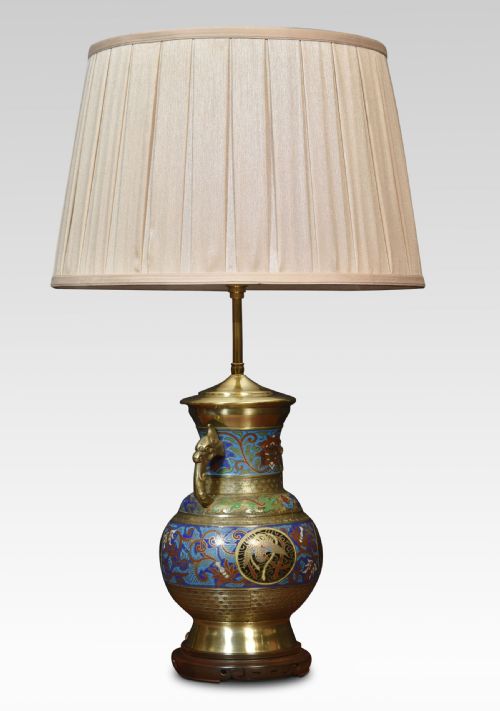
The primary material is high-fired ceramic or porcelain, painted with cobalt blue pigments before glazing and firing. Other pieces utilise ironstone, bronze mounts, or intricate cloisonne enamel work.
Vessels are mounted with brass or gilt fittings to secure electrical components, often adapting hollow bases or drilling through the original ceramic body. Silk and fabric shades frequently complement the proportion of the jar or vase below.
Listings span multiple centuries, ranging from 17th-century Japanese Arita porcelain to Edwardian Chinoiserie interpretations.
What varies in quality
Quality rests in the crispness of the hand-painted cobalt pigment and the depth of the glaze. Finer ceramics display controlled brushwork and rich colour variation, whereas simpler domestic wares show more uniform or hurried execution.
The structural integrity of the original vessel and the discretion of the conversion determine the overall standard. Superior pieces retain their balance and proportion even after mounting for electrical use.
Hicks and Meigh
The Blue Oriental Lamp Base Glossary
- Celadon
- A transparent jade-green glaze that often covers a pale grey or green porcelain body. This finish was widely produced in Chinese kilns.
- Ginger jar
- A wide-shouldered ceramic storage vessel with a domed lid, frequently adapted into a lamp base. These forms offer substantial visual weight.
- Imari
- A style of Japanese export porcelain featuring underglaze blue and overglaze iron red and gold. These wares were made in Arita from the Edo period onwards.
- Cloisonne
- A decorative metalwork technique where enamel is applied within compartments formed by soldered wire. This method creates intricate patterned surfaces on lamp bases.
- Famille Verte
- A Chinese porcelain palette dominated by green enamel overglaze, alongside other colours. It developed during the Qing Dynasty.
Blue Oriental Lamp Base: Frequently Asked Questions
What is a blue oriental lamp base?
A blue oriental lamp base is an antique ceramic vase or jar, typically originating from China or Japan, that has been wired for electricity. These pieces combine historic export porcelain with modern functional lighting.
They serve as decorative focal points in living spaces, bringing rich cobalt tones and traditional motifs into contemporary interiors.
How do I date a blue oriental lamp base?
Dating relies on examining the characteristics of the ceramic body, the style of the hand-painted cobalt decoration, and any associated mounting hardware. 19th-century examples often feature deep crackleware glazes or traditional Chinese auspicious symbols.
Earlier pieces from the 18th century display distinct Arita or Imari palettes and potting techniques associated with the Edo period.
Where should I place a blue oriental lamp base?
These lamps suit side tables, sideboards, or large console tables where their height and colour can be fully appreciated. They work particularly well against neutral walls that allow the rich blue glaze to stand out.
Because many are substantial in scale, they require stable surfaces with adequate space around them for proportion.
How do I choose a lampshade for my lamp base?
A lampshade should balance the visual weight of the ceramic body without obscuring its form or decorative patterns. Simple silk or fabric shades in neutral tones often complement the intricate patterns of ginger jars and baluster vases.
Consider the height of the lamp when selecting a shade to ensure the overall silhouette remains harmonious.