



Blue Ocean Ship Painting
A blue ocean ship painting captures the movement of vessels across open water through historical oil and watercolour works.
Blue Ocean Ship Painting
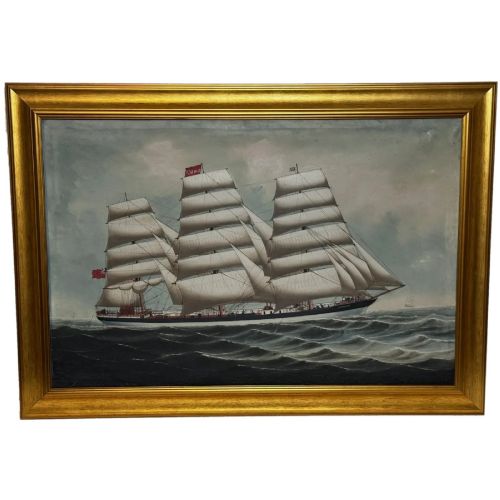
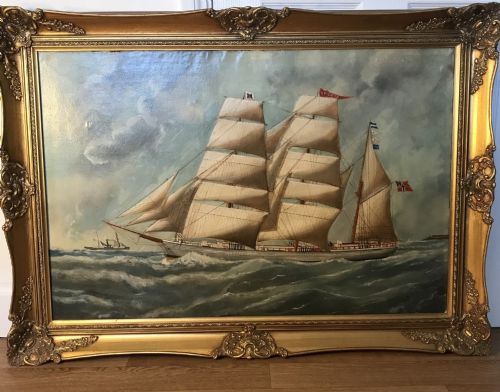
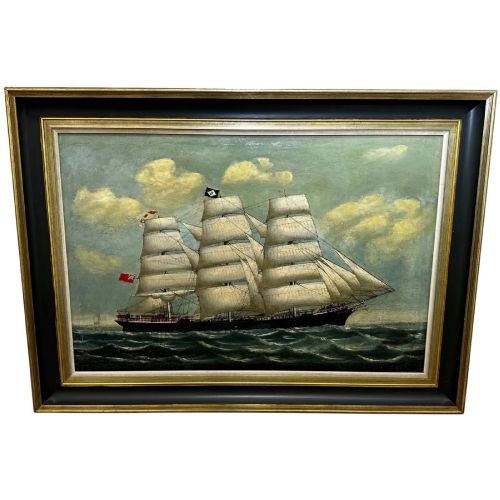
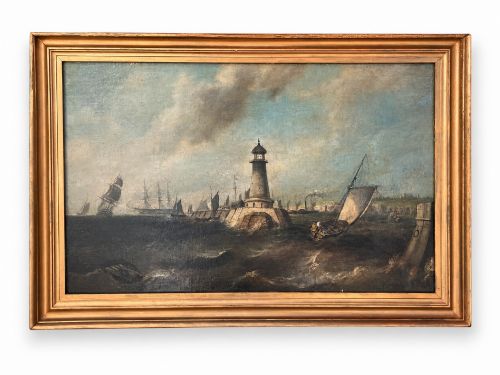
A blue ocean ship painting depicts maritime scenes ranging from Victorian maritime works to mid-century compositions. These pieces record historical vessels including schooners, barques, clippers, and steam ships navigating coastal waters or open seas.
The works appearing in this selection span the nineteenth century through the nineteen-sixties, encompassing Victorian marine art, Edwardian pieces, and twentieth-century maritime paintings.
Most examples take the form of framed wall art, utilising canvas, paper, or board as a support for oil paint or watercolour.
Materials and construction
Artists rendering a blue ocean ship painting utilise oil on canvas, oil on board, or watercolour on paper, framed behind glass where paper supports are used. Gilt wood frames frequently enclose these historical works.
Maritime painters apply pigments to capture the detail of rigging, hulls, and water conditions, employing oil paint for rich textures or watercolour for lighter washes.
A detailed nineteenth-century steam ship resides permanently inside a glass bottle.
Distinctions in quality
The calibre of a blue ocean ship painting rests upon the precision with which the vessel and water are rendered. Works attributed to known maritime artists or executed with detailed historical accuracy regarding rigging and hull structure demonstrate greater technical accomplishment.
Compositional balance and the atmospheric depiction of sea and sky separate standard decorative works from accomplished marine art.
Reginald Arthur Borstel·Lai Fong·Nicholas Condy·Charles William Adderton·Daniel Sherrin·Hendrik Willebrord Jansen·Dion Pears·Samuel Owen·George Gregory·Frank Wood·J Wilson·Richard Ball Spencer·J Syer·Johan Jens Neumann·James Scrimgeour Mann
The Blue Ocean Ship Painting Glossary
- Barque
- A sailing vessel with three or more masts having the fore and main masts square-rigged and the mizzenmast fore-and-aft rigged. These ships frequently appear in nineteenth-century maritime paintings.
- Pierhead painting
- A portrait of a specific ship commissioned by its master or owner, usually executed at a port to document the vessel accurately. These works often show the ship entering or leaving harbour.
- Diorama
- A three-dimensional representation in which objects are mounted in a naturalistic setting. Examples include model steam ships enclosed within glass bottles as folk art.
- Watercolour
- A painting method in which the paints are made of pigments suspended in a water-based solution. Works on paper utilising this medium require protection behind glass.
- Clipper
- A very fast nineteenth-century sailing ship with multiple masts and a square rig designed for trade routes. They form a frequent subject in marine art.
Blue Ocean Ship Painting: Frequently Asked Questions
What periods do these paintings date from?
The works span from the nineteenth century through the Victorian and Edwardian eras into the mid-twentieth century.
Dates recorded in the evidence range from eighteen-thirty through nineteen-sixty.
What types of ships are depicted?
Depicted vessels include three-masted schooners, Norwegian barques, clippers, steam ships, and ocean liners.
Artists also recorded fishing boats, junks, and naval shipping.
How are the artworks framed?
Many examples feature traditional gilt wood frames that complement the historical nature of the paintings.
Watercolour works on paper are typically mounted behind glass for preservation.
Are the paintings signed by artists?
Several works bear artist signatures or attributions to named painters and maritime specialists.
Others are attributed to specific schools or circles of artists from the period.