
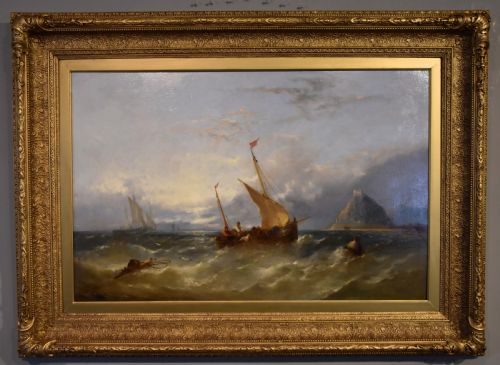


Blue Ocean Canvas Art
Blue ocean canvas art captures maritime scenes and coastal waters through historic oil paintings spanning the nineteenth and twentieth centuries.
Blue Ocean Canvas Art
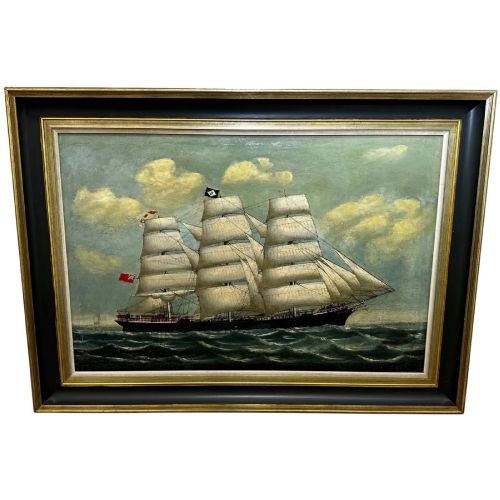
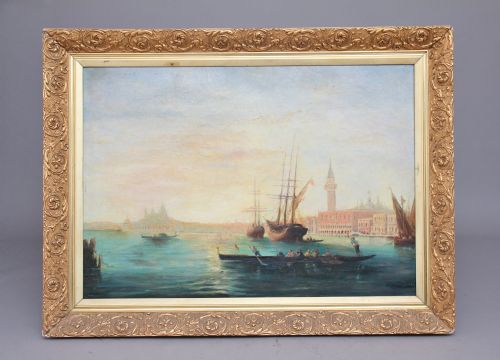
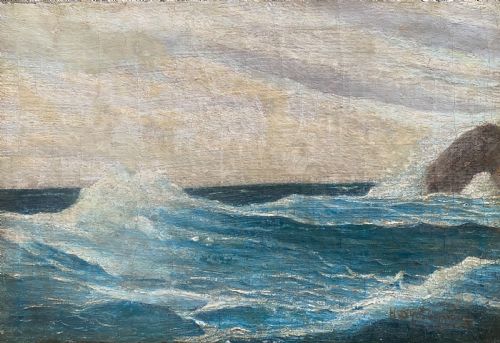
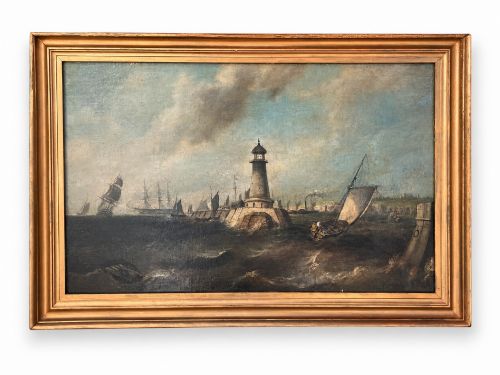
Blue ocean canvas art comprises oil paintings on canvas depicting maritime scenes, coastal landscapes, and open waters. The pieces seen here range from nineteenth-century Victorian marine art to mid-twentieth-century Impressionism.
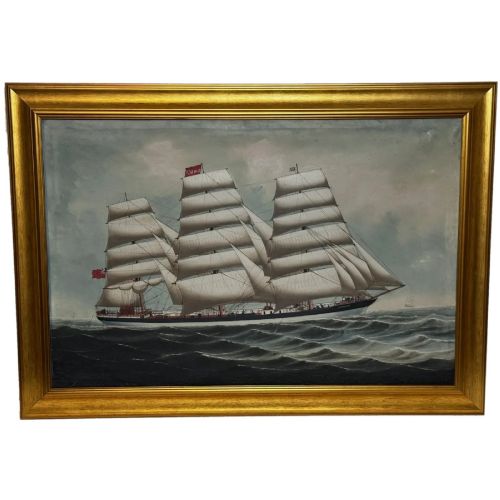
The subjects span historical sailing ships, steamers, and coastal views from Britain, Europe, and beyond. Common variations include serene Venetian lagoons, turbulent stormy seas, and detailed portraits of named vessels.
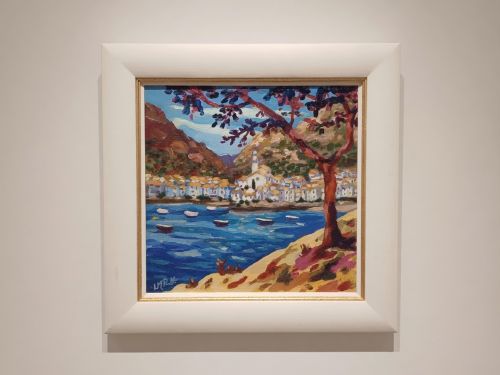
Works originate from various periods including the Victorian era, the 1900s, 1910s, 1920s, 1930s, 1950s, and 1960s. Collectors encounter everything from regional British harbour scenes to modernist Russian seascapes.
How They Were Made
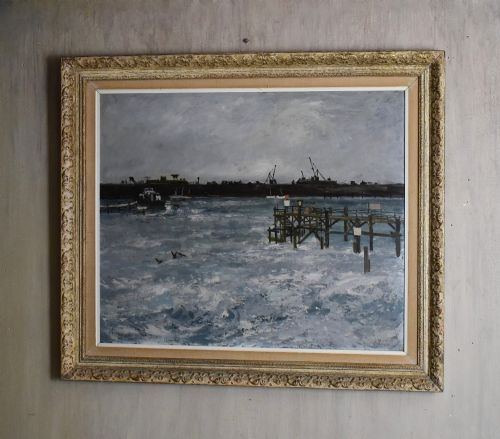
These works are executed using oil paint applied to woven canvas supports stretched over wooden frames. Artists built texture through traditional brushwork or impasto techniques to capture the movement of water and atmospheric coastal light.
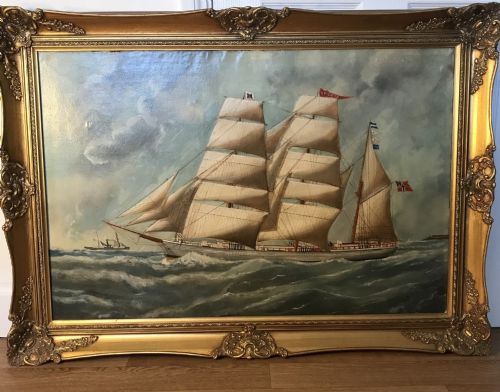
Many canvases are housed within original or period frames featuring carved and gilded wood, known as giltwood. The combination of oil pigments on canvas and wood creates durable surfaces that have survived across multiple centuries.
Several canvases capture the exact moment a sailing ship makes a run for home against stormy Cornish weather.
What Varies in Quality
Quality in these maritime works rests on the artist's command of light, water movement, and atmospheric perspective. Finer examples demonstrate precise rendering of rigging and hull structures alongside convincing depictions of ocean swell.
The distinction between standard works and master pieces often lies in the handling of the paint and the vitality of the composition. Skilled artists capture the specific atmosphere of coastal locations, whether a calm morning or a heavy sea.
Reginald Arthur Borstel·Lucy Pratt·Peter Brannan·Lai Fong·Nicholas Condy·William Henry Williamson·Elisabeth Bardon·Charles Napier Hemy·Norman Lloyd·Gustave De Bréanski·Daniel Sherrin·Charles Malfroy·Stephen J. Renard·Hendrik Willebrord Jansen·Dion Pears·Consalvo Carelli·George Gregory·H. Hadfield Cubley·James Watson·Richard Ball Spencer·Edward T Jones·Johan Jens Neumann·Thomas Rose Miles
The Blue Ocean Canvas Art Glossary
- Canvas
- A heavy woven fabric used as a surface for oil painting. It is typically stretched tightly over a wooden frame before application of the ground and pigments.
- Impasto
- A technique where oil paint is laid thickly on the canvas, standing out from the surface. This method creates tactile texture, often used to emphasise foaming waves or clouds.
- Giltwood
- Wood that has been coated with a thin layer of gold leaf or gilt powder. It is commonly found on the decorative frames enclosing period marine paintings.
- Pierhead painting
- A specific genre of ship portrait created for sailors and shipowners, typically depicting a vessel arriving at or departing from a named port.
- Seascape
- A work of art that depicts the sea, ocean, or coastal shores. These pieces focus primarily on marine weather, water conditions, and maritime vessels.
Blue Ocean Canvas Art: Frequently Asked Questions
What is blue ocean canvas art?
Blue ocean canvas art refers to traditional oil paintings on canvas that feature marine subjects, ships, and coastal waters. The selections encompass works from the nineteenth century through the mid-twentieth century.
These pieces document maritime history, commercial shipping, and coastal scenery through various artistic movements including Impressionism and realism. Each painting reflects the specific stylistic approach of its period and creator.
How were historic marine paintings framed?
Historic marine paintings were typically mounted in wooden frames, frequently finished with gilt or gesso ornamentation. These frames were designed to complement the artwork while protecting the edges of the stretched canvas.
Many surviving pieces retain their period frames, which help place the artwork within its historical context. The framing style often matches the aesthetic preferences of the decade in which the painting was produced.
Where do these maritime scenes originate?
The geographical origins of these works vary widely, spanning British, European, and international coastal locations. Artists recorded scenes from Cornish harbours, Welsh bays, Venetian lagoons, and the Mediterranean.
Naval engagements, merchant vessels, and local fishing boats all served as primary subjects for artists working across different maritime nations. This geographic diversity offers collectors a broad window into international coastal history.
How do I identify the period of a painting?
Period identification relies on a combination of stylistic cues, framing methods, artist documentation, and the types of vessels depicted. Nineteenth-century works often show detailed rigging on sailing barques, while twentieth-century examples may incorporate steamships or impressionistic brushwork.
Signatures, dates inscribed on the canvas, and historical records of named ships further clarify the timeline. Examining the materials used for the canvas support and stretcher frames also aids in dating the piece.