



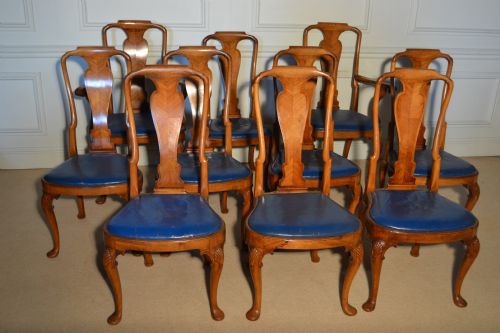

Blue Leather Chairs
Blue leather chairs are distinguished seating options upholstered in hides of various blue shades, offering both historic character and durable comfort for the home.
Blue Leather Chairs
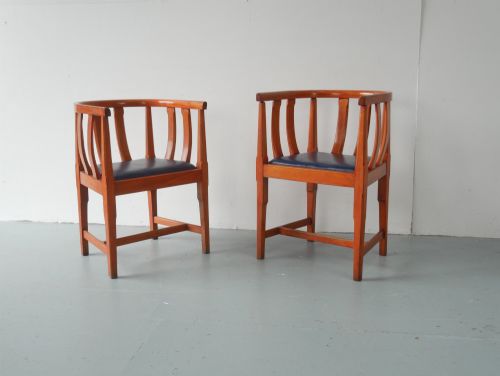
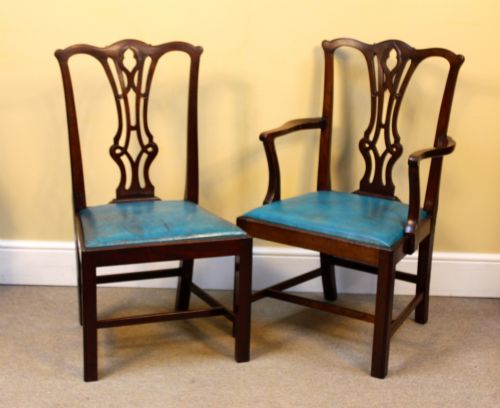
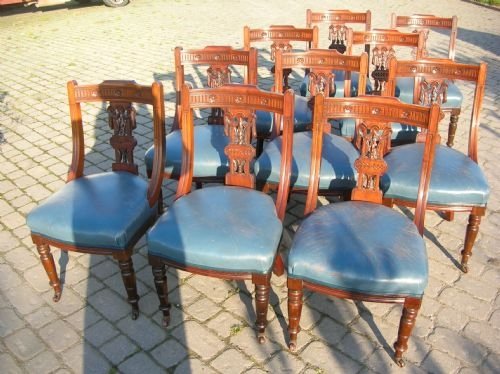
When you search for blue leather chairs, you are looking at an eclectic mix of seating ranging from single library armchairs to large dining sets. The items on this page span the nineteenth century, the Victorian era, the Edwardian period, and the nineteen twenties.
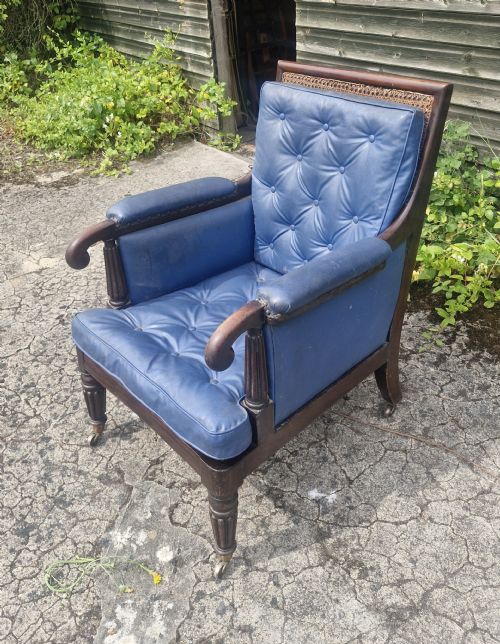
The versions you are most likely to meet here include mahogany and walnut dining chairs, bergere library armchairs, and dedicated desk or office chairs. Styles cross multiple historical periods, including Victorian, Regency, Queen Anne style, and Arts and Crafts Gothic Revival.
Makers and workshops utilised robust woods like oak, mahogany, walnut, and general wood frames to support upholstered blue leather seats and backs. Pieces often feature supportive elements such as brass castors, carved cabriole legs, cane panels, or swivelling mechanisms.
How they were made
Frames are constructed from dense hardwoods like mahogany, walnut, and oak, often shaped into dining chairs, armchairs, or desk chairs. Cabinetmakers carved details directly into the wood, forming cabriole legs or decorative spoon backs.
Upholstery methods involve stretching durable leather over padded frames, frequently secured with brass elements or individual tacks. Some specific library and desk chairs incorporate cane panels alongside the leather components to provide texture and flexibility.
Blue Leather Chairs Retail Price Guide 2026
Typical asking prices for blue leather chairs among the pieces listed under this phrase on Sellingantiques today, from the lower quarter to the upper quarter. They describe what is for sale here now, not the wider market.
The listings here feature furniture constructed from mahogany, walnut, oak, and cane, spanning the nineteenth century up to the nineteen twenties.
What varies in quality
Quality separates through the integrity of the timber frame and the skill of the original joinery, distinguishing standard dining sets from notable workshop productions. The depth of the wood carving, the symmetry of cabriole legs, and the robustness of swivelling mechanisms all influence the overall standard of a piece.
The refinement of the leather upholstery and the preservation of original or restored hand-dyed finishes alter the visual appeal. Sets that retain uniform colour and consistent grain across large numbers of chairs indicate careful material selection.
Gillows
The Blue Leather Chairs Glossary
- Bergere
- A closed armchair with an upholstered back and armrests, typically featuring wooden frames and cane or leather panels. This French-inspired form became popular in British libraries.
- Cabriole leg
- A furniture leg that curves out and then in, resembling the leg of an animal. It commonly appears on Victorian and Edwardian seating.
- Spoon back
- An upholstered chair back shaped in a concave oval resembling the bowl of a spoon. This design offered ergonomic support in nineteenth-century seating.
- Brass castors
- Small swivelling wheels made of brass attached to the feet of heavy chairs. They allowed cumbersome library and desk chairs to move smoothly across floors.
Blue Leather Chairs: Frequently Asked Questions
What periods do these chairs come from?
The pieces span the nineteenth century, the Victorian era, the Edwardian period, and the nineteen twenties. This range covers diverse stylistic revivals from different decades.
Craftsmen built these items using traditional woods and upholstery methods specific to each era.
How were these chairs used historically?
Dining chairs served around large tables for formal meals, while bergere armchairs provided comfortable seating in private libraries. Desk and office chairs supported daily administrative work.
Many designs included swivelling mechanisms or castors to assist movement within study spaces and offices.
Are the blue leather surfaces original?
Some pieces retain older upholstery, while others feature modern restorations like hand-dyed navy leather. Upholstery is frequently renewed to maintain structural integrity.
Restorers match the leather colour to the historic character of the wooden frame.
How do I tell Victorian from Edwardian chairs?
Victorian chairs often showcase heavier mahogany construction with ornate carving and dark finishes. Edwardian examples tend to display lighter frames and refined cabriole legs.
Comparing the wood type and leg shape helps clarify the specific period of manufacture.