
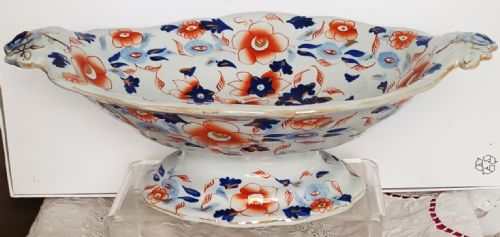


Blue Ironstone Dish
A blue ironstone dish brings sturdy utility and rich pattern to the table, combining heavy ceramic bodies with striking transfer prints.
Blue Ironstone Dish
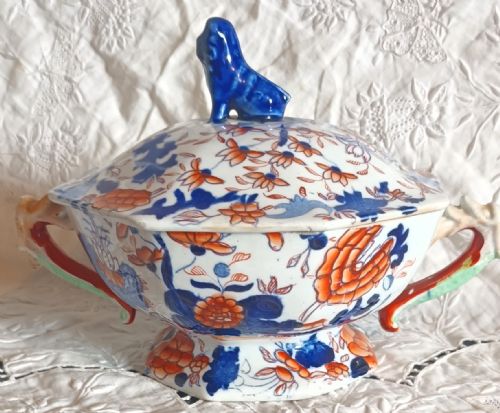
A blue ironstone dish encompasses a range of serving vessels, platters, and plates produced largely across the nineteenth century. Buyers searching for a blue ironstone dish will frequently encounter serving platters, tureens, and decorative plates originating from Georgian and Victorian periods.
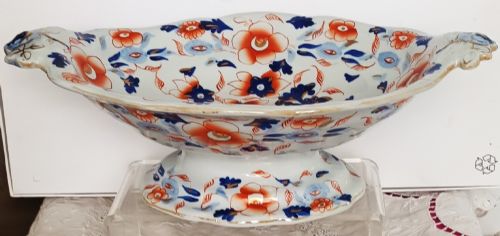
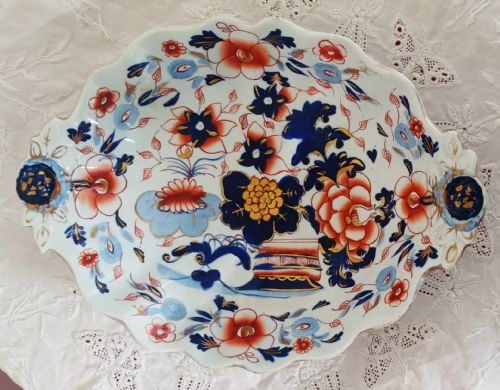
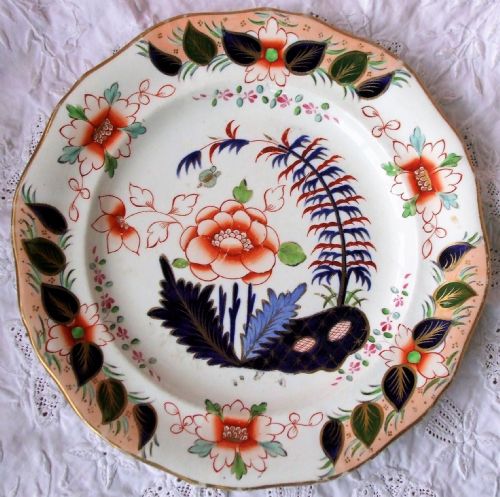
The selection includes large meat platters, cheese dishes, and footed comports decorated with transfer printed patterns or hand-painted details. Many pieces exhibit distinct stylistic influences such as Chinoiserie, Imari, and Japan patterns adapted by English potters.
How they were made
Potters formed these items using durable ironstone china and earthenware bodies designed to withstand heavy daily use. Articles received protective layers of glaze before undergoing kiln firing to secure the ceramic structure.
Decoration relied on transfer printing techniques to apply intricate blue designs, sometimes enhanced with enamel colours and gilding. Artisans applied gold leaf and hand-painted touches over the glaze to highlight specific stylistic motifs.
An eighteenth-century dish arrives paired with its original strainer, ready for draining meats before the dining table sees them.
What varies in quality
The sophistication of the transfer print and the crispness of the moulded ceramic form distinguish finer examples from standard production items. Pieces retaining bright gilding and well-preserved enamel details demonstrate superior preservation of surface decoration.
The complexity of the pattern, such as elaborate Chinoiserie or Imari schemes, often signals higher workmanship by established potteries. Careful application of glaze and balanced proportions across large serving platters or tureens indicate skilled manufacturing standards.
John Davenport of Longport·Mason's·John Ridgway·Minton·Coalbrookdale
The Blue Ironstone Dish Glossary
- Ironstone
- A heavy, durable type of ceramic or earthenware patented in the nineteenth century to provide a strong alternative to porcelain.
- Comport
- A decorative footed dish or bowl used historically for serving fruit or sweets on the dining table.
- Chinoiserie
- A decorative style reflecting European artistic interpretations of Chinese and East Asian motifs.
- Imari
- A pattern style inspired by Japanese export wares, typically featuring blue, red, and gold colour schemes.
- Transfer print
- A method of applying detailed designs to pottery by transferring ink from an engraved copper plate via tissue paper.
Blue Ironstone Dish: Frequently Asked Questions
What is ironstone china?
Ironstone china is a dense, durable ceramic material developed in the nineteenth century to create sturdy tableware that resisted chipping.
It combined refined earthenware ingredients to produce a heavy body capable of holding complex glazes and transfer prints.
How were serving platters used?
Large serving platters and meat dishes were placed centrally on dining tables to present joints of meat or large portions of food.
Deep wells and drainage channels on specific platters helped collect juices during carving.
What is a comport?
A comport is an elevated pedestal dish designed for presenting fruit, sweets, or small dishes during formal nineteenth-century meals.
Footed comports lifted items above the table surface to create varied heights among table settings.
How do I identify a transfer print?
Transfer printing involves pressing an engraved copper plate onto tissue paper coated with ink, which is then transferred onto the ceramic body.
Under magnification, the design often reveals a fine dot or line matrix rather than solid brushstrokes.