





Blue Guilloche Enamel Box
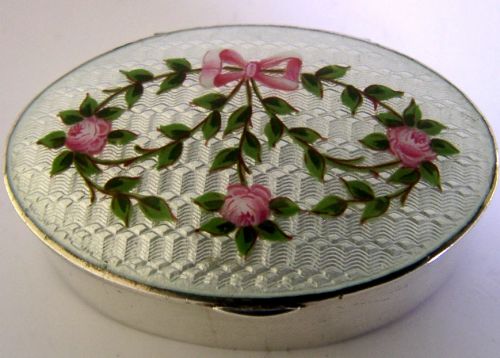
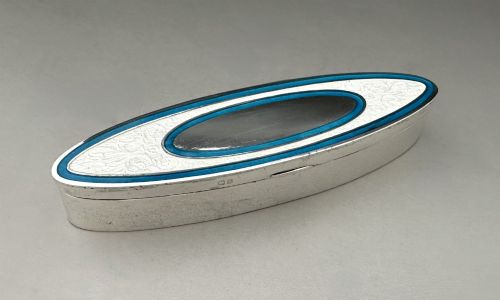
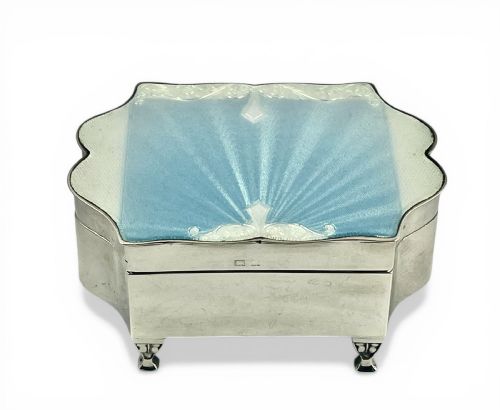
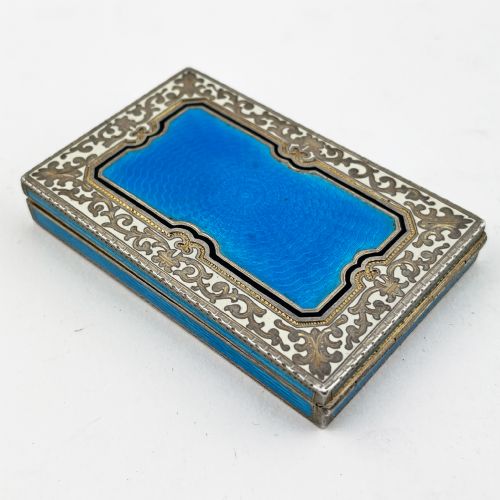
A blue guilloche enamel box brings together precise engine-turned metalwork and translucent coloured glass paste, offering a tactile piece of dressing table history.
Blue Guilloche Enamel Box
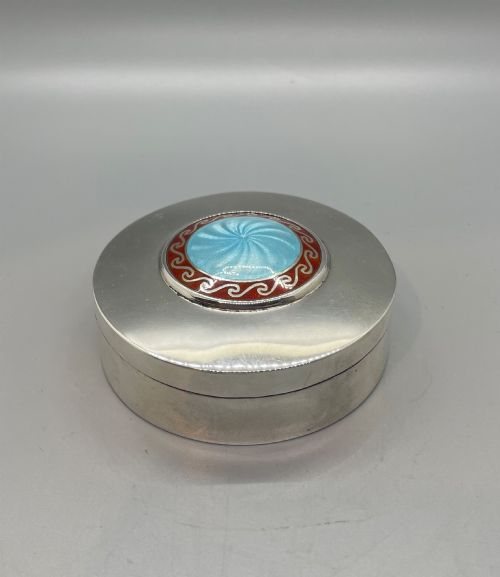
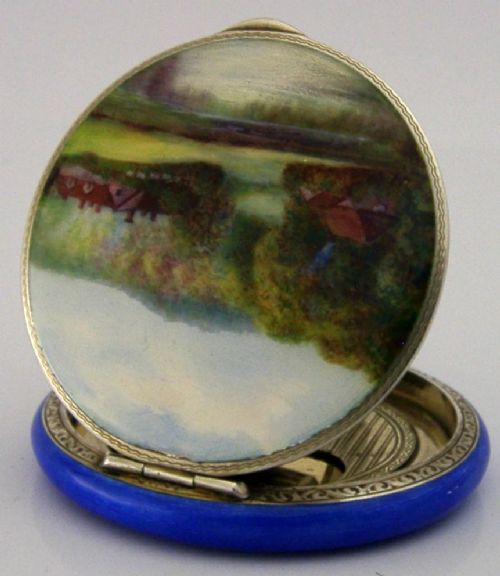
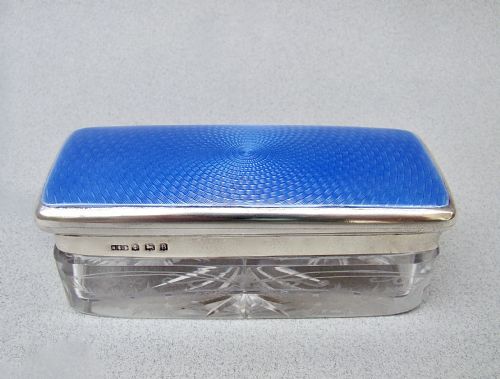
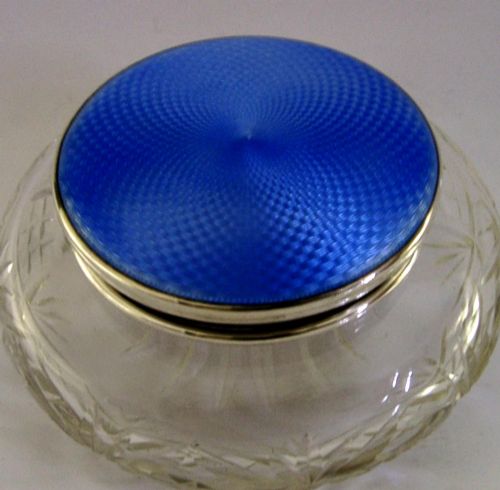
A blue guilloche enamel box is a small receptacle designed for dressing tables, vanity sets, or pocket use, most commonly found from the Edwardian era through the Art Deco period. These pieces take the form of trinket boxes, pill boxes, powder compacts, and dressing table jars with sterling silver mounts.
The selection ranges from early twentieth-century English examples marked in Birmingham to continental items and occasional pieces reaching back to the eighteenth century. Collectors encounter small circular pill containers alongside larger rectangular jewellery boxes and cut glass jars with enamelled lids.
Quality factors
The clarity and depth of the translucent blue enamel set the standard for these items, depending on the precision of the engine-turned cutting beneath. Crispness in the geometric machining and smooth, uniform application of the vitreous paste distinguish superior work from simpler variants.
The weight and substance of the sterling silver mounts, alongside legible hallmarks and undamaged hinges or tightly fitting lids, dictate the standing of an individual piece within its period.
Birmingham assay marks appear frequently alongside London hallmarks on pieces dating from the Edwardian era and the Art Deco years.
Henry Clifford Davis·Henry Matthews·Evans
The Blue Guilloche Enamel Box Glossary
- Guilloche
- An ornamental technique in which a precise, intricate pattern is mechanically engraved into a metal substrate with a lathe. This provides the textured background seen beneath translucent enamel.
- Vitreous enamel
- A material made by fusing powdered glass to a metallic substrate by firing at high temperature. It forms a smooth, durable coloured coating.
- Sterling silver
- An alloy of silver containing ninety-two point five percent silver and seven point five percent other metals, usually copper. This is the predominant metal standard for these boxes.
- Vinaigrette
- A small ornamental box containing a perforated inner grill, traditionally used to hold a sponge soaked in aromatic vinegar. These date from earlier periods including the eighteenth century.
- Compact
- A small portable case containing a mirror and pressed powder, popular during the Art Deco era. Many versions incorporate decorated metal lids.
Blue Guilloche Enamel Box: Frequently Asked Questions
What were blue guilloche enamel boxes used for?
These containers served practical functions on dressing tables and in pockets, holding small items such as pins, powder, pills, or visiting cards.
Ladies and gentlemen utilised them during the Edwardian and Art Deco periods as part of coordinated vanity sets and personal accessories.
How do I date a silver enamel box?
Dating relies heavily upon the assay office hallmarks stamped into the sterling silver mounts, which indicate specific years and towns of manufacture like Birmingham and London.
Stylistic indicators such as Edwardian neoclassical motifs or geometric Art Deco lines also help place the piece within a specific decade.
Are these boxes made of solid silver?
The structural mounts, frames, and lids of these containers consist of sterling silver, often marked with standard assay stamps.
Other materials like glass, crystal, or gilt metal frequently form the main body beneath the decorative enamel top.
How should I clean my enamel box?
Careful maintenance involves using a soft, dry cloth for the vitreous enamel surfaces to preserve the delicate translucent finish without scratching.
Silver polish should be kept away from the enamel edges to prevent chemical damage to the glass paste.