
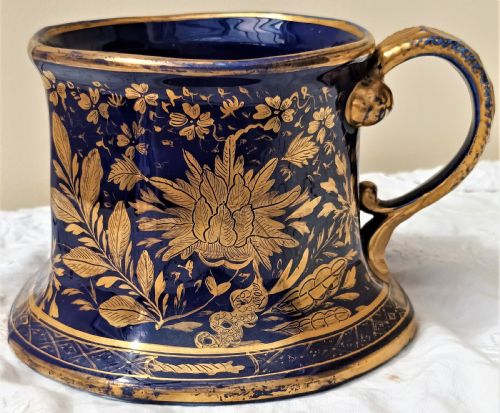


Blue Gold Porcelain Cup
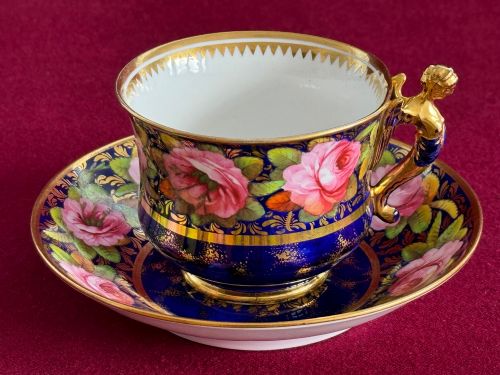
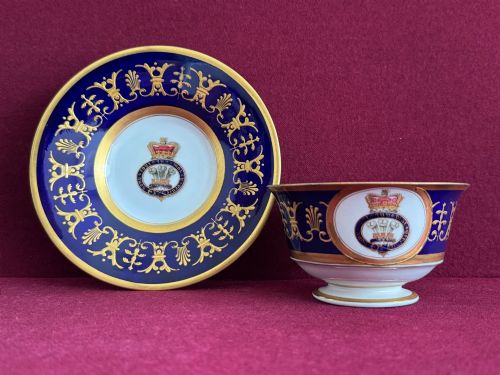
A blue gold porcelain cup brings cabinet presence to a table, combining deep cobalt colour with rich gilding across Georgian and Victorian forms.
Blue Gold Porcelain Cup
When you search for a blue gold porcelain cup, you encounter forms designed for tea, coffee, and chocolate across several distinct eras. The selection ranges from early cabinet trios and tea bowls to covered chocolate cups with stands.
Most examples originate from the nineteenth century, encompassing Regency, Victorian, and Edwardian periods alongside eighteenth-century pieces. You meet wares produced by major English factories as well as continental porcelain houses.
Vessels span from delicate bone china tea services to robust ironstone mugs, reflecting both domestic use and decorative display. The defining trait remains the pairing of blue enamel or cobalt with gold leaf or gilding.
How they were made
Potters shaped these objects using porcelain, bone china, and ironstone, applying cobalt enamel and blue grounds to the body before firing. Artisans then added gold leaf and hand-laid gilding to borders, handles, and painted panels.
Decoration often involved detailed hand-painting over glazed surfaces, sometimes featuring allegorical scenes or specific pattern motifs like bat wing designs. Kiln firing fixed the enamel and precious metal elements to the ceramic body.
Early chocolate drinkers required specialised covered cups with two handles so they could safely navigate heavy morning beverages without spilling.
What varies in quality
The distinction between standard production and top-tier pieces rests on the precision of the hand-painting and the thickness of the gold leaf applied. Finely detailed pictorial scenes and intricate ground work separate cabinet pieces from everyday tableware.
Makers such as Worcester, Coalport, and Spode achieved higher refinement in their porcelain pastes and enamel saturation. The crispness of the Neoclassical Revival detailing and the preservation of the original gilding dictate the standing of an individual cup.
Grainger's Worcester·Flight Barr And Barr·Royal Vienna·Royal Worcester
The Blue Gold Porcelain Cup Glossary
- Cabinet trio
- A matching teacup, coffee cup, and saucer made primarily for display rather than daily service.
- Coffee can
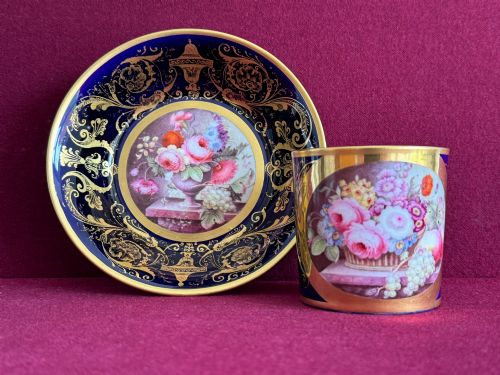
- A straight-sided cylindrical porcelain cup used for drinking coffee during the Georgian and Regency periods.
- Tea bowl
- A handleless cup used for drinking tea before the widespread adoption of handled teacups in the eighteenth century.
- Ironstone
- A heavy, durable type of earthenware patented in the nineteenth century as a tougher alternative to porcelain.
- Gilding
- The application of gold leaf or powdered gold to the surface of ceramics for decorative effect.
Blue Gold Porcelain Cup: Frequently Asked Questions
What is a chocolate cup?
A chocolate cup is a specialised vessel often featuring two handles and a matching cover, designed for drinking rich hot chocolate in the eighteenth and nineteenth centuries.
These pieces frequently included a stand or saucer to catch drips from the taller, heavier cups used for wealthier households.
How do I date a porcelain cup?
Dating relies on identifying the paste type, factory marks on the base, and stylistic indicators such as Regency shapes or Victorian floral motifs.
Comparison with documented patterns from makers like Coalport or Worcester helps narrow the decade of production.
Can I use these cups for drinks?
While many of these antique cups are structurally sound, most owners treat them as cabinet pieces or display items to preserve the delicate gilding.
Hand-washing in warm water without harsh detergents is necessary if you choose to use them for special occasions.
What is a cabinet trio?
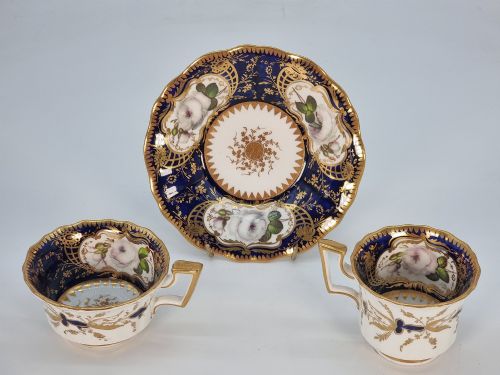
A cabinet trio consists of a teacup, a coffee cup, and a matching saucer produced as a unified set by factories like Coalport.
They were intended for display in a china cabinet to showcase the owner's taste and the manufacturer's decorative skill.