





Blue Glass Silver Salt
A blue glass silver salt brings rich colour and bright metal to the dining table, pairing cobalt liners with pierced or solid frames.
Blue Glass Silver Salt
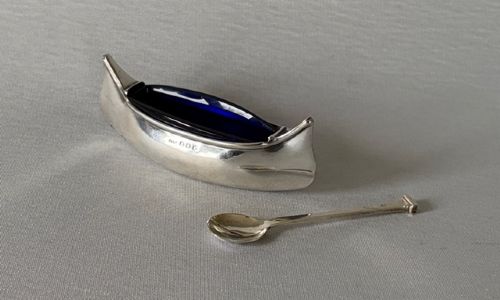
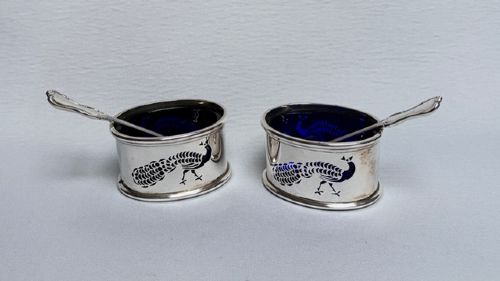
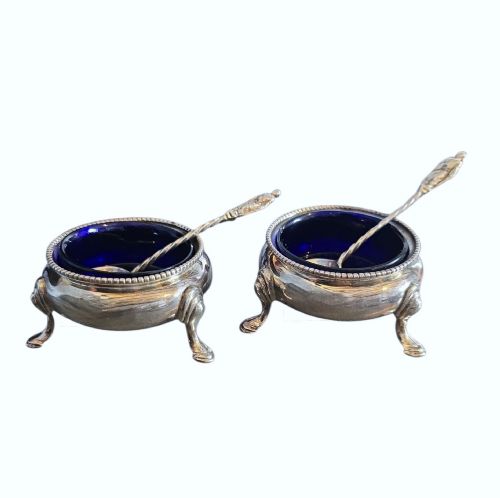
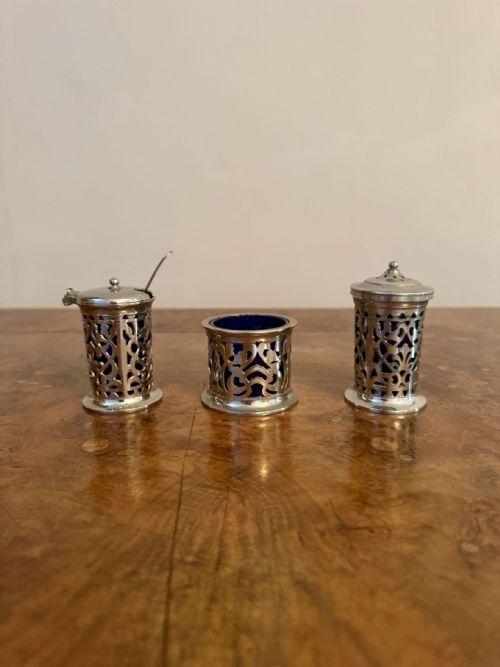
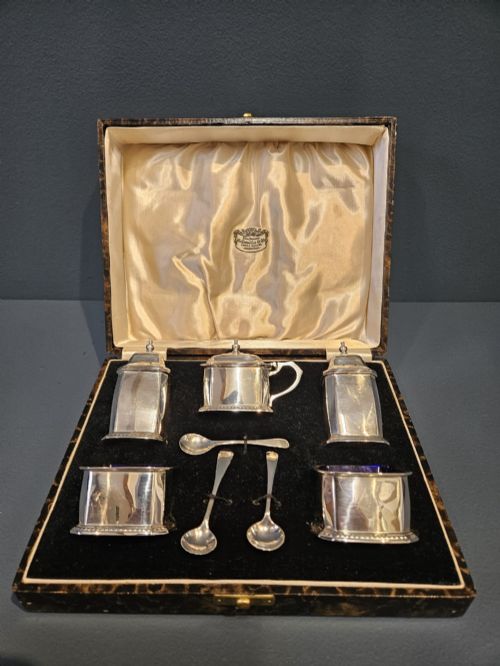
When you search for a blue glass silver salt, you encounter tableware designed to hold table salt before the invention of free-running salt, usually taking the form of open cellars or enclosed pots with matching spoons. The examples on this page span the Georgian, Victorian, Edwardian, and Art Deco periods, appearing as individual pieces, pairs, or complete condiment sets.
Makers ranged from specialist silversmiths to larger plating firms, producing items in sterling silver and silver plate. The integration of glass and metal reflects centuries of dining tradition, where rich blue inserts protected the silver from the corrosive nature of salt.
Materials and technique
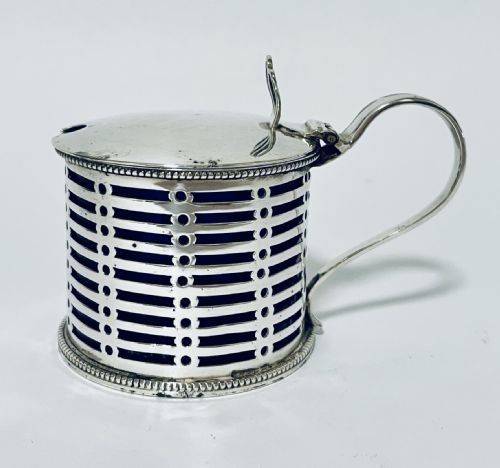
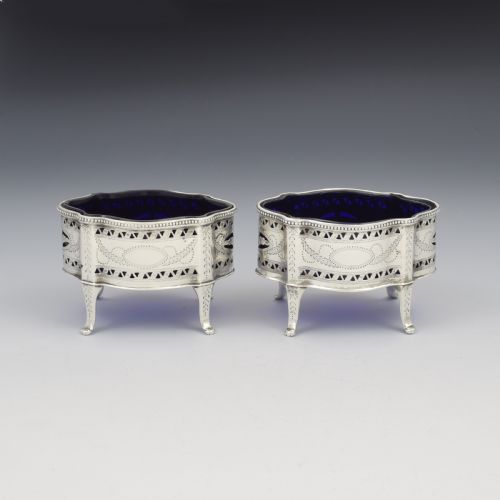
Makers formed the metal frames of a blue glass silver salt through casting, piercing, and wirework, shaping sterling silver or silver plate into boat shapes, tubs, and serpentine galleries. Pierced designs required careful hand-sawing to create openwork lattice patterns without weakening the structural integrity of the vessel.
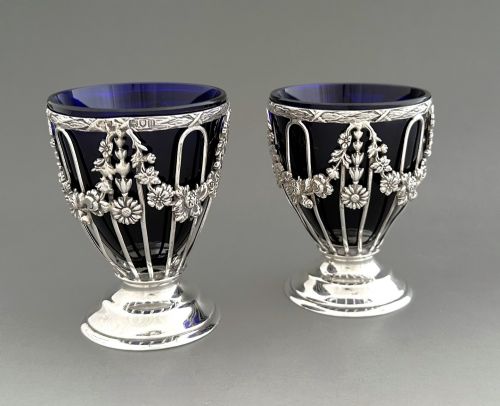
The glass liners began as molten metal blown into moulds or free-blown before being ground and polished to fit snugly inside the silver mounts. Cobalt glass and blue opaline glass provided the characteristic vibrant colour, contrasting sharply with the polished or patinated exterior metal.
Blue Glass Silver Salt Retail Price Guide 2026
Typical asking prices for blue glass silver salt among the pieces listed under this phrase on Sellingantiques today, from the lower quarter to the upper quarter. They describe what is for sale here now, not the wider market.
Horse hoof salt cellars bring an unexpected equestrian touch to the dining table, complete with silver shoe trims and cobalt glass interiors.
Assessing quality
Quality in these pieces rests upon the crispness of the silversmith's piercing, the weight and gauge of the metal used for the frame, and the harmonious fit between the silver mount and its glass insert. Heavy gauge sterling silver frames with clean, sharp cast details and undamaged original liners sit at the upper end of the range.
The sophistication of the design, whether an intricate Victorian rococo revival casting or a clean-lined Art Deco geometric condiment set, determines the refinement of the piece. Matching sets with uniform hallmarks across every component naturally hold greater distinction than assembled groupings.
David Hennell I·Elkington and Co·William Neale·William Aitken
The Blue Glass Silver Salt Glossary
- Salt cellars
- Small open vessels placed on the dining table to hold salt for individual guests before the widespread use of shaker bottles. They almost universally require a glass liner to prevent salt corrosion of the metal.
- Cobalt glass
- A deep blue glass coloured by the addition of cobalt oxide during manufacturing. It provides the striking contrast seen inside silver salt cellars and scent bottles.
- Pierced silver
- Metalwork decorated by cutting out patterns with a fine jeweler's saw to create ornamental fretwork or lattice designs. This technique lightened the visual weight of Victorian and Edwardian tableware.
- Cruet set
- A matched collection of condiment bottles or pots held together in a metal stand or frame. These sets commonly housed salt, mustard, and pepper.
- Opaline glass
- An opaque or semi-translucent glass developed in various pastel and vibrant tones. In older tablewares, it appears as a smooth, milky alternative to standard transparent cobalt glass.
Blue Glass Silver Salt: Frequently Asked Questions
What are blue glass silver salts used for?
These vessels held dry salt on formal dining tables, allowing guests to pinch salt onto their plates using small spoons. The glass insert protected the metal frame from chemical damage.
Over time, their role shifted from functional dining implements to decorative objects, though many collectors still use them for small domestic purposes.
How do I clean the silver and glass?
The glass liner should be removed from the silver frame before cleaning to prevent moisture from becoming trapped between the two materials. Wash the glass gently in warm soapy water.
Polish the silver frame with a dedicated cloth, taking care to avoid abrasive cleaners that might scratch the soft metal or damage any remaining hallmarks.
Are the glass liners usually original?
Many surviving pieces retain their original blown or moulded liners, which fit the contours of the silver mount precisely. Because glass breaks easily, replacements are sometimes fitted later.
A correct original liner sits level within the mount and matches the period manufacturing techniques of the outer silver frame.
How can I tell the period of a piece?
Hallmarks stamped onto the silver provide the most reliable guide to dating, indicating the assay office, the year of manufacture, and the silversmith's mark. Georgian pieces often display simpler boat shapes.
Victorian and Edwardian examples introduce heavier casting, elaborate piercing, and rococo revival motifs, while 1930s pieces lean towards Art Deco geometry.