





Blue Fabric Couch
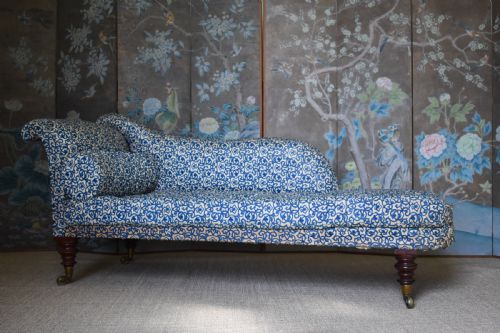
A blue fabric couch brings traditional seating into a room with rich texture and deep colour, drawing on centuries of upholstery heritage.
Blue Fabric Couch
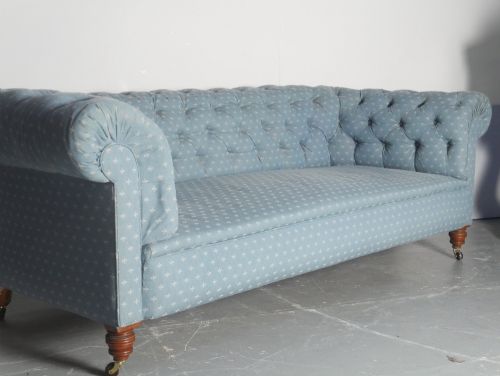
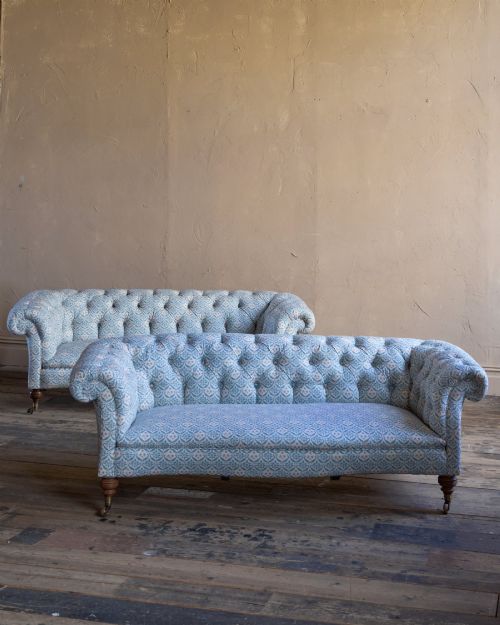
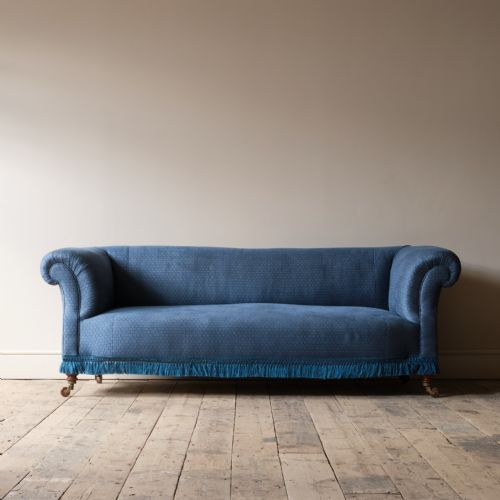
A blue fabric couch covers a range of nineteenth century seating forms, from grand Chesterfield sofas and drop arm models to elegant chaise longues and button back canapes. These pieces bring traditional English country house style into domestic spaces through generous proportions and comfortable upholstered seating.
Buyers searching for a blue fabric couch will most frequently encounter nineteenth century Victorian and Edwardian examples upholstered in cotton, damask, or floral textiles. Forms vary from sturdy timber frames on castors to refined camel back shapes rooted in earlier stylistic revivals.
How they were made
Makers constructed these frames using substantial timbers such as mahogany, walnut, and resilient hardwoods to ensure structural integrity. Craftsmen then applied supportive stuffing and durable fabric coverings over traditional spring or webbing foundations.
Metal components like brass hardware and original castors appear on the legs of various pieces, aiding mobility and stability. Upholstery techniques ranged from plain cotton and damask to elaborate button back work and specialised designer textiles.
Blue Fabric Couch Retail Price Guide 2026
Typical asking prices for blue fabric couch among the pieces listed under this phrase on Sellingantiques today, from the lower quarter to the upper quarter. They describe what is for sale here now, not the wider market.
Listings feature nineteenth century and Edwardian seating including Chesterfields, day beds, and chaise longues constructed from mahogany, walnut, and hardwood.
What varies in quality
The distinction between ordinary and exceptional pieces lies in the refinement of the frame's woodwork, such as finely turned legs and balanced proportions. Superior examples retain original structural elements and distinctive stylistic flourishes like serpentine profiles or drop arm mechanisms.
Upholstery choice and execution also separate standard variants from the finest items, particularly where makers utilise high quality cotton, damask, or notable decorator fabrics. The presence of maker attribution and integrated design details further elevates the standing of an individual couch.
Howard and Sons·Hampton and Sons
The Blue Fabric Couch Glossary
- Chesterfield
- A large upholstered sofa traditionally characterised by deep buttoning and rolled arms of equal height to the back. This form remains a staple of traditional English seating.
- Chaise longue
- An elongated chair designed for reclining, featuring a single backrest at one end. These pieces combine the comfort of a chair with the length of a day bed.
- Canape
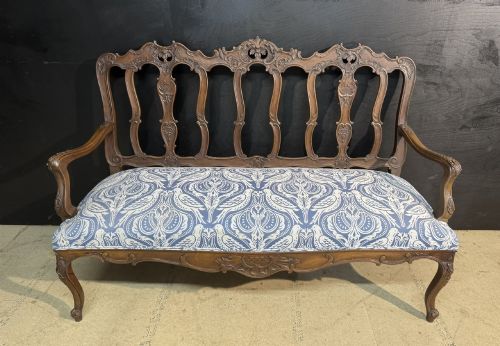
- An ornamental sofa with an exposed wooden frame and an upholstered back and seat. Originating in French design, it became popular in various British stylistic revivals.
- Damask
- A reversible figured fabric woven on a loom with patterns formed by contrasting warps and wefts. It provides a rich texture frequently used for formal upholstery.
- Castor
- A small wheel mounted on a swivel attached to the base of furniture legs. Original brass examples assist in moving heavy nineteenth century sofas safely.
Blue Fabric Couch: Frequently Asked Questions
What defines a nineteenth century sofa?
Nineteenth century sofas typically feature robust hardwood frames, traditional coil springing, and handcrafted upholstery methods that predate modern mass production.
They showcase distinct period aesthetics ranging from heavy buttoned backs to refined revival shapes on turned legs.
How do I identify a Victorian day bed?
A Victorian day bed combines the reclining length of a chaise with an open frame often supported on turned wooden legs and original brass castors.
These pieces were designed for resting in private chambers or informal sitting rooms during the nineteenth century.
How do I care for antique upholstery?
Antique upholstery requires gentle vacuuming with a soft attachment to remove surface dust without disturbing delicate cotton or damask threads. Direct sunlight should be avoided to prevent fading of the blue fabric.
Professional cleaning is recommended for antique textiles to preserve the underlying stuffing and frame structure.