

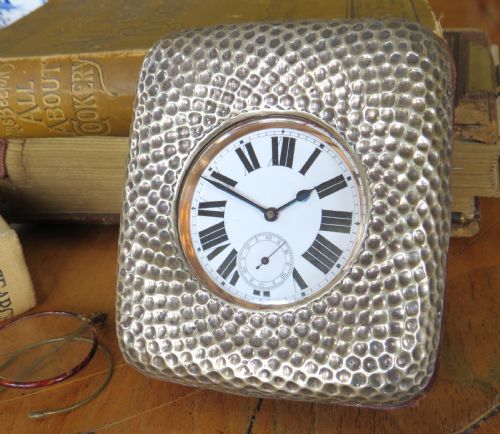


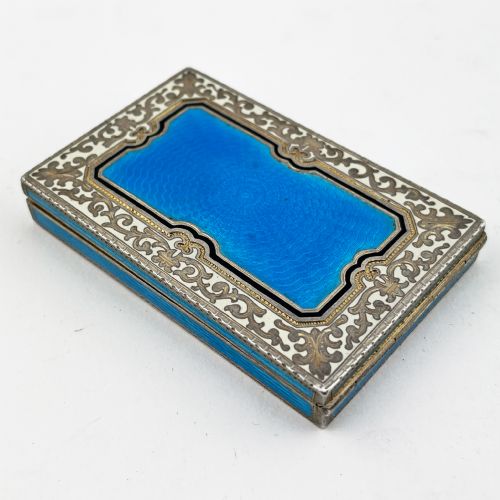


Blue Enamel Case
A blue enamel case brings together precious metal and fired glass to hold cigarettes, cards, or timepieces.
Blue Enamel Case
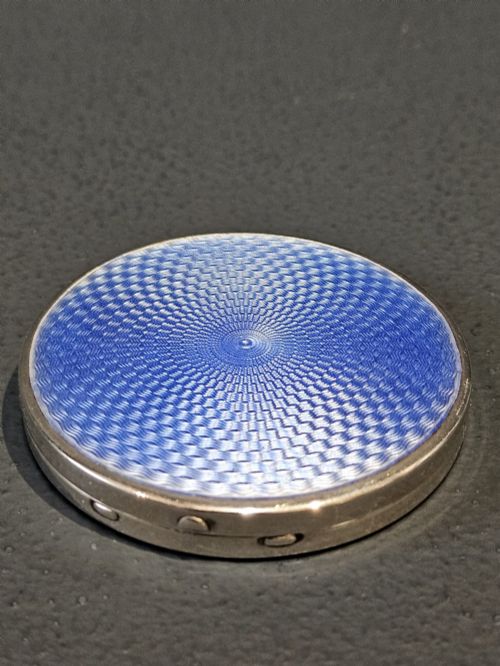
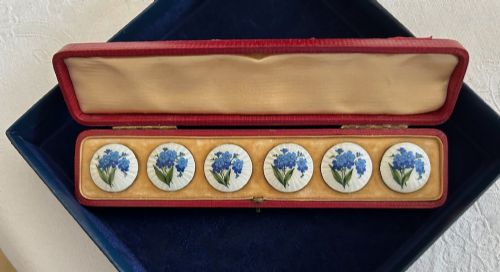
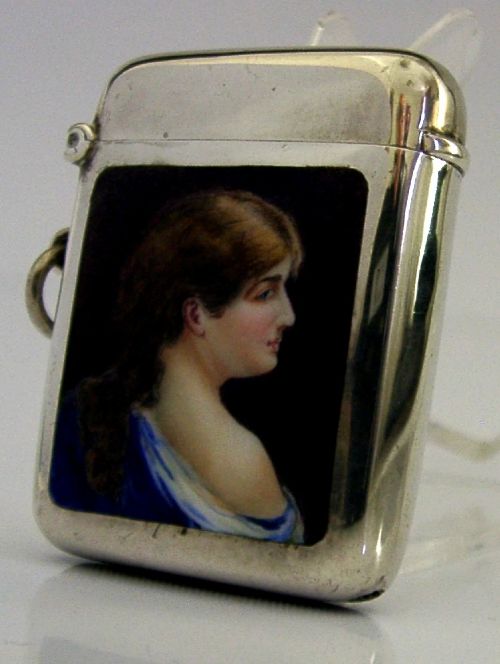
A blue enamel case encompasses a wide variety of personal accessories designed to protect small valuables, spanning from the late nineteenth century through to the mid-twentieth century. The phrase covers compacts, cigarette and cheroot cases, card cases, travel clocks, vestas, and buttons in both British and continental styles.
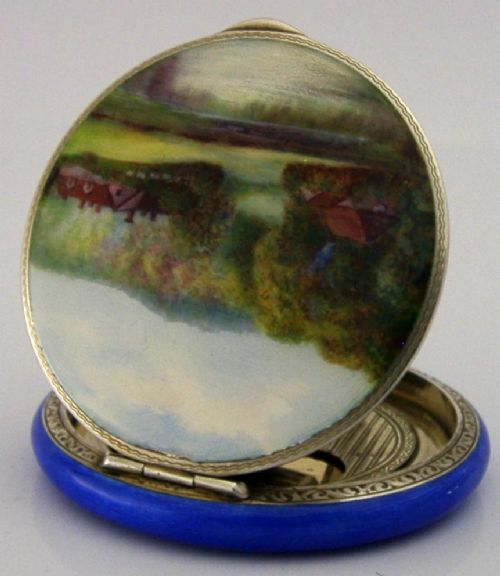
The most common examples on this page date from the Art Deco period and the Edwardian era, rendered in sterling silver or silver-gilt with translucent blue guilloche or hand-painted enamel panels. These pieces served practical daily functions for the fashionable owner while doubling as miniature canvases for decorative metalwork.
Origins range widely, including dedicated British silversmith workshops, French clockmakers, and Italian silver studios. Forms vary from sleek geometric cigarette holders to delicate pocket timepieces and matched sets of waistcoat buttons.
What varies in quality
Quality rests upon the precision of the underlying engine-turning and the clarity of the vitreous enamel layer, where superior examples exhibit an even, unclouded depth of colour across complex curved surfaces. The complexity of the maker's hand, particularly in hand-painted floral panels or specialist guilloche patterns, elevates certain pieces well above standard utility items.
The integrity of the metal framing and the snugness of the hinged closures distinguish high-grade workshop production from mass manufacturing. Maker attribution to known firms adds considerable distinction to surviving specimens.
Blue Enamel Case Retail Price Guide 2026
Typical asking prices for blue enamel case among the pieces listed under this phrase on Sellingantiques today, from the lower quarter to the upper quarter. They describe what is for sale here now, not the wider market.
Listings span from the nineteenth century through the nineteen-fifties, featuring silver, gilt metal, and glass across various decorative forms.
Henry Matthews·Margaine Of France·Liberty And Co·Deakin And Francis·William Neale And Son Ltd·Robert Chandler·Henry Perkins And Sons·Giuliano Spinelli
The Blue Enamel Case Glossary
- Guilloche
- A decorative mechanical technique where precise geometric patterns are cut into a metal surface before enamelling. This underlying texture shows clearly through translucent coloured glass layers.
- Vitreous Enamel
- A material made by fusing powdered glass to a metallic substrate through firing in a kiln at high temperatures. It provides a durable, glossy coloured surface.
- Vesta Case
- A small pocket box specifically designed to hold matches and keep them dry. They often feature hinged lids and strike bases.
- Silver-Gilt
- Silver that has been coated with a thin layer of gold on its exterior surfaces. This finish is also known as vermeil.
- Cheroot Case
- A rigid pocket container fashioned to hold small cigars or cheroots safely without crushing them. They frequently match cigarette cases in design and construction.
Blue Enamel Case: Frequently Asked Questions
What were blue enamel cases used for?
These cases held personal necessities like cigarettes, visiting cards, cosmetics, and pocket watches during daily social routines.
Their sturdy metal construction protected fragile items inside pockets or handbags while offering a decorative surface suited to fashionable display.
How do I date a silver and enamel case?
British pieces rely on stamped hallmarks that include date letters, assay office symbols, and maker marks to identify the exact year of production.
Stylistic indicators such as Art Deco geometric layouts or Edwardian floral motifs help narrow down continental or unmarked items.
What is guilloche enamel?
Guilloche is an engraving technique that etches precise, repeating geometric patterns into a metal base before applying translucent coloured enamel.
The light reflects off the cut metal underneath, giving the blue surface a shimmering, multi-dimensional depth.
How should I care for antique enamel cases?
Enamel is essentially glass and requires gentle handling to prevent scratching, chipping, or thermal shock from harsh cleaning methods.
Silver components can be polished carefully while avoiding direct contact between metal cleaning agents and the glass surfaces.