



Blue Cream Area Rug
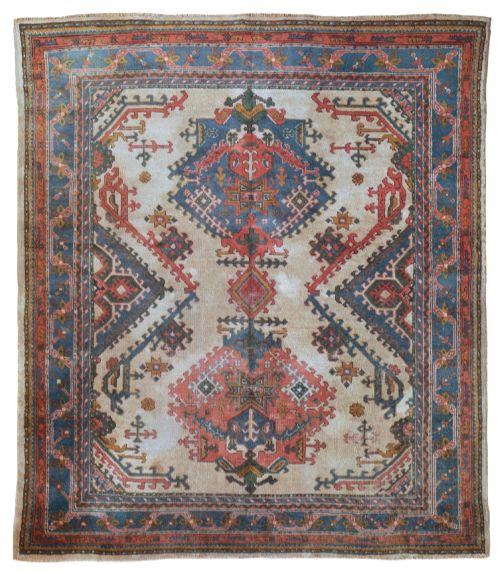
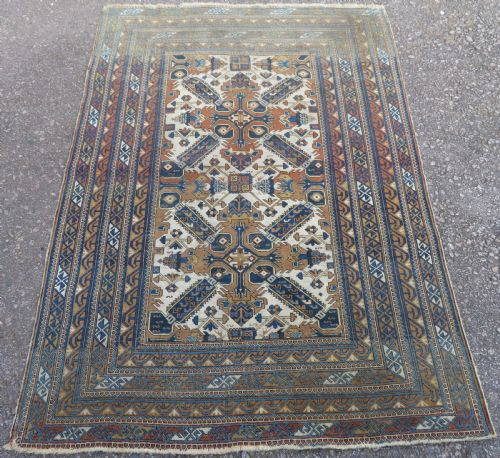
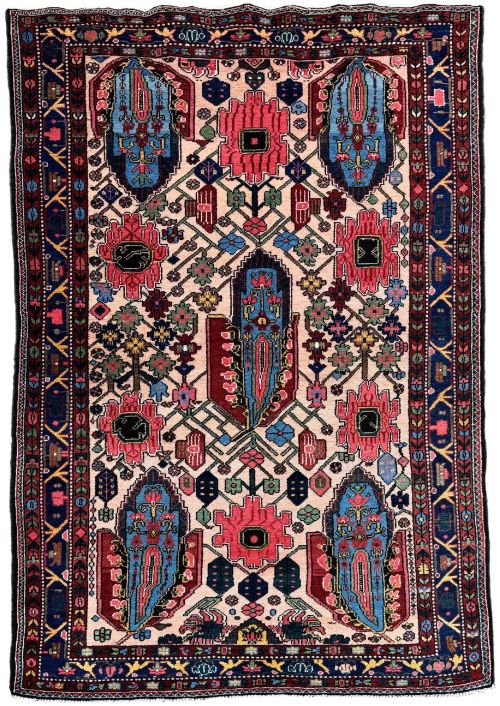
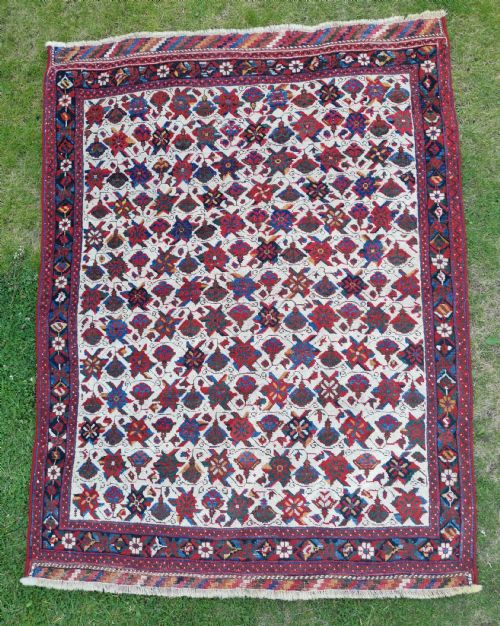
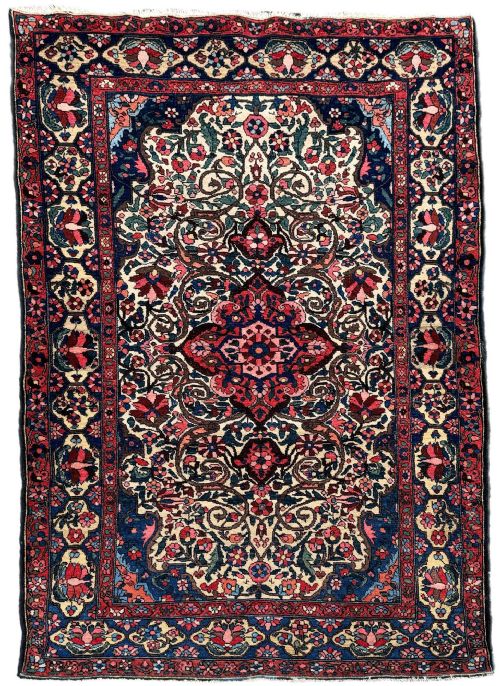
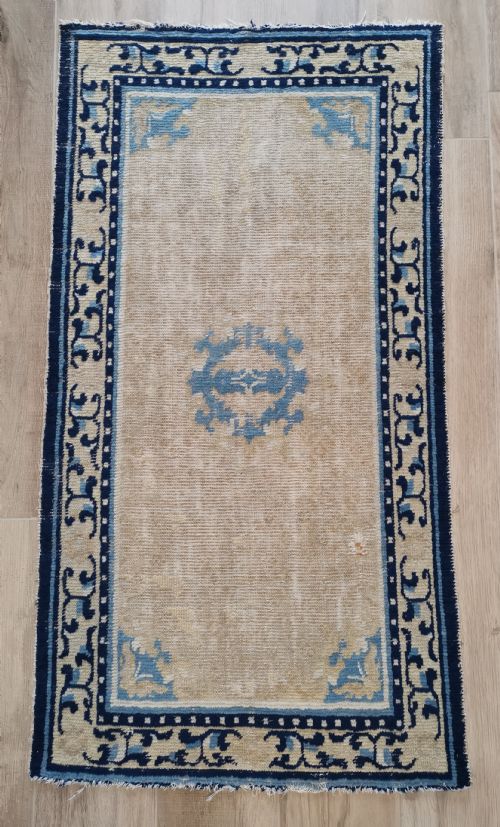
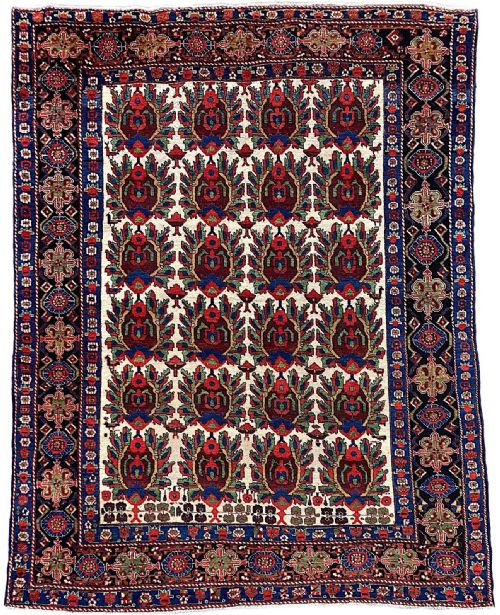
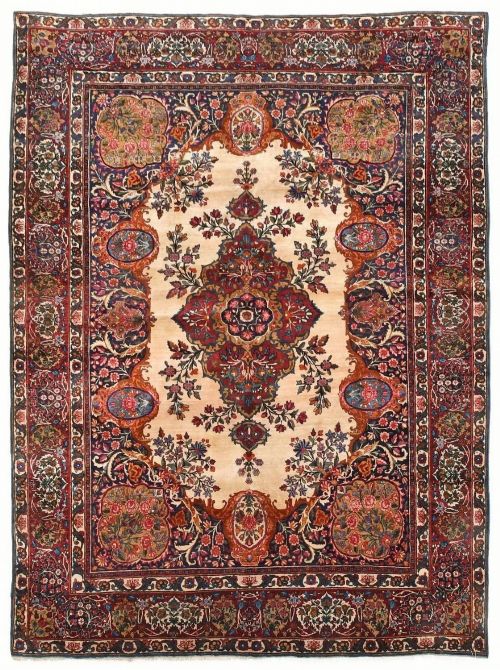
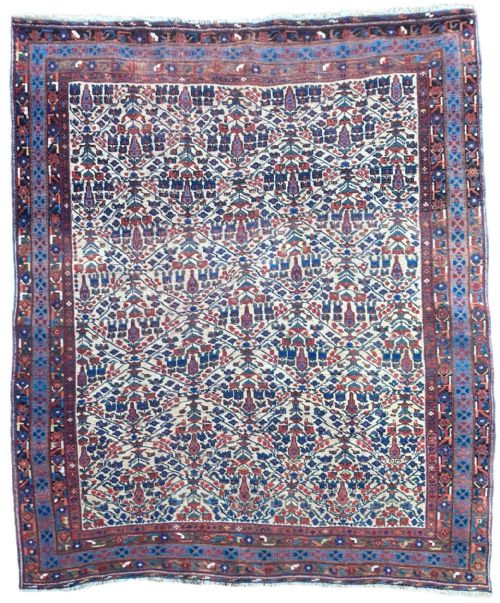
A blue cream area rug brings ground and calm to a room through traditional Persian and Ottoman patterns woven in wool, cotton and silk.
Blue Cream Area Rug
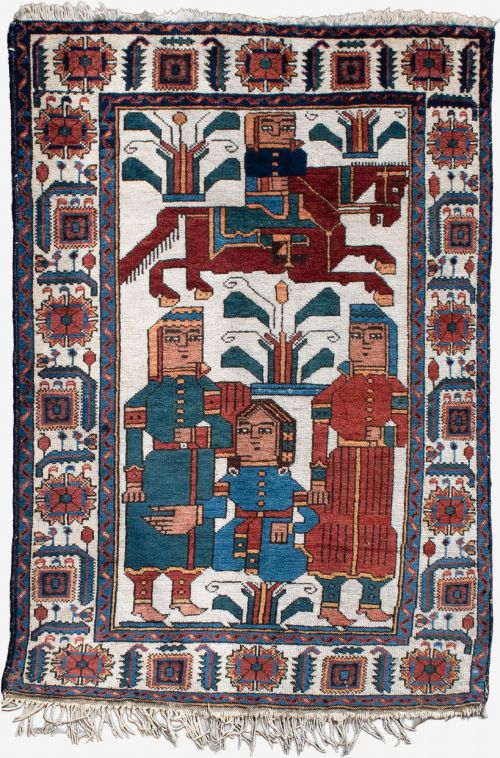
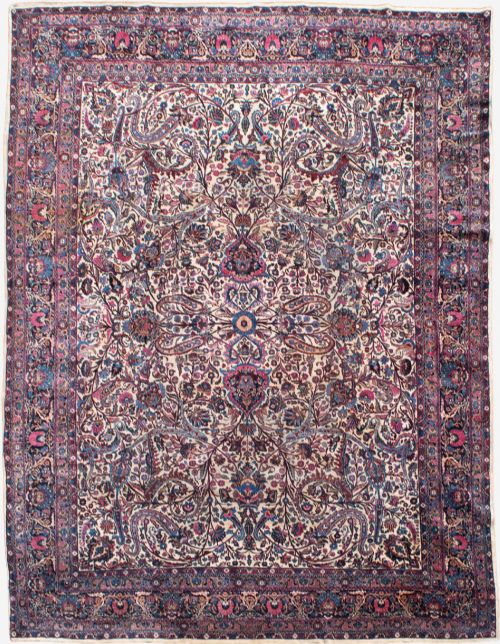
When you search for a blue cream area rug, you encounter hand-knotted carpets and rugs originating from Persia, China, Turkey and the Caucasus, spanning the nineteenth and early twentieth centuries. These floor coverings range from compact village pieces to large room-size carpets bearing traditional medallions, floral motifs and pictorial designs.
The pieces on this page are predominantly antique oriental carpets and rugs created in regional workshops and nomadic tribes. Examples include works from Kirman, Tabriz, Bakhtiar, Afshar, and Ushak, capturing the distinct aesthetic of Persian and Ottoman weaving traditions.
How they were made
Weavers constructed these textiles by hand knotting natural fibres onto foundations of sturdy cotton or wool. The pile predominantly utilises wool, sometimes complemented by silk details, dyed using traditional methods that yield rich colour palettes.
The structural integrity relies on dense knotting techniques handed down through generations of artisans in Persian and Anatolian workshops. Foundation warps and wefts hold the hand-tied pile firmly in place, ensuring decades of domestic resilience.
Blue Cream Area Rug Retail Price Guide 2026
Typical asking prices for blue cream area rug among the pieces listed under this phrase on Sellingantiques today, from the lower quarter to the upper quarter. They describe what is for sale here now, not the wider market.
Listings feature wool, cotton and silk materials across Persian, Turkish and Chinese regional traditions dating from the nineteenth and early twentieth centuries.
What varies in quality
Quality rests upon knot density, the precision of the design execution and the depth of the natural dyes used in the pile. Finer examples display intricate rendering of floral and medallion motifs with harmonious colour saturation across the surface.
The integrity of the foundation and the evenness of the wear distinguish superior specimens from simpler village work. Master weavers working in established centres achieved a crispness of line and balance of proportion that elevates certain carpets above standard production.
Mohtasham Kashan·Hajji Jalili
The Blue Cream Area Rug Glossary
- Pile
- The vertical tufts of wool, cotton or silk that form the soft upper surface of the carpet. This element absorbs daily friction and displays the woven design.
- Warp
- The stationary lengthwise threads stretched tightly on the loom that form the structural skeleton of the rug. Weft threads are interlaced across these to secure the knots.
- Medallion
- A prominent symmetrical ornamental design centred in the middle of the carpet field. This central motif often anchors the surrounding floral or geometric patterns.
- Kilim
- A flat-woven carpet produced without a pile by tightly interweaving warp and weft strands. These textiles offer a smooth, lightweight alternative to knotted floor coverings.
- Ground
- The main background colour of the central field behind the primary motifs. In these pieces, this surface typically appears in ivory, cream or soft blue tones.
Blue Cream Area Rug: Frequently Asked Questions
How do I clean an antique rug?
Professional specialist cleaning is essential for antique textiles to protect delicate natural dyes and fragile wool foundations.
Regular gentle vacuuming without a rotating brush bar helps remove surface dust without straining the old fibres.
Can I place these rugs in high traffic areas?
Sturdy room-size wool carpets handle moderate hallway or living room traffic well when laid over a quality underlay.
Finer silk pieces or fragile nineteenth-century examples benefit from placement in quieter rooms to preserve their delicate pile.
How do I identify Persian regional styles?
Regional attribution relies on examining specific motifs, border arrangements, colour combinations and knotting structures particular to areas like Tabriz, Kirman or Bakhtiar.
Comparing the handling of floral sprays and medallion shapes against known examples clarifies the likely place of origin.
Are these rugs entirely handmade?
Every carpet listed here represents traditional hand-knotted or flat-woven craftsmanship produced by regional artisans before mass industrial looms dominated.
Human hands tied individual tufts of wool or silk onto cotton foundations, creating subtle irregularities unique to each piece.