





Blue Console Table
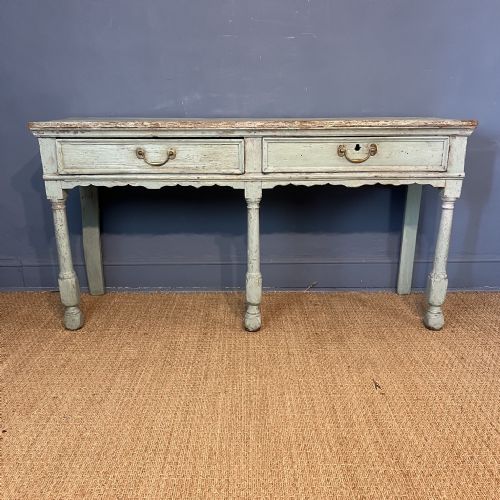
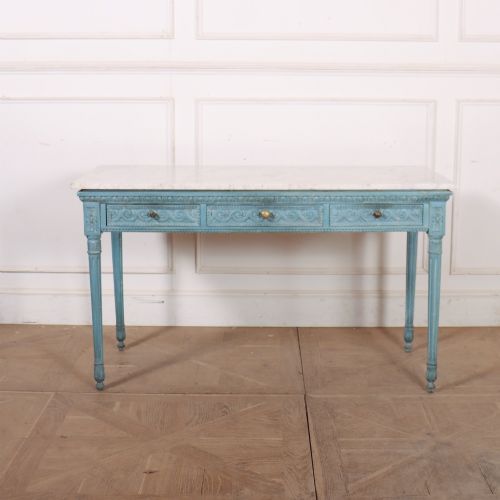
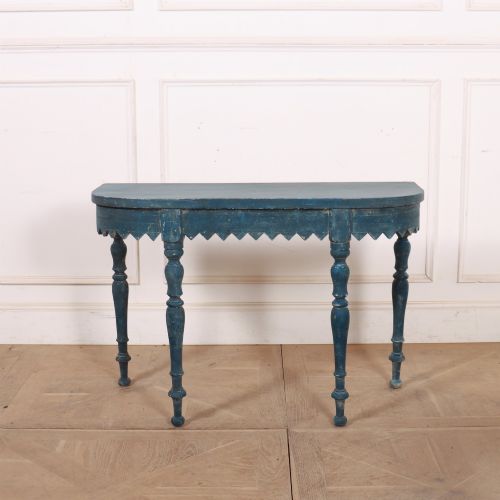
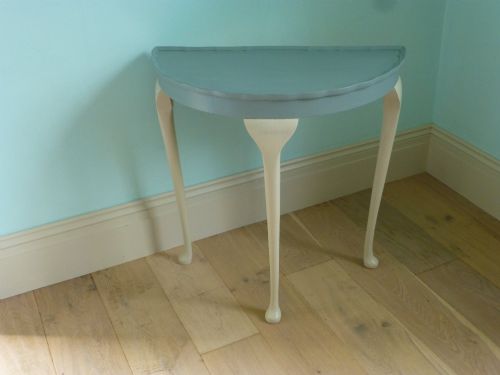
A blue console table brings surface and colour to a hallway or drawing room, anchoring the space with period character.
Blue Console Table
A blue console table spans diverse forms from the eighteenth to the twentieth centuries, including side tables, serving tables, washstands, and dresser bases. Buyers frequently encounter painted pine and mahogany pieces originating from English, French, Swedish, and Italian workshops.
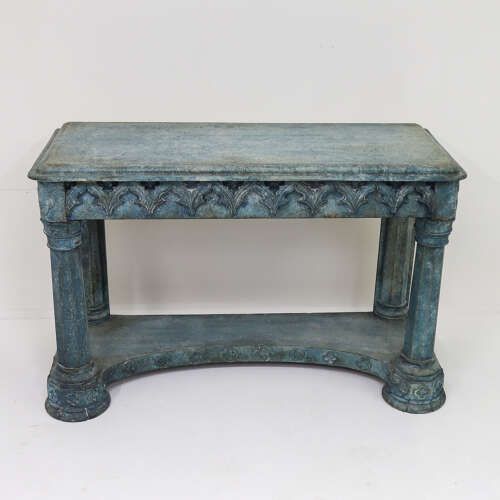
The selection ranges from compact demi-lune hall tables and lamp tables to imposing nineteenth-century Gothic and neoclassical designs. Construction relies heavily on timber frameworks, often finished in painted schemes that reflect English country, Gustavian, and French provincial aesthetics.
Materials and construction methods
Makers utilised solid timber such as pine and mahogany, occasionally pairing wooden bases with marble tops for washstands and serving tables. Structural joinery involves traditional methods suited to supporting furniture placed against walls or within hallways.
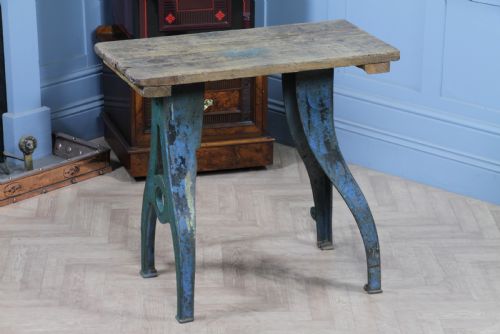
Surfaces receive layered paint treatments, showing original or later application in various tones. Metal elements like brass appear alongside cast iron machine bases repurposed for industrial vintage items.
Current listings feature items from the 18th, 19th, and 20th centuries, constructed from pine, mahogany, and marble.
Distinctions in construction and finish
Quality rests on the integrity of the timber frame and the handling of the painted finish over time. Pieces retaining original surface treatments demonstrate greater integrity than those with unsympathetic later interventions.
Fine carving, balanced proportions, and well-executed details such as bow ends or serpentine fronts elevate certain console tables above standard utility pieces.
The Blue Console Table Glossary
- Demi-lune
- Having a half-moon shape designed to stand flush against a wall in narrow spaces.
- Console table
- A table supported against a wall by brackets or legs, often narrow in depth.
- Washstand
- A piece of furniture built to hold a basin and jug, frequently topped with marble in Victorian examples.
- Dresser base
- A low wooden storage unit with drawers or cupboards, built without upper shelving tiers.
- Chinoiserie
- European decorative style reflecting Chinese artistic motifs, popular on eighteenth and nineteenth-century tables.
Blue Console Table: Frequently Asked Questions
Where should I place a blue console table?
These tables suit hallways, landings, and reception rooms where depth is restricted. Their narrow profiles allow them to sit flush against walls while holding lamps or decorative objects.
They also function as serving tables in dining spaces or as writing surfaces when paired with a chair.
How do I identify the period of a console table?
Examination of timber types, joinery methods, and hardware offers clear indications of age. Eighteenth-century pieces often feature hand-cut joints and native pine or mahogany construction.
Later nineteenth and twentieth-century examples incorporate machine-sawn components and distinct regional styling such as Gustavian or Gothic revival motifs.
Are painted finishes original?
Some pieces retain their first application of paint, showing natural wear and weathering over generations. Others have undergone later re-painting to achieve specific decorative colour schemes.
Inspect the layers around edges and joints to understand the history of the surface finish.
What is the difference between a console and a side table?
Console tables are specifically designed to stand against a wall, sometimes requiring wall fixings for stability depending on their leg configuration. Side tables are free-standing units with four independent legs.
Both forms overlap significantly in practical use within historic interiors.