






Blue Cloisonne Plate
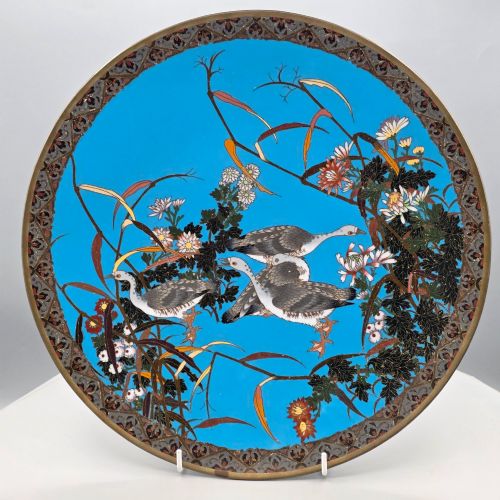
A blue cloisonne plate is a striking metal vessel decorated with intricate glass enamels divided by fine wires, bringing centuries of skilled artistry to a room.
Blue Cloisonne Plate
When you search for a blue cloisonne plate, you encounter decorative chargers, circular dishes, and large display plaques originating mainly from the Japanese Meiji and Edo periods, alongside examples from the Qing Dynasty. These pieces span from the mid-nineteenth century into the early twentieth century, taking the form of substantial chargers or medium-sized plates designed for display.
The version you are most likely to meet on this page is a Japanese Meiji period charger featuring deep blue enamel fields filled with motifs of dragons, birds, koi, or floral subjects. They serve as focal points for interiors, combining utility as flat dishes with intricate pictorial artistry.
How they were made
Artisans constructed these pieces using a metal base of copper, brass, or bronze, shaping it into the form of a plate or charger. Upon this base, they soldered fine brass or silver wires to map out the outlines of the intended design, creating tiny walled cells known as cloisons.
Workers then filled these individual compartments with coloured glass enamels in various shades of blue and other hues before firing the piece in a kiln. Subsequent grinding and polishing revealed the metal wire grid holding the hardened vitreous pastes in place.
Blue Cloisonne Plate Retail Price Guide 2026
Typical asking prices for blue cloisonne plate among the pieces listed under this phrase on Sellingantiques today, from the lower quarter to the upper quarter. They describe what is for sale here now, not the wider market.
Some dragons depicted on these copper chargers possess expressions that suggest they are merely mildly inconvenienced by the enamel.
What varies in quality
The refinement of the wirework dictates much of the distinction between standard and exceptional pieces, with finer, thinner wire grids allowing for more intricate and lifelike pictorial detail. Artisans achieving precise symmetry and clean geometric or organic layouts elevated the visual impact of the composition.
The depth, uniformity, and luminosity of the enamel fields also separate the ranges, where superior pieces display a rich, unclouded vitreous surface free of pitting or discolouration. The complexity of the subject matter, such as multi-layered dragon scales or finely shaded feathers, reflects the maker's technical mastery.
Kinkozan
The Blue Cloisonne Plate Glossary
- Cloisonne enamel
- A decorative metalwork technique where glass paste is fired inside compartments formed by soldered wires. This method creates a stained-glass effect upon a metallic substrate.
- Charger
- A large decorative plate utilised for display rather than for serving food. These substantial vessels often form the centrepiece of a collection.
- Meiji Period
- The era of Japanese history spanning from 1868 to 1912, noted for a surge in refined metalwork and enamel production exported globally. Pieces from this time show exceptional technical control.
- Silver Gilt
- Silver that has been coated with a thin layer of gold over its surface. This treatment provides a rich golden sheen while retaining a silver core.
Blue Cloisonne Plate: Frequently Asked Questions
How were blue cloisonne plates displayed?
These chargers and plates were traditionally positioned on wooden stands or hung upon walls to showcase their intricate pictorial enamelwork.
In contemporary settings, they continue to serve as vibrant decorative focal points on mantelpieces, sideboards, or dedicated display rails.
What motifs appear on these plates?
Common subjects include dragons, phoenixes, leaping koi, birds sitting on branches, and various floral arrangements such as chrysanthemums.
Some pieces incorporate landscape scenes or auspicious symbols reflecting traditional Japanese and Chinese artistic themes.
How do I care for cloisonne enamel?
Maintenance requires gentle dusting with a soft, dry cloth to prevent accumulation within the wire crevices. Harsh chemical cleaners and abrasive materials must be avoided to protect the polished enamel and metal wires.
How can I distinguish Meiji period pieces?
Meiji period items generally exhibit extreme precision in the wirework alongside deep cobalt or rich blue background enamels. The presence of specific signatures or stylistic markers from late nineteenth-century Japanese workshops aids in identification.