

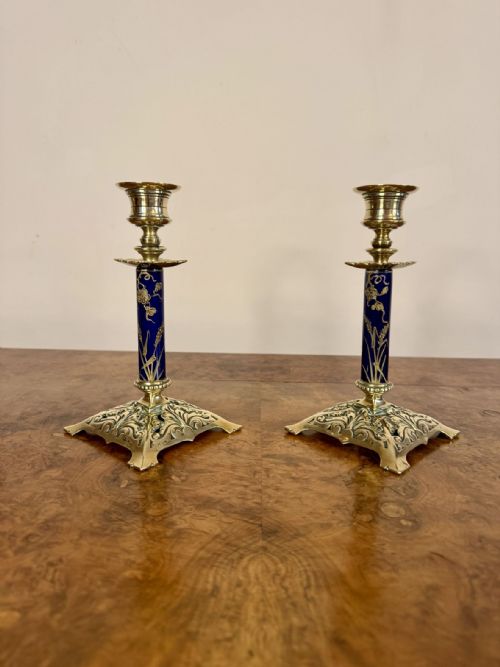
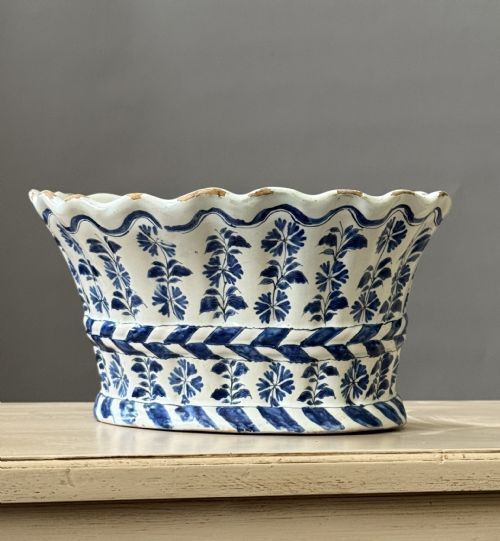
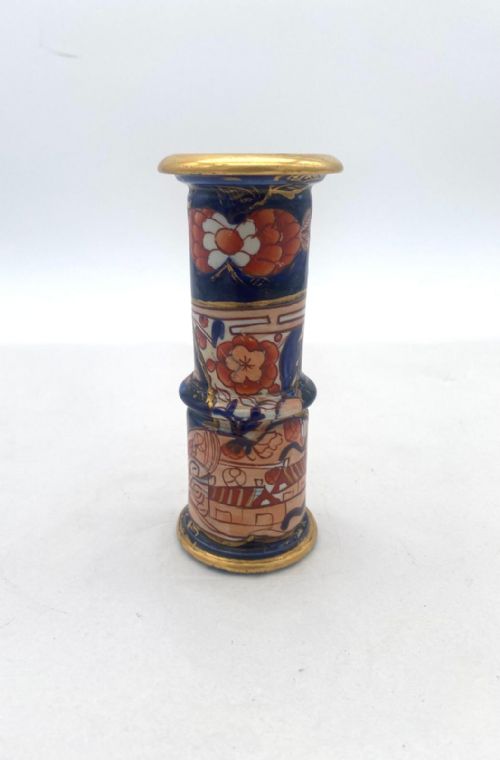
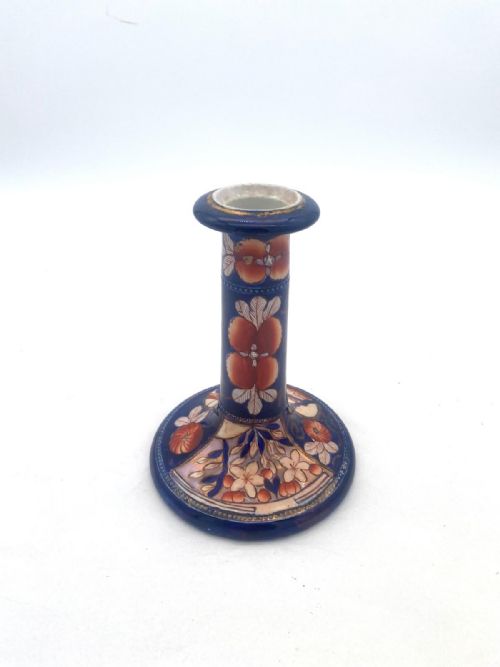

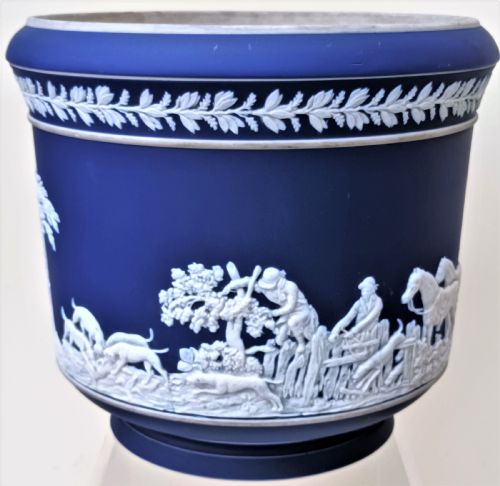


Blue Ceramic Holders
Blue ceramic holders arrive in many forms, from Chinese brush pots to Victorian Staffordshire inkwells, bringing practical utility and vivid colour to desk and mantel.
Blue Ceramic Holders
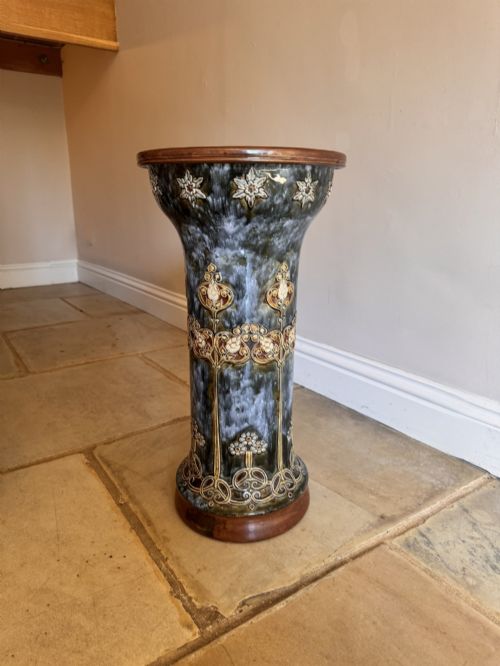
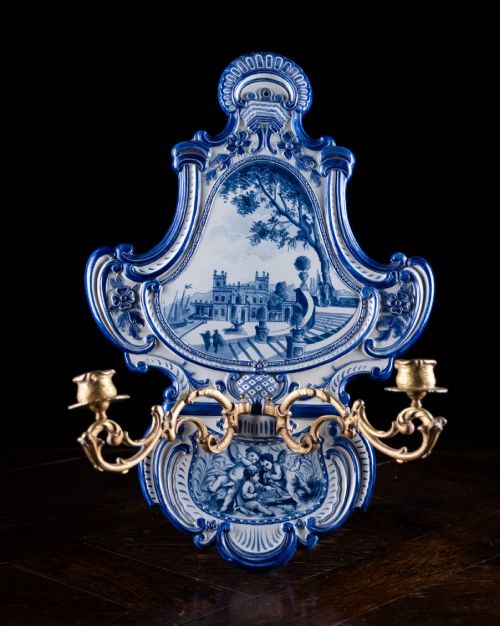
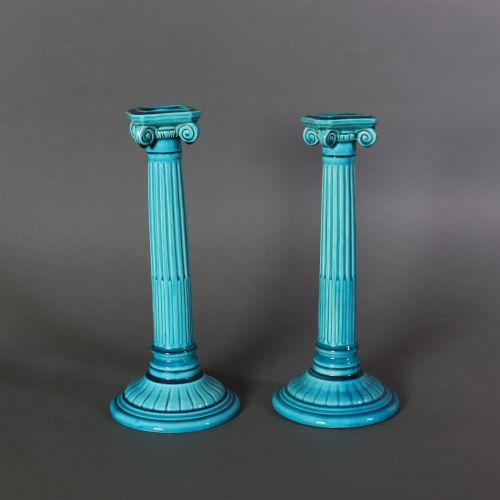
Blue ceramic holders encompass functional desk accessories, candlesticks, and umbrella stands produced across several centuries and continents. When searching for blue ceramic holders, buyers encounter utilitarian vessels and decorative display pieces alike.
The selections span English earthenware, continental porcelain, and Chinese export pieces. Forms range from inkwells and quill holders to large jardiniere stands and brush pots.
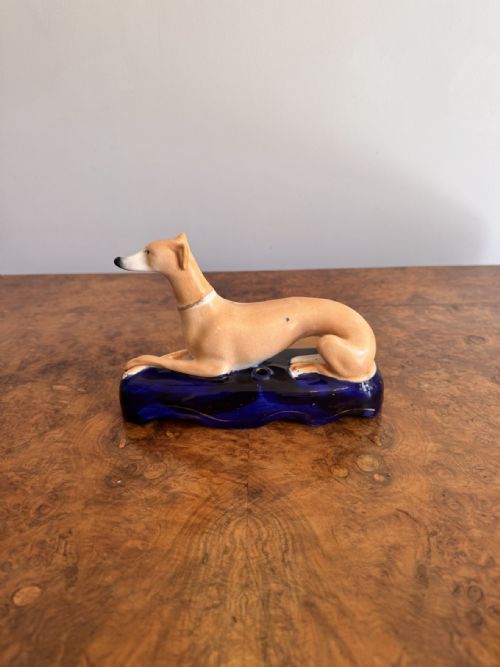
Dated examples stretch from the seventeenth century through the Art Deco era of the nineteen-thirties. Victorian Staffordshire figures and Dutch Delft vessels appear frequently among these offerings.
How they were made
Potters shaped these items from ceramic, porcelain, earthenware, and ironstone, applying glaze, enamel, and occasionally gold leaf for surface decoration. Tin-glazed earthenware provided a smooth canvas for painted pigments.
Techniques varied from the hand-poured ironstone of nineteenth-century factories to the delicate powder-blue and polychrome glazes of Qing Dynasty porcelain. Kiln firing methods determined the depth of the blue colour and the durability of the glaze.
Blue Ceramic Holders Retail Price Guide 2026
Typical asking prices for blue ceramic holders among the pieces listed under this phrase on Sellingantiques today, from the lower quarter to the upper quarter. They describe what is for sale here now, not the wider market.
Listings feature items spanning the seventeenth to the twentieth century, incorporating earthenware, porcelain, and tin-glazed ceramic.
What varies in quality
The refinement of the painted decoration distinguishes finer pieces from standard domestic wares, particularly in hand-painted Delftware and porcelain brush pots. Crispness in moulded Staffordshire figures and well-defined transfer printing indicate higher workshop standards.
Preservation of the original glaze and minimal kiln distortion elevate certain candlesticks and inkwells above contemporaries. The presence of authentic period marks or attribution to established potteries adds historical weight to the object.
Burmantofts Faience·Théodore Deck·William Adams & Sons·Spode·Royal Doulton·Clement Massier·Wedgwood·Fukagawa
The Blue Ceramic Holders Glossary
- Bitong
- A Chinese brush pot, typically cylindrical, used by scholars to hold writing brushes. These vessels often feature carved or painted blue and white decoration.
- Jardiniere
- A large ceramic pot or receptacle designed to hold growing plants or flowers. They frequently match a pedestal or stand.
- Tulipiere
- A vessel with multiple spouts or sockets designed for displaying cut tulip bulbs or stems. Originating in the Netherlands, they utilise delftware and porcelain bodies.
- Jasperware
- A type of fine stoneware developed by Josiah Wedgwood, characterised by a matte surface and contrasting raised white reliefs against a coloured ground, often blue.
- Quill holder
- A small desk accessory fashioned to keep writing quills or pens within reach. They often take figurative animal forms in Staffordshire pottery.
Blue Ceramic Holders: Frequently Asked Questions
What were blue ceramic holders used for?
These vessels served diverse domestic and scholarly functions, from holding writing implements on desks to containing candles and floral arrangements in parlours.
Desk accessories organised ink and quills, while larger jardinieres and umbrella stands managed plants and walking sticks in hallways.
How do I date a ceramic holder?
Dating relies on stylistic markers, potting techniques, and any factory marks stamped or painted on the base. Comparing the glaze characteristics and subject matter to known periods helps narrow the timeframe.
Nineteenth-century pieces often display registration marks or factory stamps, whereas earlier pieces require analysis of body weight and pigment composition.
Are these holders suitable for daily use?
Many sturdy earthenware and ironstone pieces remain robust enough for light modern use, such as holding pens or dried botanicals.
Fragile porcelain or antique Delftware warrant more careful handling, often serving better as decorative display items than working desk accessories.
How do English and Chinese holders differ?
English examples frequently reflect domestic Victorian tastes, featuring transfer-printed patterns, figurative animal designs, and utilitarian forms like inkstands.
Chinese pieces, such as Qing Dynasty brush pots, often showcase sophisticated porcelain bodies with powder-blue or cobalt painted scenes intended for scholar's studios.