
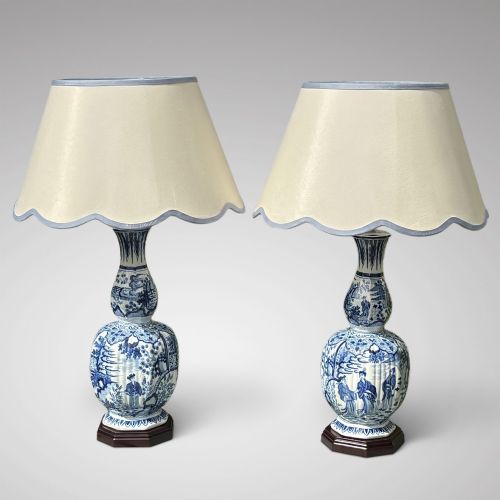


Blue Ceramic Bedside Lamp
A blue ceramic bedside lamp brings colour and character to a room, turning transformed jars and vases into warm lighting.
Blue Ceramic Bedside Lamp
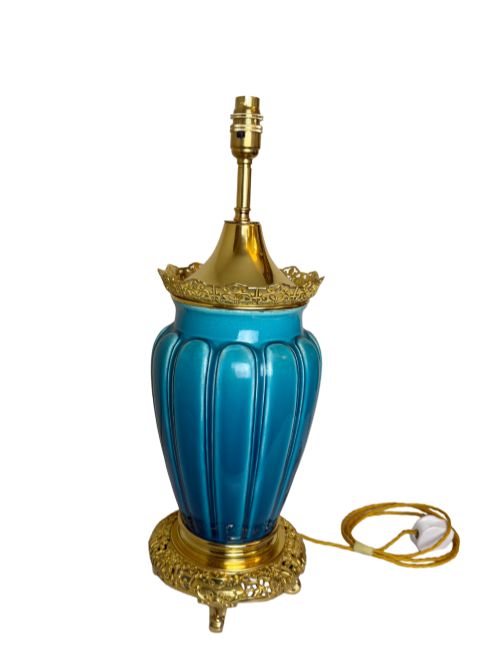
A blue ceramic bedside lamp is typically created by converting traditional vessels such as ginger jars, vases, and apothecary jars into functional lighting. These pieces span periods from the mid-nineteenth century through the art deco era, incorporating styles like Chinoiserie, Delftware, and Japanese Meiji designs.
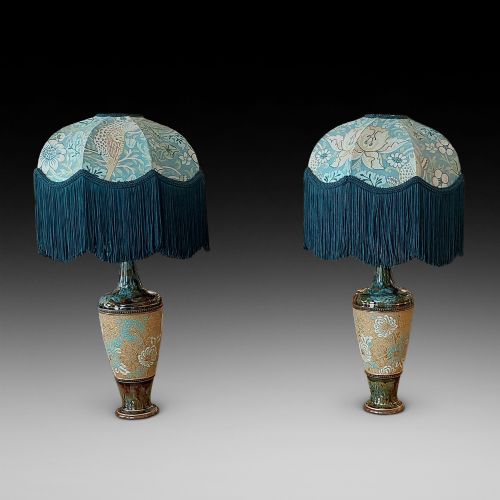
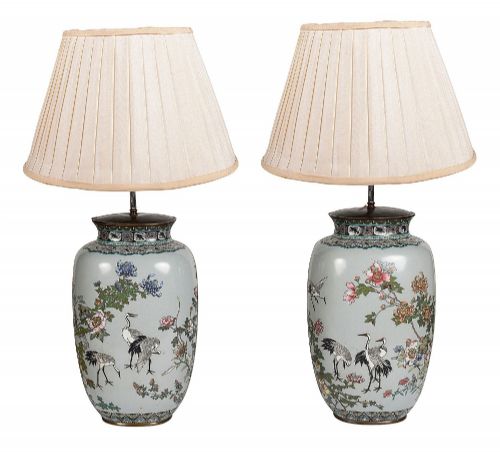
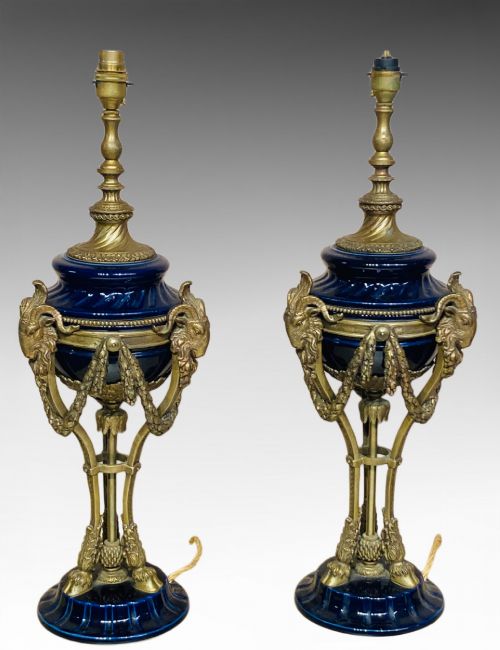
The selection on this page relies heavily on Chinese and Japanese blue and white porcelain alongside European ceramics, mounted with brass, gilt bronze, or ormolu bases. Buyers will frequently encounter matched pairs originating from the nineteenth century, often paired with handmade fabric or silk shades.
How they were made
The bodies of these lamps begin as ceramic, porcelain, or earthenware vessels, hand-painted or glazed in various shades of blue before undergoing high-temperature firing. Artisans then fitted these vessels with metal mounts in brass, gilt bronze, or ormolu to provide structural stability and house electrical or original burner components.
Many examples started life as ginger jars, tobacco jars, or vases that were later adapted into lamps, sometimes retaining their original lids or incorporating bespoke wooden and fabric elements such as handmade silk shades.
Several heavy tobacco jars from Royal Doulton have retired from storing leaf to illuminate bedside tables.
What varies in quality
Quality rests in the crispness of the blue glaze, the detail of the hand-painted brushwork on the porcelain, and the weight of the metal mounts. Pieces displaying intricate Chinoiserie scenes or finely cast ormolu trim stand apart from simpler glazed earthenware bodies.
The integrity of the conversion also dictates the standard of the piece, particularly where original vessel forms are preserved without compromising the balance and proportion of the assembled lamp.
The Blue Ceramic Bedside Lamp Glossary
- Ormolu
- Gilded bronze mounts used to decorate the bases and necks of ceramic vessels. This technique was popular in French and nineteenth-century decorative pieces.
- Ginger jar
- A storage jar with a broad shoulders and a rounded body, frequently converted into a table lamp. These often feature traditional blue and white Chinese designs.
- Cloisonné
- An enamelwork technique where metal wire creates raised barriers filled with coloured paste. Japanese examples from the late nineteenth century frequently utilise this method.
- Crackware
- A ceramic glaze purposely patterned with a network of fine cracks during the cooling process. It appears on nineteenth-century Chinese porcelain bodies.
Blue Ceramic Bedside Lamp: Frequently Asked Questions
Are these lamps newly made?
The ceramic bodies and vases forming these lamps originate from the nineteenth and early twentieth centuries. They have been adapted from earlier vessels into functional bedside lighting.
While the wiring and fittings are updated for modern use, the main body retains its historical period and manufacture.
Can I find matching pairs?
Several listings feature matched pairs of lamps, particularly those converted from nineteenth-century Japanese vases or Delft jars. These provide symmetrical lighting for bedside tables.
Single pieces also appear frequently, often originating as individual Chinese ginger jars or apothecary vessels.
What shades come with them?
Many lamps are supplied with handmade fabric or silk shades designed to complement the proportions of the ceramic base. These shades soften the light output for bedroom use.
Some pieces are sold as bases only, allowing you to select a shade that suits your interior colour scheme.
How do I date the ceramic?
Dating relies on the style of the blue glaze, the type of porcelain body, and any associated metal mounts like brass or ormolu. Nineteenth-century pieces often show characteristic hand-painted brushwork.
Later art deco and early twentieth-century examples display cleaner geometric influences or distinct factory marks.