
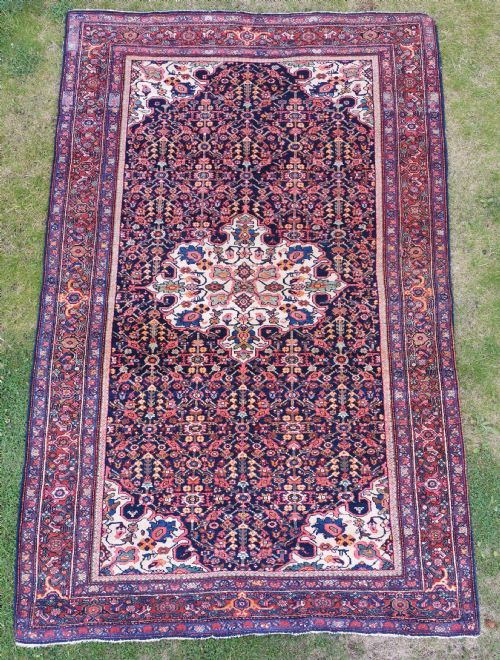
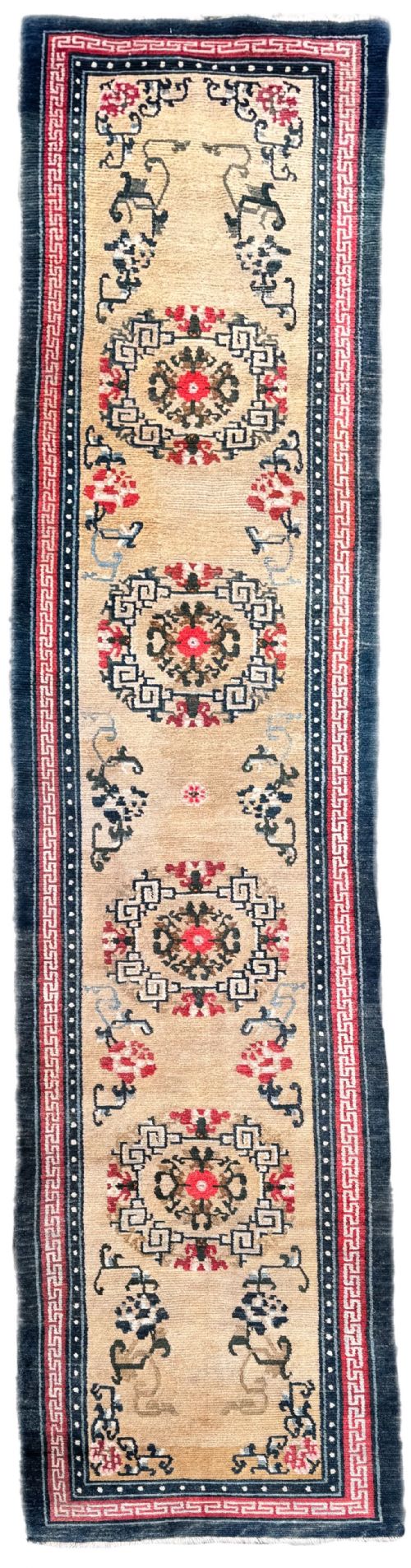
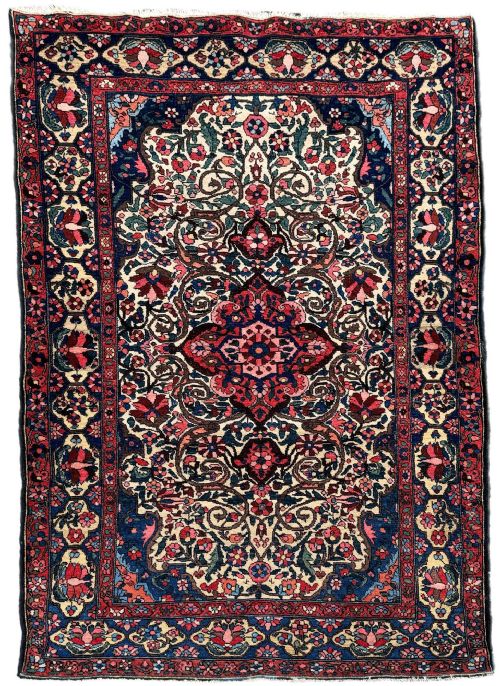
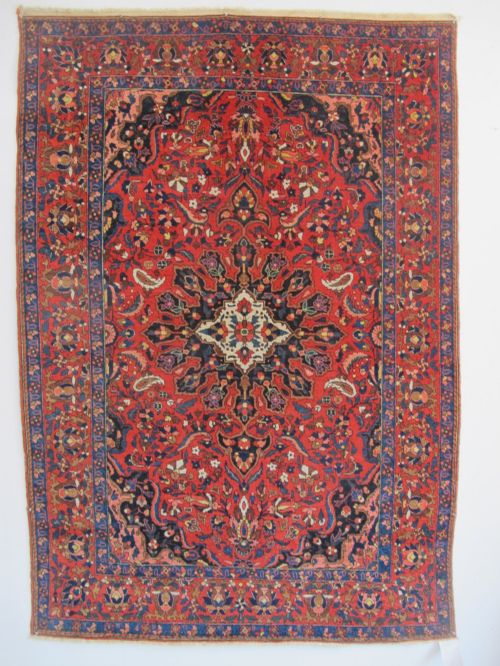
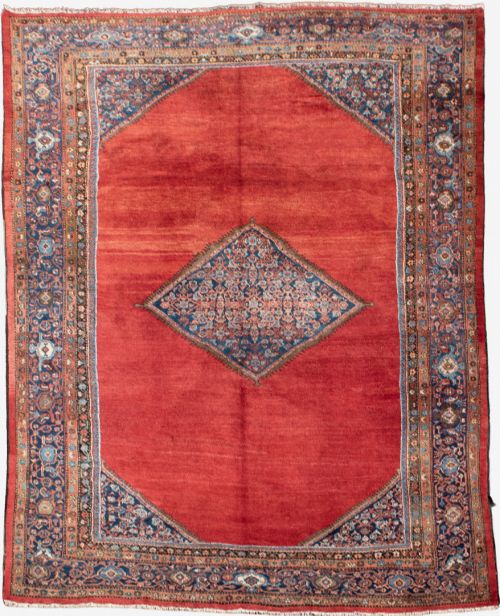
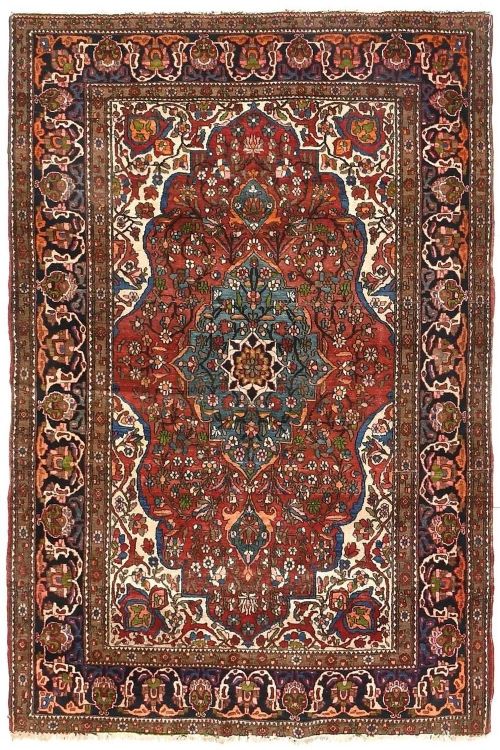
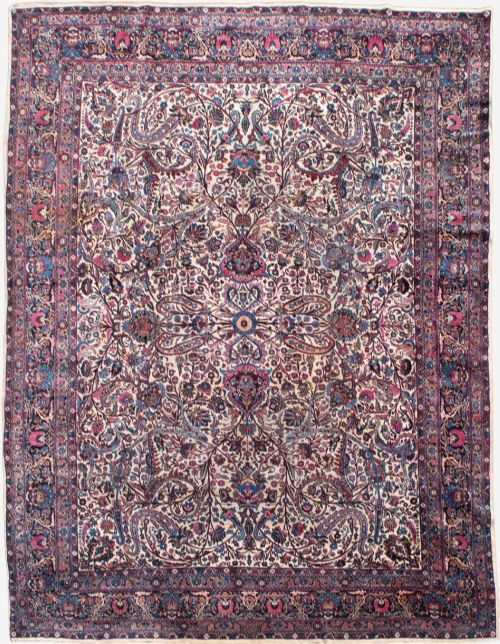
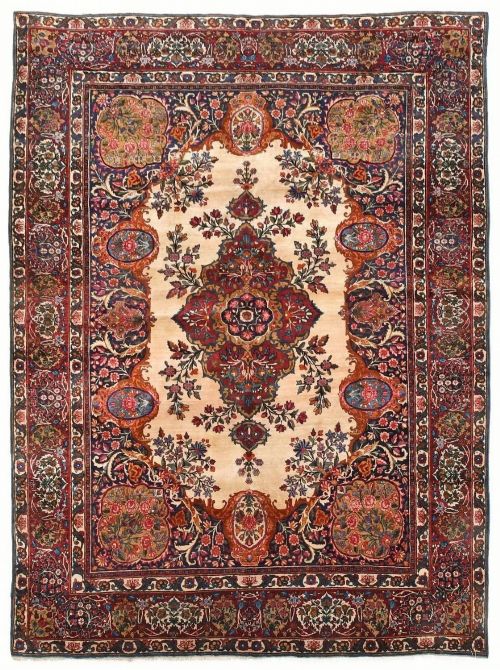

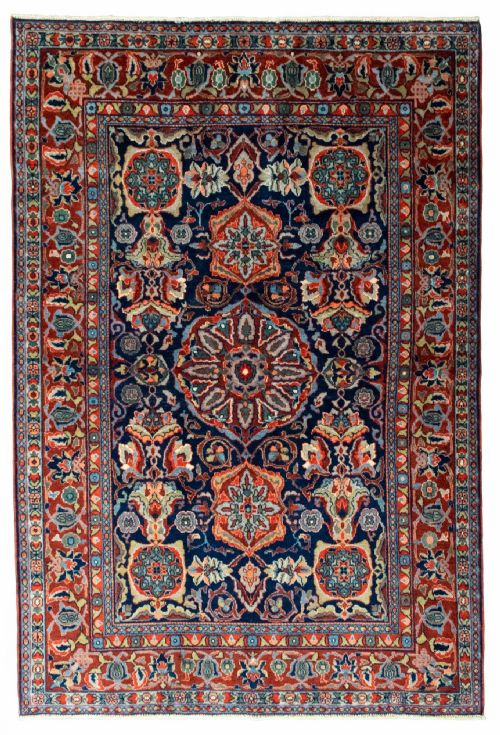


Blue Central Medallion Rug
A blue central medallion rug anchors a room with a traditional geometric or floral focal point framed by rich indigo and azure fields.
Blue Central Medallion Rug
A blue central medallion rug draws the eye to a distinct focal ornament set against contrasting fields of wool and cotton. These pieces emerge predominantly from Persian weaving traditions alongside Tibetan and Ushak workshops.
The inventory on this page spans from the late nineteenth century through to the mid twentieth century, encompassing room-size carpets, area rugs, and compact bag faces. Village and city workshops alike utilise the classic medallion format to structure complex floral or tribal motifs.
Materials and construction
Weavers construct these textiles primarily with hand-knotted wool foundations supported by cotton warps and wefts, occasionally incorporating silk highlights for definition. Natural dyes provide the enduring depth of the blue tones seen across the pieces.
Specialised regional variations incorporate soft kork wool or angora wool, which contribute a distinct tactile quality to the pile. The density of the knots varies between fine city workshop carpets and heavier village tribal pieces.
Assessing quality and craftsmanship
Quality rests in the precision of the knotting and the complexity of the medallion geometry relative to the overall field. Finer wools and stable natural dye palettes elevate certain rugs above standard commercial village productions.
The integrity of the foundation threads and the uniformity of the pile determine the longevity of each carpet. Master weavers achieve a sharper definition in the central motif through tighter packing of the foundation.
The Blue Central Medallion Rug Glossary
- Medallion
- The central ornamental motif placed in the middle of the rug field. It serves as the primary visual anchor for the surrounding design.
- Warp
- The vertical threads stretched tightly on the loom before knotting begins. Cotton is the most common material used for this structural base.
- Weft
- The horizontal threads passed alternately over and under the warp threads after each row of knots. They stabilise the structural integrity of the weave.
- Pile
- The surface of the rug formed by the cut ends of knotted yarn. Its depth and density determine how the carpet handles foot traffic.
- Natural Dyes
- Colourants derived from plants, insects, and minerals rather than synthetic compounds. They produce the varied, subtle shades found in older textiles.
Blue Central Medallion Rug: Frequently Asked Questions
How do I place a medallion rug?
Centre the rug beneath a main piece of furniture such as a coffee table or dining set to let the central motif draw the eye.
Allow enough surrounding floor space to frame the outer borders properly without crowding the room.
Are these rugs durable enough for hallways?
Longer runner formats and sturdily knotted village rugs withstand regular foot traffic when paired with a quality underlay.
Delicate silk highlights or antique city carpets benefit from placement in lower-traffic zones to preserve the pile.
How do I clean an antique rug?
Vacuum gently without using a rotating brush roll to prevent catching the hand-knotted wool pile.
Consult a professional textile conservator experienced in antique oriental carpets for deep cleaning and repairs.
How can I tell workshop rugs apart?
City carpets often feature intricate floral curves and dense knotting derived from established urban design centres.
Village and tribal pieces display geometric abstraction, bolder colour contrasts, and coarser structural foundations.