





Blue Art Nouveau Vase
A blue art nouveau vase brings the flowing lines and organic motifs of the turn of the twentieth century directly into a room.
Blue Art Nouveau Vase
When you search for a blue art nouveau vase, you encounter ceramic, stoneware, porcelain and glass vessels originating primarily from the late nineteenth and early twentieth centuries. The pieces span periods from the Victorian era through the 1920s, encompassing distinct regional interpretations of the aesthetic.
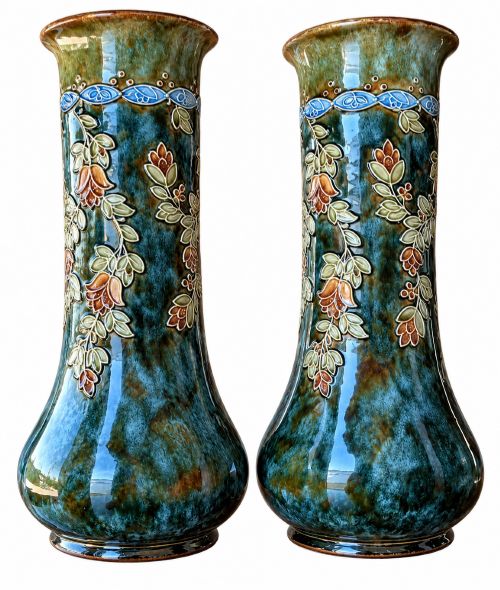
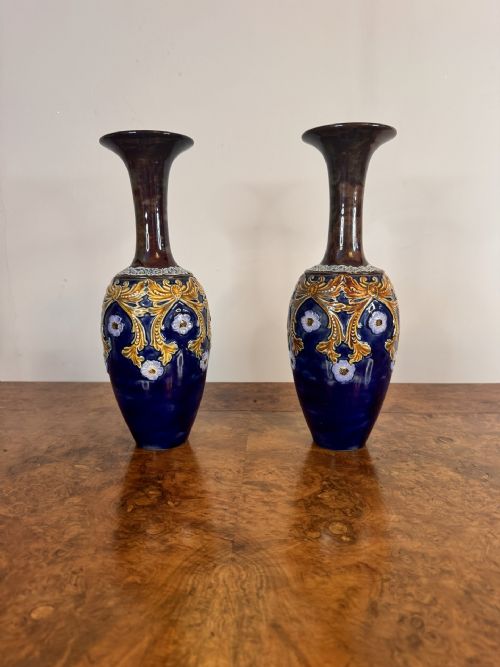
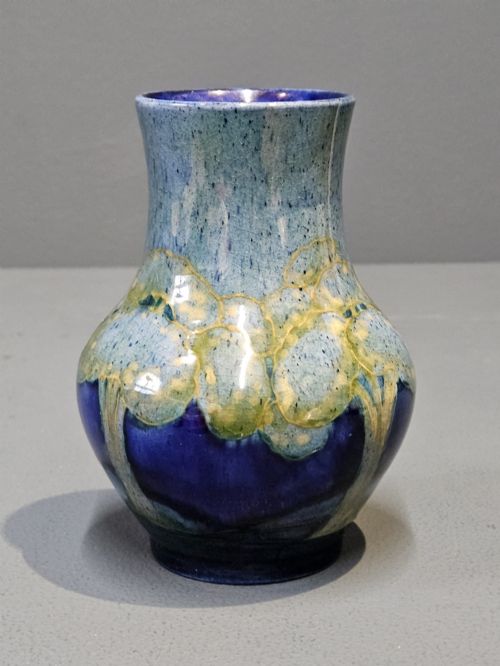
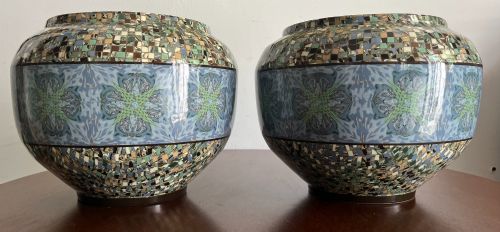
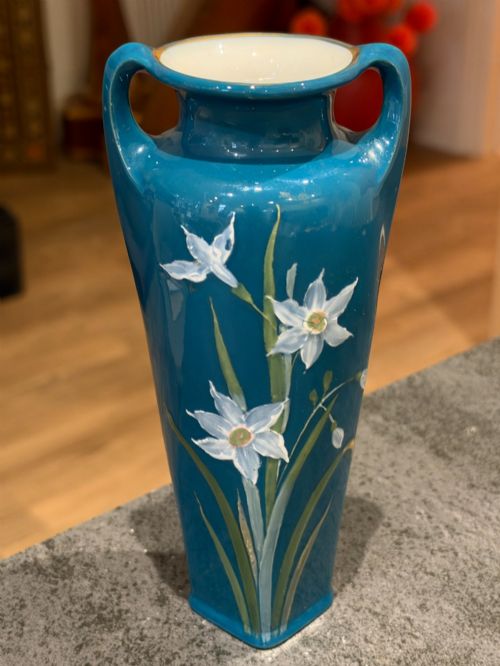
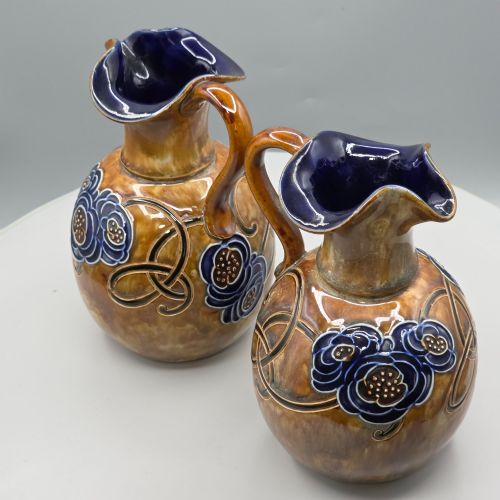
The form most frequently met on this page is the earthenware or stoneware vase, often created by prominent English potteries or continental glassmakers. These vessels range from small bud vases and bulbous baluster shapes to tall decorative jugs and twin-handled designs.
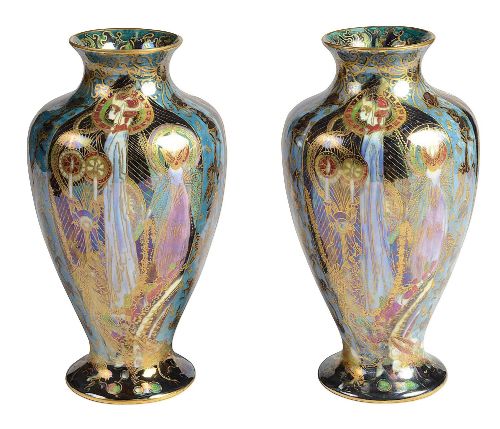
Makers from Britain, France and Austria dominate the selection, utilising cobalt, turquoise and iridescent glazes to achieve striking blue colourways. Collectors find both paired decorative pieces and individual cabinet examples reflecting the arts and crafts, secessionist and art nouveau movements.
How they were made
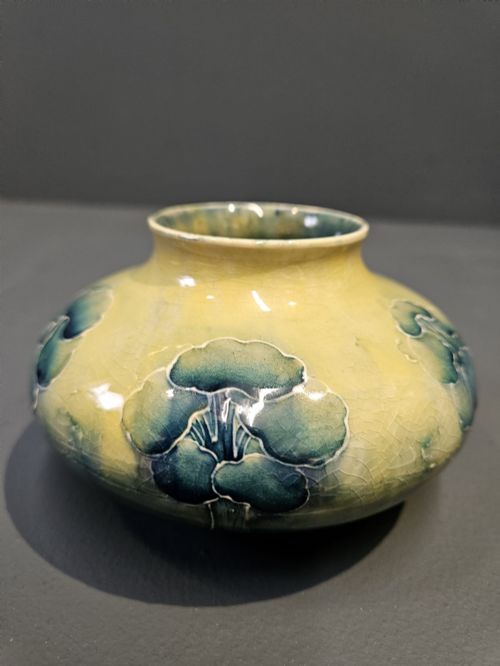
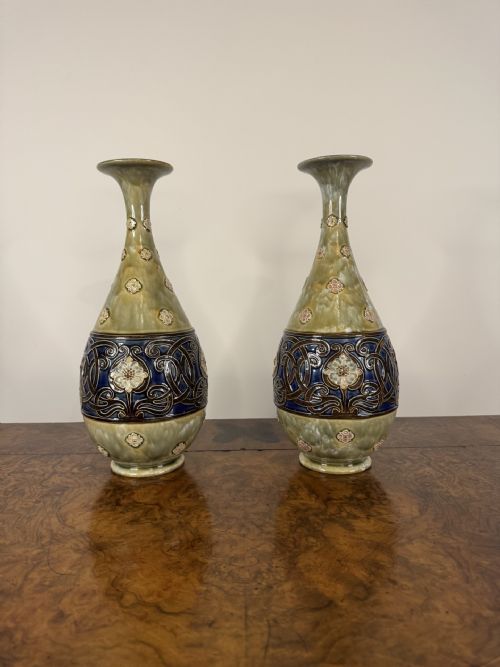
Pottery examples rely on earthenware, stoneware and porcelain bodies shaped on the wheel or cast in moulds, then finished with reactive glazes, lustres and hand-painted floral motifs. Stoneware pieces often incorporate intricate incised or slip-trailed patterns before firing.
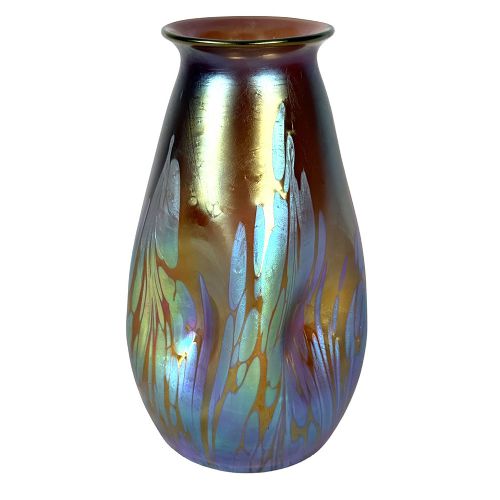
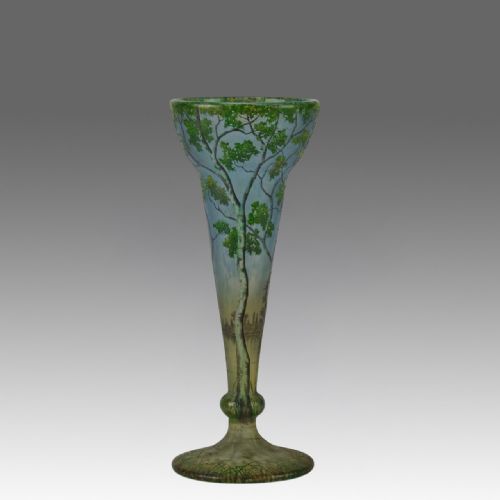
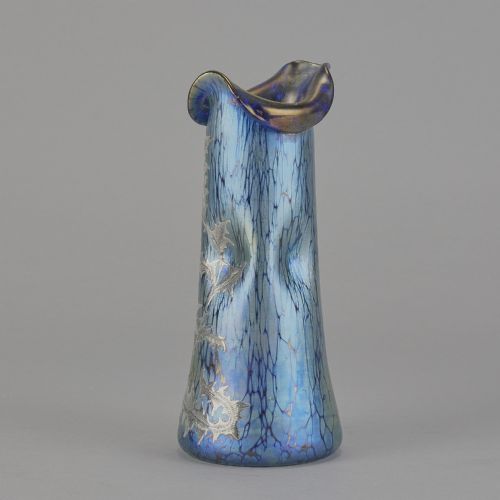
Glass vessels utilise cameo techniques, where multiple layers of coloured glass are acid-etched to reveal contrasting landscapes and botanical designs. Iridescent finishes and silvered treatments, such as the papillon effect, are achieved through chemical vapour applications during the hot-working stage.
Blue Art Nouveau Vase Retail Price Guide 2026
Typical asking prices for blue art nouveau vase among the pieces listed under this phrase on Sellingantiques today, from the lower quarter to the upper quarter. They describe what is for sale here now, not the wider market.
Some glass vases capture entire Vosges landscapes and aquatic water lilies frozen forever in multi-layered cameo glass.
What varies in quality
The distinction between standard production and the top of the range lies in the depth and complexity of the glaze chemistry and the precision of the hand-decoration. Superior pieces display rich, multi-layered lustres or finely executed cameo carving rather than flat, uniform colour.
Designer attribution and factory provenance heavily influence standing, with signed or specially marked items commanding greater interest. The crispness of moulded relief work and the successful integration of metal overlays, such as pewter or silver, separate exceptional studio output from routine commercial output.
Royal Doulton·Moorcroft·Loetz·Emile Galle·Ernst Wahliss
The Blue Art Nouveau Vase Glossary
- Baluster
- A vase form characterised by a rounded body that tapers toward the neck, resembling an architectural baluster. This shape provides a stable base while offering ample surface area for decorative glazes.
- Cameo Glass
- A method of glassmaking utilising multiple fused layers of different colours that are subsequently carved or acid-etched away. This technique creates high-relief pictorial designs across the vessel surface.
- Lustre
- A type of ceramic glaze containing metallic salts that produce an iridescent, rainbow-like sheen upon firing. Wedgwood Fairyland Lustre represents an elaborate development of this decorative finish.
- Papillon
- An iridescent glass finish developed by Loetz that creates a mottled, butterfly-wing effect across the surface. The treatment catches light to shift between blue and silver tones.
- Stoneware
- A dense, impermeable ceramic fired at high temperatures that allows for robust vessel forms. It accepts salt-glazes and rich cobalt decoration effectively.
Blue Art Nouveau Vase: Frequently Asked Questions
What periods do these vases cover?
The pieces span from the late nineteenth century through the 1920s, capturing the height of the international art nouveau movement and subsequent secessionist styles.
Most examples date between 1890 and 1920, reflecting manufacturing periods in Britain, France and Austria.
How were these blue vases used originally?
These vessels functioned primarily as decorative ornaments for domestic interiors, displayed on mantelpieces, sideboards and occasional tables.
Larger baluster and jug forms held cut flowers, while smaller bud vases and miniature pieces served as standalone cabinet displays.
How do I care for antique art nouveau glass?
Keep glass pieces out of direct, prolonged sunlight to prevent any fading of iridescent surfaces or delicate enamelling.
Clean them gently with a dry or barely damp microfiber cloth, avoiding harsh chemical detergents and submersion in hot water.
How can I tell ceramic types apart?
Earthenware and porcelain bodies differ in weight, translucency and resonance when tapped lightly, with porcelain offering a higher pitch.
Stoneware is heavier, vitrified and completely waterproof even before glazing, whereas earthenware requires an intact glaze layer to hold water.