






Blue Apothecary Jars
Blue apothecary jars are striking storage vessels from past centuries, offering collectors rich pigments and historic pharmacy forms that display wonderfully today.
Blue Apothecary Jars
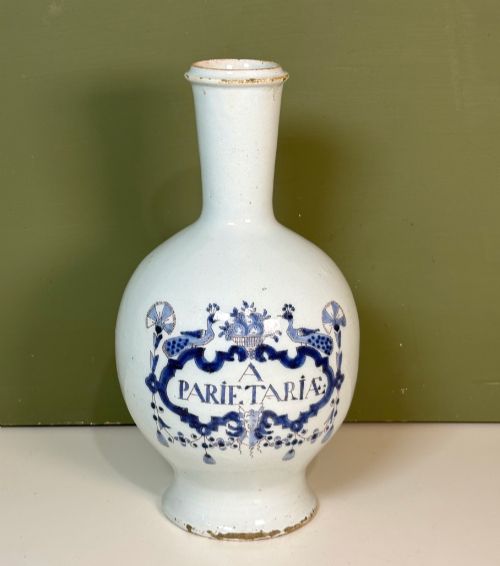
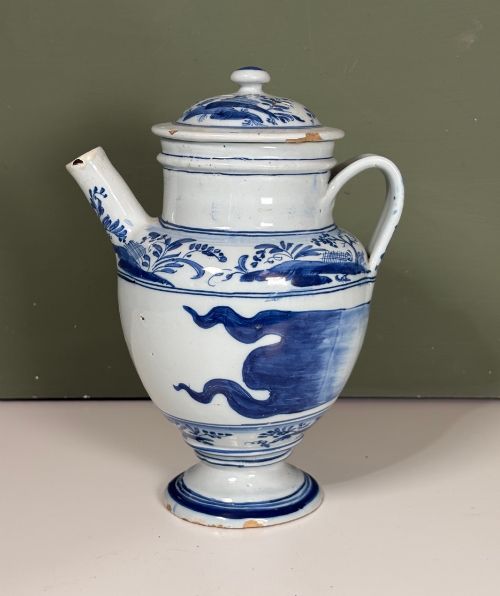
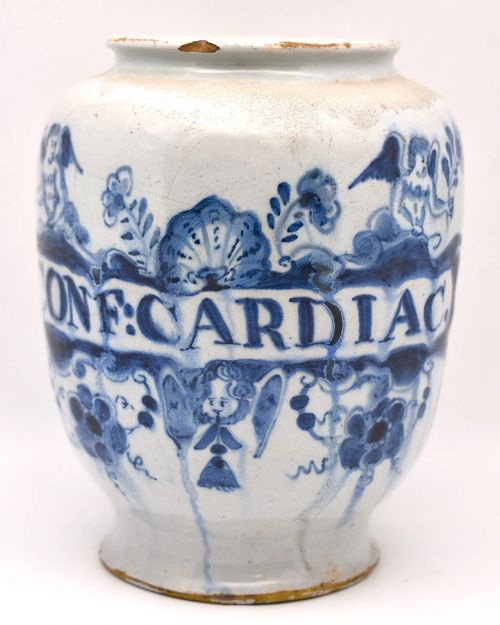
When you search for blue apothecary jars, you encounter historic vessels created to hold medicines, dry drugs, and chemical preparations in pharmacies and dispensaries. The pieces on this page span the seventeenth, eighteenth, and nineteenth centuries, taking the form of albarellos, cylindrical drug jars, and blown glass bottles.
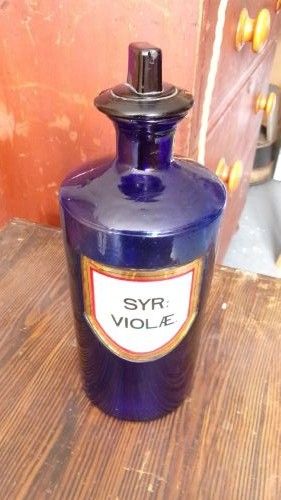
You are most likely to meet tin-glazed earthenware examples from English, Dutch, and Italian potteries alongside deep cobalt glass bottles from the Victorian era. These objects range from tall lidded jars bearing painted labels to heavy bottles fitted with glass stoppers.
How they were made
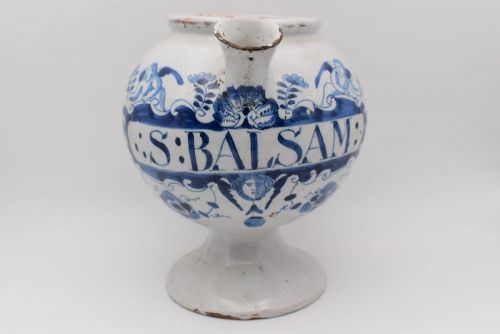
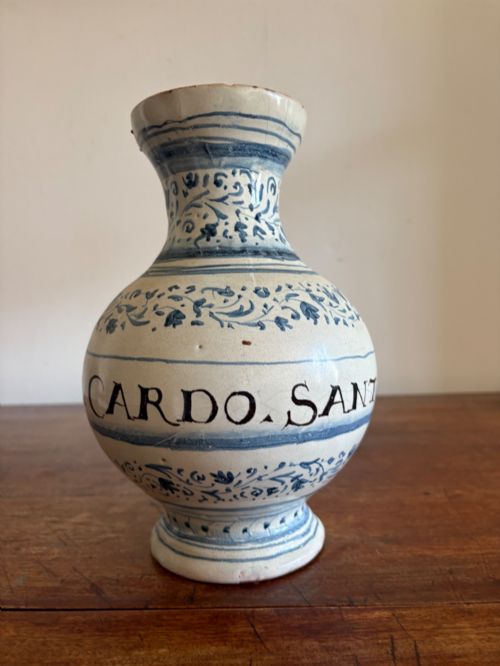
Potters shaped tin-glazed earthenware and majolica bodies by hand on the wheel before applying an opaque white tin glaze that accepted cobalt pigment decoration. Artisans painted botanical motifs, cherubs, and pharmacy labels directly onto this absorbent surface before a final kiln firing fixed the blue design.
Glassmakers created chemists' bottles by free-blowing or mold-blowing deep cobalt glass into substantial vessels, often adding ground-glass stoppers. Workshops then applied paper or direct-enameled white labels to identify the medicinal contents.
Blue Apothecary Jars Retail Price Guide 2026
Typical asking prices for blue apothecary jars among the pieces listed under this phrase on Sellingantiques today, from the lower quarter to the upper quarter. They describe what is for sale here now, not the wider market.
Object forms on this site include albarellos, drug jars, chemists' bottles, lidded vases, and table lamps.
What varies in quality
Quality rests in the crispness of the cobalt painting, the proportion of the ceramic form, and the survival of original components like lids and stoppers. Early tin-glazed pieces with detailed hand-painted panels command attention through artistic execution rather than mere age.
Glass versions distinguish themselves by the depth of the cobalt colour, the weight of the metal, and the clarity of any surviving labels or matching stoppers. The visual impact depends entirely on how cleanly the cobalt pigment took to the glaze or glass.
The Blue Apothecary Jars Glossary
- Albarello
- A cylindrical earthenware jar used in pharmacies to hold ointments and dry drugs. This distinct waist-pinched form originated in the Near East and became common across Italian and Dutch potteries.
- Tin-Glazed Earthenware
- Pottery covered with a lead glaze made opaque by the addition of tin oxide. This surface provided a smooth white ground for cobalt blue painting.
- Wet Drug Jar
- A specialised pharmacy vessel designed with a spout or wider mouth to dispense liquid medicines and syrups. These often bear abbreviated Latin inscriptions denoting the contents.
- Majolica
- Italian tin-glazed earthenware decorated with colourful metal oxides on an opaque white glaze. Pieces frequently feature rich blue and white narrative scenes or floral scrollwork.
- Cobalt Pigment
- A metallic oxide used by ceramic painters and glassmakers to achieve deep, stable blue tones under high kiln temperatures. It remains vibrant across centuries of exposure.
Blue Apothecary Jars: Frequently Asked Questions
What did pharmacies store in these jars?
Apothecaries used these vessels to hold dried herbs, powders, resins, and liquid medicines necessary for compounding medical treatments. The specific contents often appear on the painted or enameled label.
Larger jars held bulk supplies, while smaller albarellos kept expensive or frequently dispensed ointments close at hand on the dispensary counter.
How do I date a ceramic drug jar?
Dating relies on stylistic shifts in the tin glaze, the profile of the ceramic body, and the lettering style of the painted drug label. Seventeenth and eighteenth-century examples typically show softer earthenware bodies and hand-brushed cobalt lettering.
Later nineteenth-century pieces display different glaze formulations and more standardised industrial shapes. Comparing the potting technique provides the clearest chronological anchor.
Are glass and ceramic jars from the same period?
Tin-glazed earthenware and majolica jars largely dominate the seventeenth and eighteenth centuries, while deep cobalt glass bottles become prevalent during the Victorian era. Both types served the same function in the apothecary shop but reflect changing manufacturing capabilities.
Ceramic vessels were standard for dry goods and ointments, whereas glass containers better suited volatile liquids and chemicals.
How do I display these jars at home?
These vessels suit open shelving, mantelpieces, or dedicated display cabinets where their rich blue tones catch the light. Grouping different forms, such as pairing an albarello with a blown glass bottle, creates visual depth.
Keeping them away from direct heat sources protects the historic glaze and any surviving paper labels from environmental stress.