



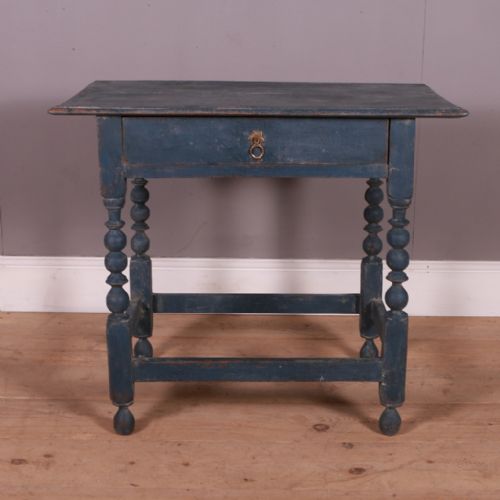
Blue End Table
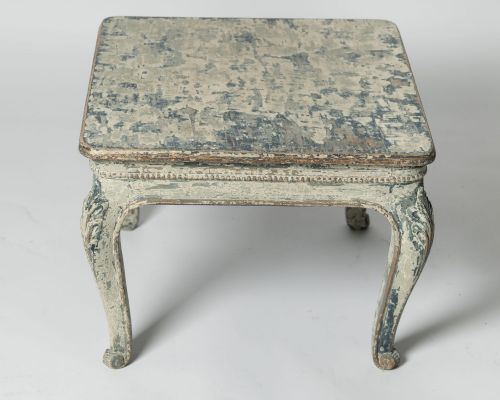
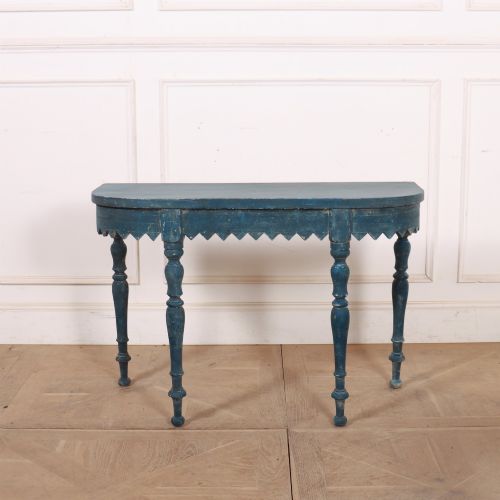
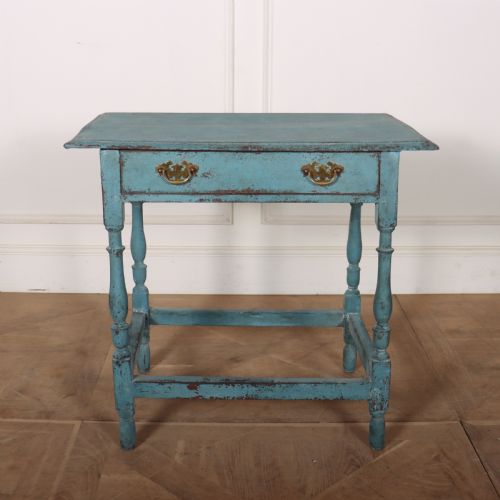
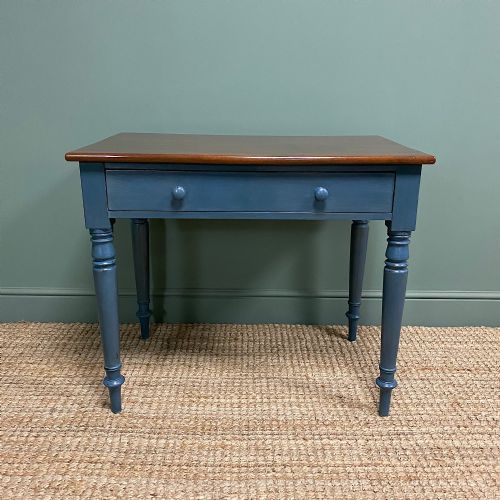
These blue antique end tables are painted occasional and side pieces offering compact surfaces and regional country character.
Blue End Table
A blue antique end table covers small functional surfaces including lamp tables, side tables, console tables, gueridons, and stands. These pieces are chosen to sit beside seating or against walls, providing a practical top while introducing a painted finish.
The selections span the eighteenth and nineteenth centuries, taking forms such as French Provincial, English Country, Scandinavian Country, Chinese Qing Dynasty, Neoclassical, and Georgian Country. Buyers meet painted pine tables most frequently alongside occasional lamp tables and side tables.
Origins stretch across England, France, Sweden, and China, bringing diverse regional joinery traditions to the form. Pieces range from simple pine side tables to marble-topped gueridons and stands featuring inset porcelain panels.
How they were made
Construction relies upon traditional timber framing utilising pine, hardwood, and various timbers combined with applied paint finishes. Joinery varies from country workshop methods to more formal cabinet-making techniques.
Surface decoration relies heavily on paint applied to wood bases, sometimes paired with inset porcelain panels or marble tops. Brass hardware occasionally provides structural or decorative detail on console and side tables.
Listings include painted pine, hardwood, marble, and porcelain across eighteenth and nineteenth-century periods.
What varies in quality
Quality rests upon the integrity of the original timber frame and the character of the painted surface. Pieces retaining their early or original paint layers command greater interest than those stripped or heavily refinished.
Refinement of form separates standard country utility pieces from finer urban or neoclassical examples. The inclusion of specialised materials like inset porcelain panels or marble tops elevates a piece beyond basic timber construction.
The Blue End Table Glossary
- Gueridon
- A small French table, often circular, designed to hold a light or ornament. These pieces frequently feature marble tops and decorative supports.
- Console table
- A table designed to stand against a wall, sometimes secured to it. Eighteenth and nineteenth-century examples often feature shaped ends or bow fronts.
- Lamp table
- A compact occasional table intended to support a lamp. These small surfaces are common in eighteenth-century painted country variants.
- Occasional table
- A general term for a small, moveable table used intermittently in a room. Side tables and lamp tables fall into this category.
Blue End Table: Frequently Asked Questions
What is a blue antique end table used for?
These pieces serve as small functional surfaces beside seating or against walls in living spaces and hallways. They hold lamps, decorative objects, and everyday items while adding colour to a room.
Historically, forms like lamp tables and gueridons were designed for specific lighting or display tasks. Today, buyers use them flexibly throughout the home for similar surface needs.
Where were these tables made?
The available pieces originate from various European and Asian regions, including England, France, Sweden, and China. Each region imparted distinct regional characteristics to the furniture.
French and Swedish examples frequently exhibit provincial painted finishes, while English pieces range from country pine to bow end console formats. Chinese stands introduce entirely different decorative traditions through inset porcelain panels.
How do I care for a painted antique table?
Maintenance involves protecting the aged painted surface from excessive moisture, direct sunlight, and heat. Dusting with a soft, dry cloth preserves the finish without abrasive cleaners.
Timber and paint expand and contract with humidity changes, so placing tables in stable environmental conditions prevents wood movement. Gentle care ensures the historic surface remains intact.