






Blue and White Jardiniere
A blue and white jardiniere brings botanical display into the room with cobalt pigment beneath glaze on ceramic or porcelain.
Blue and White Jardiniere
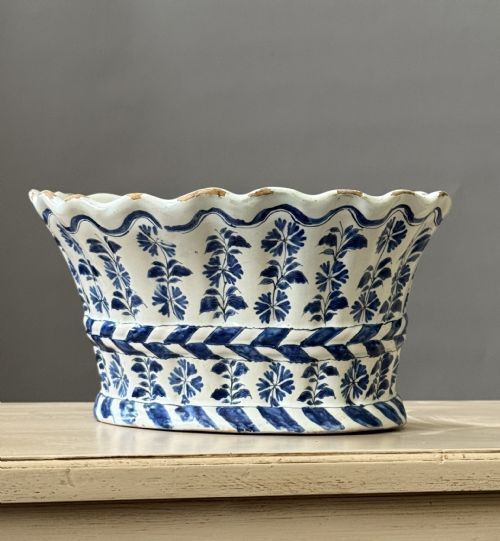
A blue and white jardiniere functions as a decorative plant pot or display vessel, appearing across eighteenth-century and nineteenth-century periods. These vessels emerge in ceramic, porcelain, stoneware, and tin-glazed earthenware forms.
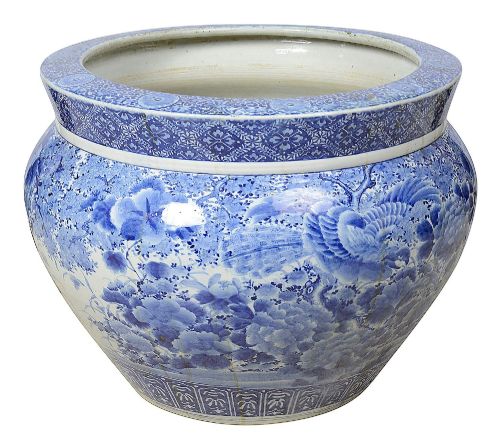
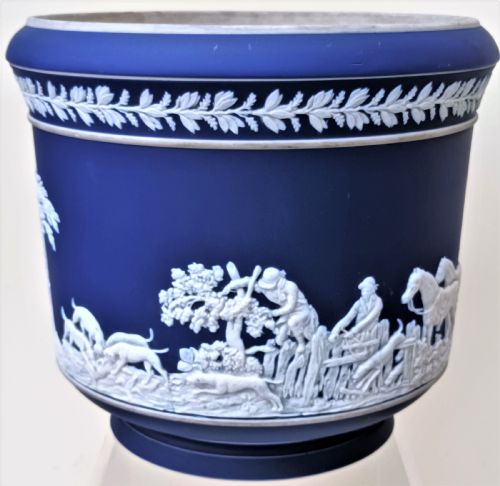
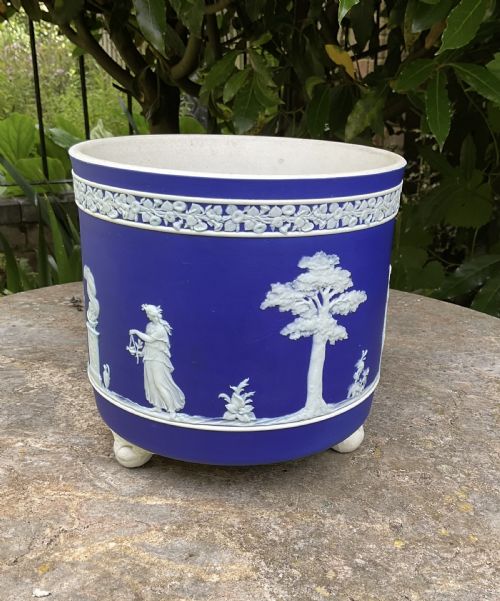
Makers shaped these planters through distinct cultural lenses, ranging from English Victorian jasperware and Delftware to Japanese Meiji period porcelain and Chinese export pieces. Buyers frequently encounter eighteenth-century Chinese export wares alongside nineteenth-century English and Japanese examples.
The decorative schemes span Chinoiserie motifs, Imari palettes, and Victorian neoclassical styling. Formats include traditional round planters, fish bowls, and bough pots designed to house indoor greenery.
Materials and construction
Potters applied cobalt underglaze to ceramic and porcelain bodies before firing at high temperatures to vitrify the material. Tin-glazed earthenware and stoneware provided alternative foundations for painted botanical motifs.
Jasperware relied on fine-grained stoneware bodies with contrasting applied white ceramic reliefs against blue grounds. Associated hardwood stands frequently accompanied Japanese porcelain planters to support the weight of the vessel.
Blue and White Jardiniere Retail Price Guide 2026
Typical asking prices for blue and white jardiniere among the pieces listed under this phrase on Sellingantiques today, from the lower quarter to the upper quarter. They describe what is for sale here now, not the wider market.
Listings feature porcelain, ceramic, stoneware, jasperware, and tin-glazed earthenware bodies decorated in cobalt underglaze.
Assessing quality
Depth and clarity of the cobalt underglaze separate standard production from superior painting. Crispness in moulded jasperware reliefs and finely potted porcelain walls indicate higher manufacturing standards.
Integrity of the glaze surface and absence of heavy firing distortions distinguish better-preserved examples. The precision of hand-painted Chinoiserie or Imari detailing governs the visual success of the piece.
William Adams And Sons·Wedgwood
The Blue and White Jardiniere Glossary
- Cobalt Underglaze
- A blue metallic oxide pigment applied to pottery before glazing and firing. This pigment withstands high temperatures without losing intensity.
- Jasperware
- A type of fine stoneware developed by English potteries featuring a matte surface. White ceramic figures and motifs are applied in relief against a solid blue ground.
- Chinoiserie
- European artistic styles reflecting Chinese decorative motifs. Artisans reinterpreted oriental landscapes and figures on ceramics and furniture.
- Delftware
- Tin-glazed earthenware produced in England and the Netherlands. The white opaque glaze receives painted cobalt decoration before a final clear firing.
- Imari
- Japanese porcelain decorated in underglaze blue and iron red with gold additions. Export wares combined these palettes for international markets.
Blue and White Jardiniere: Frequently Asked Questions
What is a blue and white jardiniere?
A blue and white jardiniere is a decorative pot designed to hold indoor plants or flowers. These vessels utilise cobalt pigment painted onto ceramic, porcelain, or stoneware surfaces.
Craftsmen across centuries produced these planters in various cultural styles, including English earthenware, Japanese porcelain, and Chinese export wares.
How were these planters used?
Owners placed these vessels on tables, plant stands, or hearths to display potted plants and botanical arrangements indoors. Larger fish bowls accommodated aquatic plants or goldfish in domestic interiors.
Many Japanese examples were paired with carved hardwood stands to elevate the planter and protect furniture surfaces.
How do I care for a ceramic jardiniere?
Protect antique ceramic and porcelain surfaces by placing a waterproof liner inside the vessel rather than planting directly into the unglazed interior base. Clean the exterior gently with a soft, dry cloth to avoid scratching the glaze.
Avoid exposing old earthenware or tin-glazed pieces to excessive moisture or sudden temperature changes.
How do I date a blue and white jardiniere?
Dating relies on examining the ceramic body, glaze characteristics, and decorative style. Eighteenth-century pieces often display tin-glazed earthenware or Chinese export porcelain traits, while nineteenth-century items frequently feature Victorian jasperware or Japanese Meiji period porcelain.
Maker marks and impressed stamps on the base provide additional chronological guidance.