


Blue and Red Porcelain Jar
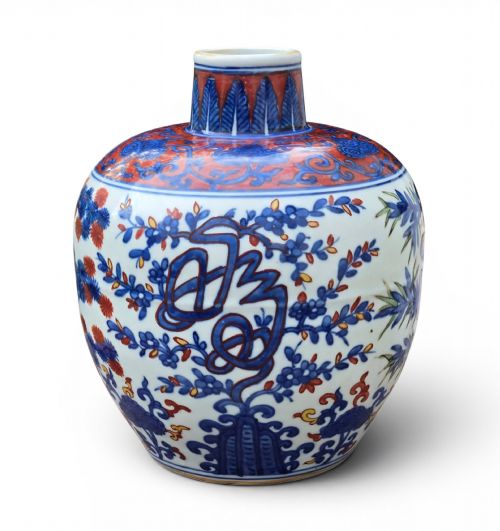
A blue and red porcelain jar combines the cobalt glaze and iron-red enamel traditions of East Asian and European workshops.
Blue and Red Porcelain Jar
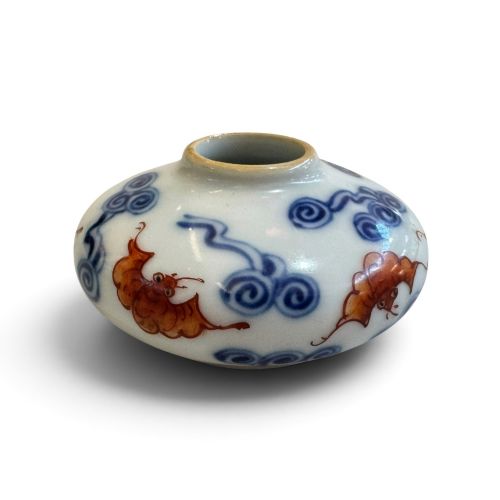
A blue and red porcelain jar encompasses lidded ginger jars, floor standing vessels, and scholar's objects originating from Chinese and Japanese kilns, alongside later European interpretations.
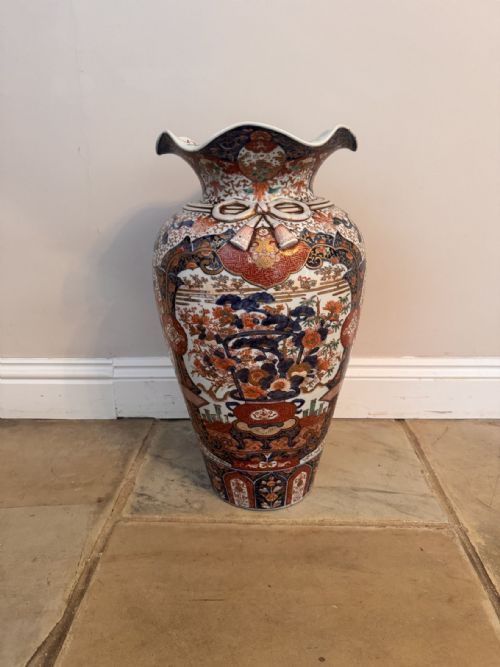
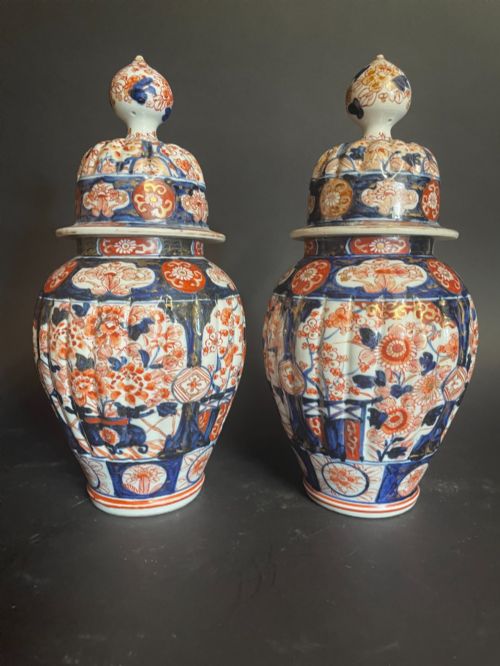
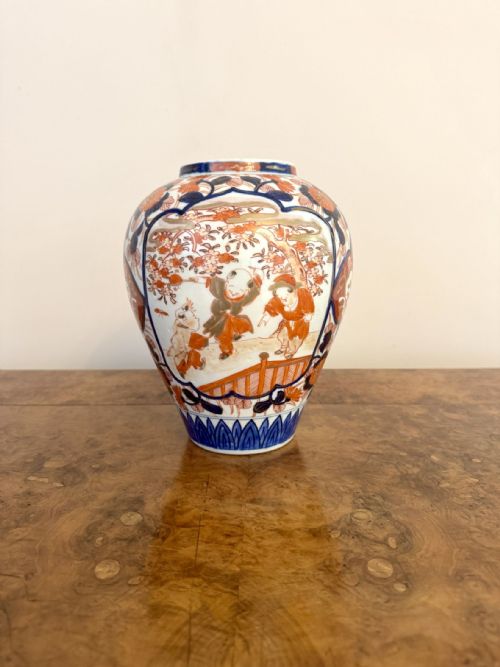
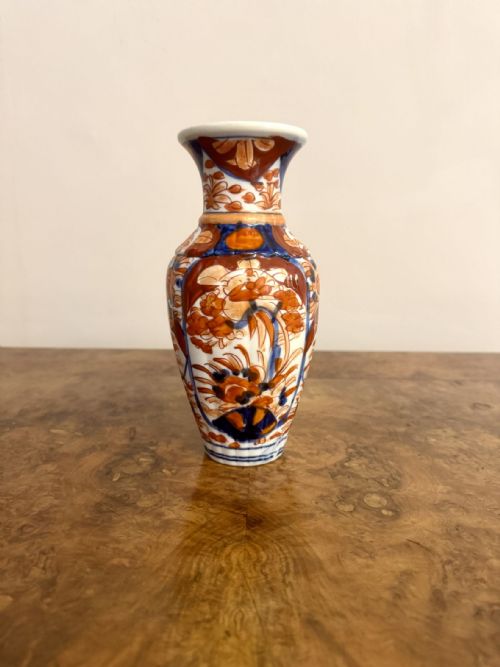
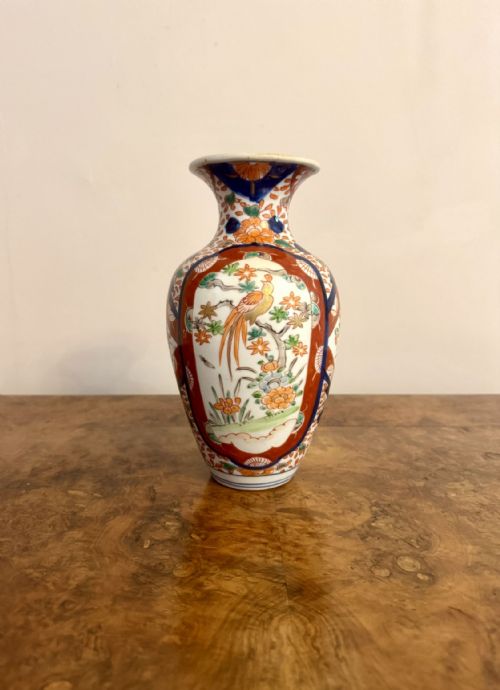
The pieces appearing most frequently on this page are Japanese Imari wares from the nineteenth century, characterised by underglaze cobalt blue and iron-red enamel pigments, often accented with gilding.
Buyers encounter forms ranging from double gourd vases and hexagonal vessels to covered garnitures, spanning periods from the sixteenth century to the Edwardian era.
Materials and production methods
Potters shaped fine porcelain bodies before applying cobalt glaze beneath a transparent layer, firing the pieces at high temperatures to achieve the deep blue tones.
Iron-red enamel and gold leaf or gilding were typically added over the glaze during a subsequent, lower temperature firing to secure the contrasting red and metallic details.
Listings span from sixteenth-century imperial pieces to Edwardian interpretations, incorporating porcelain, enamel, gold leaf, and cobalt glaze.
Distinctions in craftsmanship
Execution of the painted motifs separates standard production from superior examples, with finer pieces exhibiting precise brushwork in both the cobalt blue and the iron-red enamel.
The clarity of the porcelain body and the controlled application of gilding or gold leaf contribute significantly to the visual weight and finish of the vessel.
Masons·Samson
The Blue and Red Porcelain Jar Glossary
- Imari palette
- A decorative scheme utilising underglaze blue, iron-red enamel, and gold on a white porcelain ground. This style originated in Japanese kilns at Arita before influencing European makers.
- Ginger jar
- A storage vessel featuring a broad shoulders and a domed cover, historically used for spices and later adapted for ornamental display.
- Cobalt glaze
- A metallic oxide pigment applied prior to firing that produces a durable blue colour beneath a transparent porcelain glaze.
- Iron-red
- An enamel pigment derived from iron oxide applied over the glaze, yielding a distinctive rusty red hue that contrasts with blue underglaze.
- Garniture
- A set of matching vases and jars designed to be displayed together on a mantelpiece or cabinet top.
Blue and Red Porcelain Jar: Frequently Asked Questions
How do I care for my porcelain jar?
Dust the surface gently with a soft, dry cloth to protect delicate overglaze enamel and gilding work.
Avoid using liquid cleaners or placing the vessel in environments with fluctuating temperatures and direct sunlight.
Where were these jars made?
The pieces originate primarily from kilns in Japan and China, with some later examples produced by European factories.
Japanese production centres such as Arita supplied substantial quantities of the Imari wares seen in this selection.
What is a ginger jar used for?
Traditional ginger jars served as utilitarian storage containers for spices, salt, and oils in households.
Over subsequent centuries, the form transitioned into a purely decorative object for display on tables and shelves.
How do I distinguish periods?
Examination of the porcelain body, potting weight, and pigment characteristics helps differentiate between earlier dynastic pieces and later nineteenth-century production.
Style names and palette conventions provide further context regarding the manufacturing era and geographic origin.