



Blue and Red Imari China
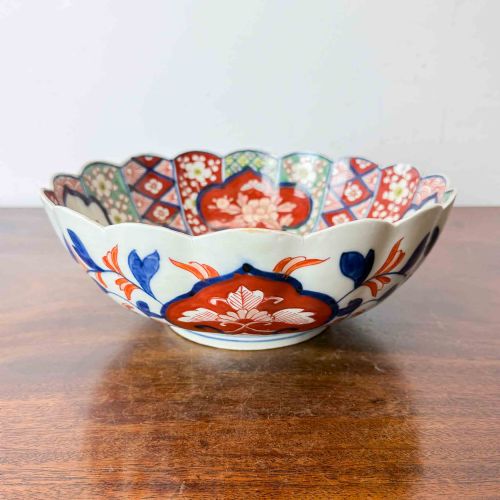
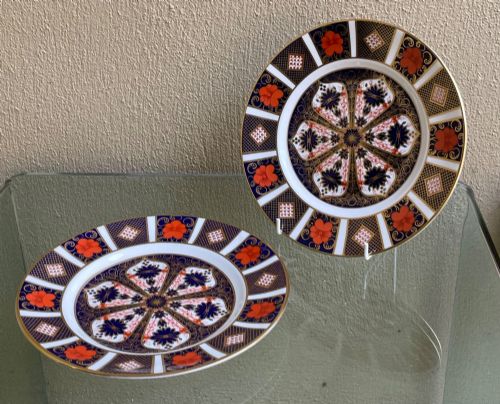
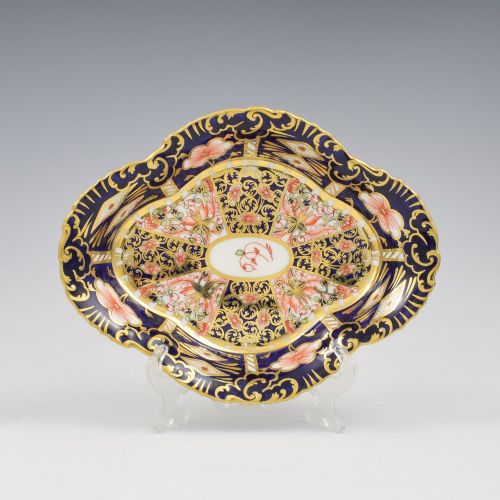
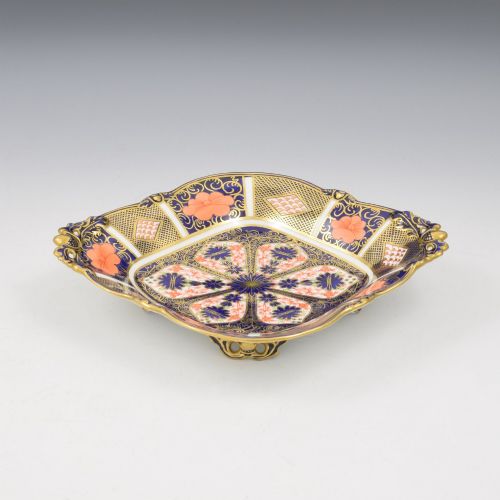
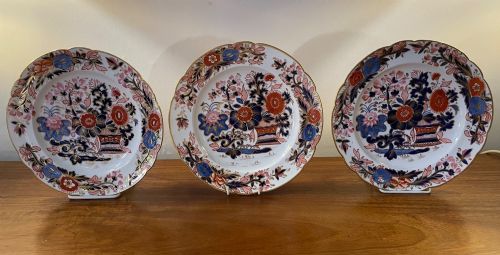
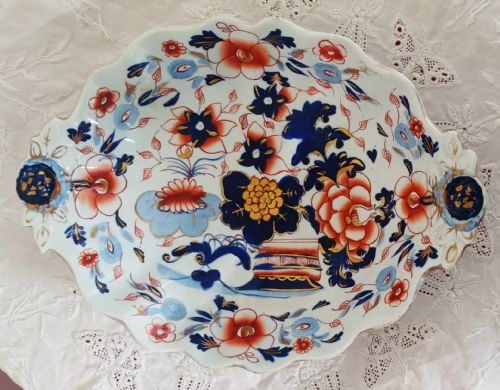
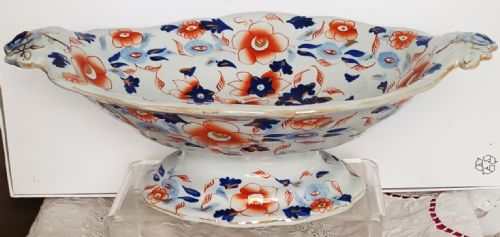
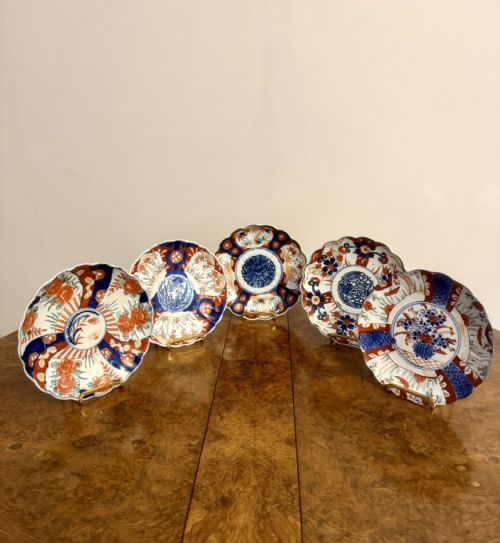
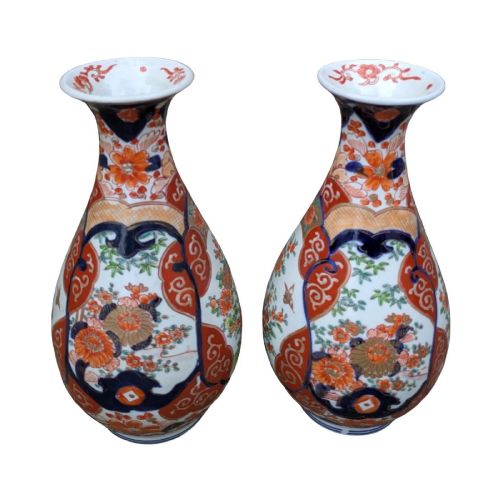
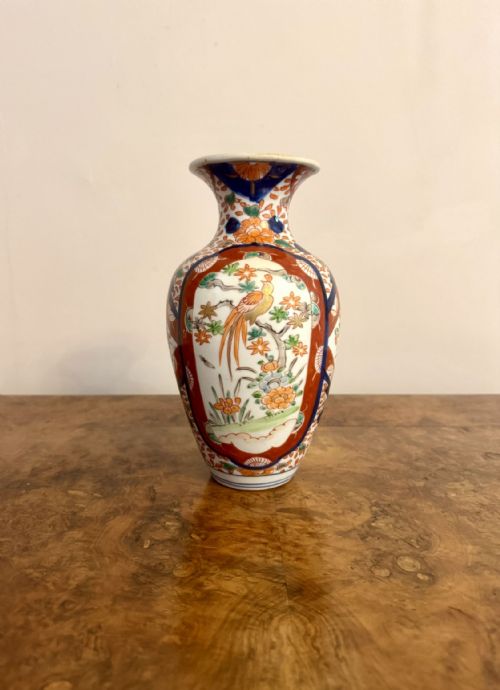
These pieces of blue and red imari china bring together centuries of rich export porcelain and European earthenware made for display.
Blue and Red Imari China
Blue and red imari china encompasses both authentic Japanese export pieces and the British interpretations that followed them across the eighteenth, nineteenth, and twentieth centuries. When searching for this palette, collectors encounter a diverse range of decorative plates, bowls, chargers, and vases originating from diverse periods.
The objects on this page lean heavily towards late nineteenth and early twentieth century Japanese examples alongside Georgian and Victorian English ironstone and bone china services. Forms vary from scalloped bowls and ribbon plates to footed comports, bud vases, and deep serving dishes created for functional dining or ornamental use.
How blue and red imari china was made
Potters utilised ceramic bodies including porcelain, ironstone, and bone china as the structural base for these colourful compositions. Cobalt blue was painted under the glaze before initial firing, fixing the primary tone beneath a glassy protective coating.
Overglaze iron red enamel and gold leaf or gilding were added during subsequent low-temperature firings to build the distinctive multi-layered palette. This combination of underglaze blue and overglaze enamel work created the vibrant contrast characteristic of the style.
Blue and Red Imari China Retail Price Guide 2026
Typical asking prices for blue and red imari china among the pieces listed under this phrase on Sellingantiques today, from the lower quarter to the upper quarter. They describe what is for sale here now, not the wider market.
Listings span several centuries of production, ranging from early eighteenth century Japanese bowls to mid-twentieth century English bone china plates.
What varies in quality
The crispness of the hand-painted cobalt blue beneath the glaze and the precision of the overglaze red and gold detailing dictate visual merit. Finer pieces display confident brushwork and well-registered patterns rather than hurried or muddy application.
The weight, resonance, and purity of the ceramic body itself differentiate standard utilitarian wares from superior cabinet pieces. Surviving gilding and intact enamel surfaces without heavy rubbing also separate well-preserved examples from worn domestic items.
Royal Crown Derby·Stevenson and Hancock·Royal Davenport·Masons Patent Ironstone
The Blue and Red Imari China Glossary
- Imari style
- A decorative scheme employing cobalt blue, iron red, and gilt, originating in Japan and widely copied by European potteries.
- Ironstone
- A durable type of heavy earthenware patented in the nineteenth century, often used for robust tableware and comports.
- Comport
- A raised dish or bowl traditionally used for serving fruit or sweetmeats at the centre of a dining table.
- Overglaze enamel
- Coloured glass pigments applied on top of a fired glaze and fixed with a secondary, lower temperature heating.
- Charger
- A large ornamental plate intended primarily for display on a sideboard or wall rather than for daily dining use.
Blue and Red Imari China: Frequently Asked Questions
How do I tell Japanese imari from English imari?
Japanese examples typically utilise a finer porcelain body with slightly sandy foot rims and distinctively traditional eastern motifs. English pieces often employ ironstone, bone china, or earthenware bearing factory marks specific to Staffordshire or Derby potteries.
The potting weight and paste composition offer further clues, as European ironstone is notably heavier and denser than classic Japanese export porcelain from the Edo or Meiji periods.
Were these pieces used for dining?
Many items including plates, serving dishes, and part dinner services were produced for actual table use during the Georgian and Victorian eras. Over time, however, the decorative nature of the rich red and blue patterns led to their retention as display items.
Larger chargers and comports were explicitly designed for ceremonial serving or fruit presentation, whereas smaller bowls and plates saw regular household service until retirement.
Can I wash imari china in a dishwasher?
Hand washing in warm water with mild soap is essential for preserving the delicate overglaze enamels and gold leaf gilding. Modern dishwashers use harsh detergents and abrasive heat cycles that will quickly strip away the surface red paint and metallic gold.
Careful cleaning protects the fragile painted layers that sit on top of the glaze, ensuring the colours remain vibrant for future generations to enjoy.
What does the iron red colour signify?
The iron red pigment is an overglaze enamel derived from iron oxides, applied after the initial high-temperature kiln firing. It provides the warm, contrasting brick-red tone that balances the deep cobalt blue and sparkling gold leaf.
This specific mineral pigment produces a slightly raised texture on the surface of the ceramic when touched, distinguishing it from the smooth underglaze blue beneath.