





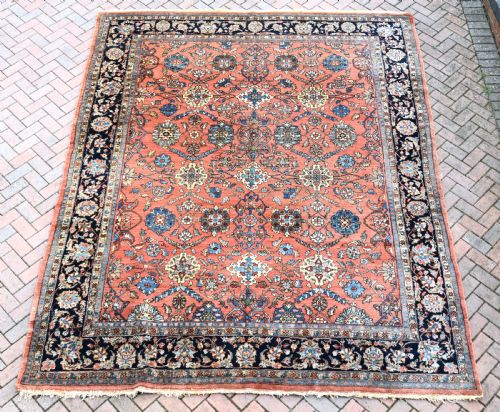


Blue and Pink Carpet
A blue and pink carpet brings warmth and colour to a room through traditional hand-woven designs.
Blue and Pink Carpet
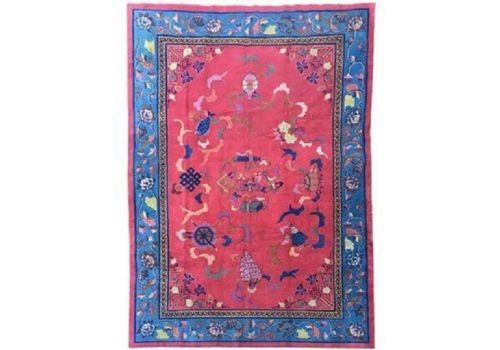
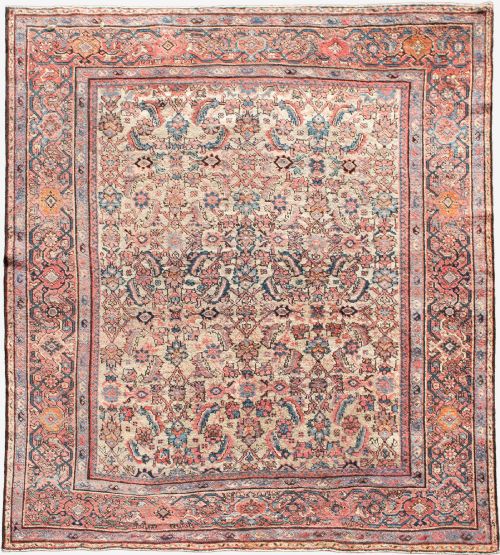
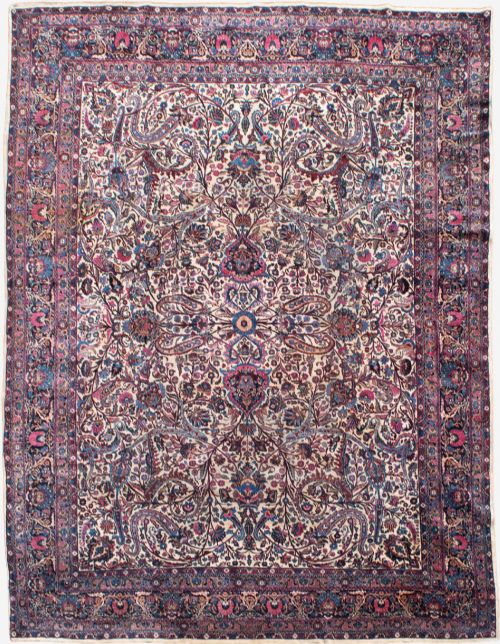
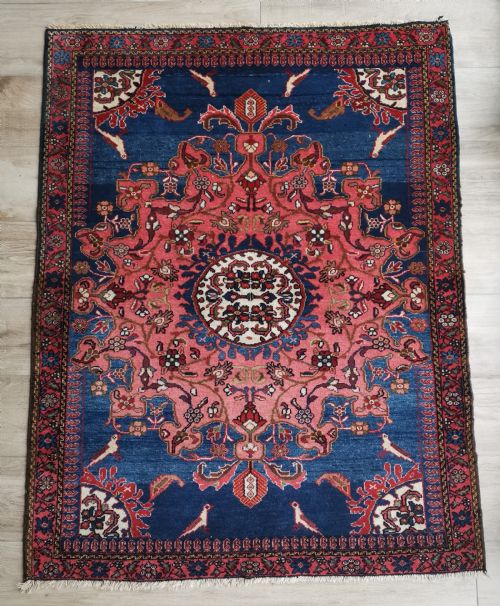
A blue and pink carpet is a woven floor covering that typically originates from Persian, Ottoman or Anatolian, Indian, and Chinese traditions. These pieces include large carpets, runners, and smaller area rugs produced during the nineteenth and early twentieth centuries.
The selections found here lean heavily towards Persian workshops such as Kirman, Sarouk, Heriz, and Bidjar, alongside Ushak, Sivas, and Art Deco examples. Buyers encounter everything from grand room-sized floor coverings to narrow runners designed for specific architectural spaces.
How they were made
These floor coverings are constructed primarily from wool and cotton, utilising hand-woven techniques passed down through generations. Artisans knot woolen yarns onto sturdy cotton foundation warps and wefts to create dense, durable floor coverings.
Natural dyeing traditions provide the characteristic palette seen in these textiles, combining soft blues and pinks with complementary tones. The meticulous hand-knotting ensures each piece holds up to domestic use while maintaining intricate floral or geometric motifs.
Blue and Pink Carpet Retail Price Guide 2026
Typical asking prices for blue and pink carpet among the pieces listed under this phrase on Sellingantiques today, from the lower quarter to the upper quarter. They describe what is for sale here now, not the wider market.
The listings span from the eighteen-seventies through the nineteen-thirties, showcasing wool and cotton materials from Persian, Indian, Chinese, and Anatolian traditions.
What varies in quality
Quality in these textiles rests upon the density of the knotting and the crispness of the design execution. Finer knots permit more intricate curves and detailed botanical motifs to emerge clearly across the surface.
The handling of the wool and the depth of the dye saturation also separate standard examples from finer works. Superior pieces retain resilient piles and balanced proportions that anchor a room without overwhelming the space.
The Blue and Pink Carpet Glossary
- Warp
- The vertical foundation threads stretched lengthwise on the loom before weaving begins. All knots are tied around these stationary cords.
- Weft
- The horizontal threads passed across the warp threads after each row of knots is completed. This locks the pile firmly into position.
- Pile
- The surface of the textile formed by the cut ends of the knotted yarn. Its thickness and density dictate how the rug feels underfoot.
- Runner
- A long, narrow carpet format traditionally used in hallways, corridors, or alongside beds. These pieces require specific proportions to fit linear spaces.
- Node
- An individual knot tied to the foundation threads, forming the pattern and pile of the woven surface.
Blue and Pink Carpet: Frequently Asked Questions
How do I clean an antique rug?
Professional specialist cleaning is essential for antique textiles to protect delicate wool fibres and traditional dyes.
Vacuuming with gentle suction regularly removes surface grit without damaging the foundation.
Where should I place a runner?
Narrow runners suit hallways, corridors, entryways, and alongside large beds in a bedroom.
Their elongated proportions bridge open spaces while adding texture to high-traffic zones.
How do I identify Persian rugs?
Origin is often identified by specific floral motifs, medallion layouts, and regional weaving structures.
Palettes and knotting techniques characteristic of centres like Kirman or Sarouk provide further clues.
Are these carpets suitable for daily use?
Hand-woven wool textiles on sturdy cotton foundations are remarkably durable and withstand normal domestic traffic.
Using a quality underlay prevents slipping and cushions the weave against hard flooring.