






Blue Afghan Carpet
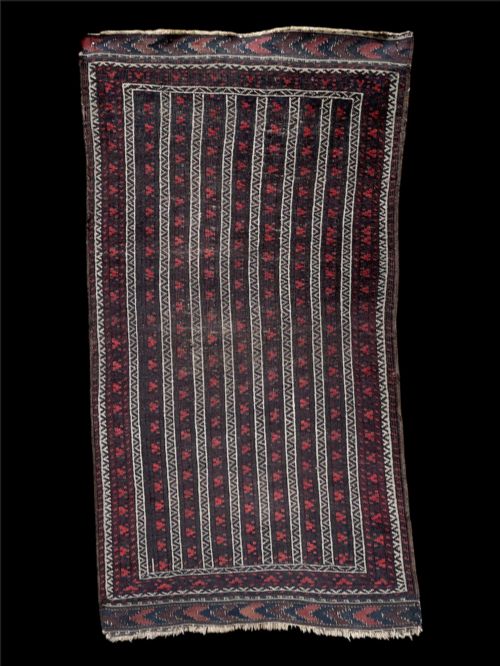
A blue afghan carpet delivers deep indigo tones and tribal motifs handed down across generations of nomadic weavers.
Blue Afghan Carpet
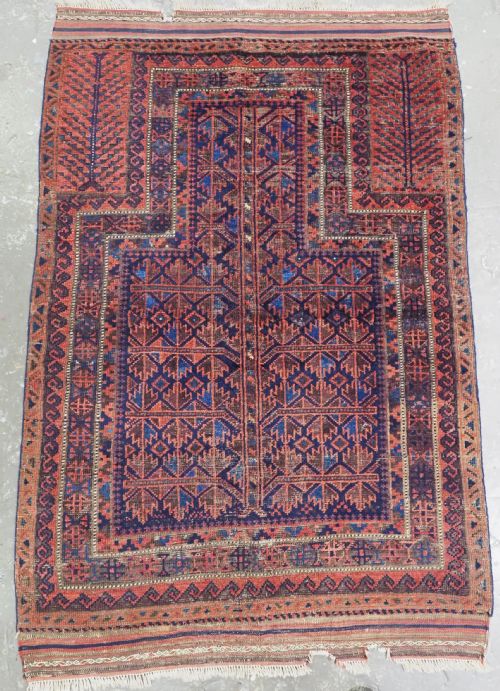
A blue afghan carpet brings together tribal designs rooted in nineteenth and early twentieth century weaving traditions. Buyers encounter various formats on this page, ranging from compact prayer rugs to larger main carpets and flatweave kilims.
Tribal makers produced these pieces across western Afghanistan, incorporating influences from Baluch, Timuri, Taimani, and Ersari traditions. The forms include runner rugs, area rugs, and specialised eating cloths known as sofreh.
Design vocabulary on these pieces frequently displays prayer niches, lotus leaf motifs, animal figures, and chevron patterns. Pieces span production dates from the late nineteenth century into the 1930s.
Materials and construction
Weavers relied on hand-spun wool and goat hair for the pile and foundation, often combined with cotton details. These natural fibres provide durability and a heavy handle suited to daily floor use.
Makers utilised natural dyes to achieve soft colour palettes and deep blue grounds across the wool. Flatweave kilim sections were frequently constructed in two separate parts before being joined together.
Blue Afghan Carpet Retail Price Guide 2026
Typical asking prices for blue afghan carpet among the pieces listed under this phrase on Sellingantiques today, from the lower quarter to the upper quarter. They describe what is for sale here now, not the wider market.
Listings span production dates from 1870 to 1930, featuring materials such as hand-spun wool, cotton, goat hair, and natural dyes.
Evaluating the weaving
The standard of a blue afghan carpet rests on the handling of the wool and the depth achieved by natural dyes. Finer examples display precise execution in complex tribal motifs such as the Kalam Donneh or Dokhtar-e-Qazi designs.
Structural integrity and the retention of original fringe and edges distinguish superior specimens. Variations in knot density and the crispness of secondary motifs separate standard village output from master tribal work.
The Blue Afghan Carpet Glossary
- Sofreh
- A woven eating cloth utilised by nomadic groups for communal meals and food preparation. These textiles often double as utilitarian floor coverings.
- Kilim
- A flatweave textile produced without a pile by tightly interweaving warp and weft threads. Pieces are frequently constructed in two parts and joined down the centre.
- Seh Mihrab
- A prayer rug design featuring three distinct arches or niches across the top of the field. This format points the worshipper toward Mecca.
- Kalam Donneh
- A traditional teardrop or paisley motif woven into the field of tribal carpets. The pattern appears frequently in western Afghan weaving.
- Dokhtar-e-Qazi
- A specific prayer rug design associated with Baluch and Timuri traditions. The name translates to the judge's daughter.
Blue Afghan Carpet: Frequently Asked Questions
How do I care for a tribal wool rug?
Vacuum gently without a rotating brush roll to protect the hand-spun wool pile and natural dyes. Professional cleaning should occur periodically to remove grit embedded deep within the foundation.
Keep the textile out of direct sunlight to prevent fading of the indigo and secondary tones. Using a breathable rug underlay prevents slipping and allows air circulation underneath.
What does a prayer niche signify?
The arched mihrab design indicates the direction of Mecca during daily Islamic prayers. Weavers arranged these architectural motifs at one end of the rug to guide the user.
Single, double, or triple mihrab formats appear across various tribal traditions. Over time, these devotional rugs transitioned into domestic spaces as decorative floor coverings.
Why are some kilims woven in two parts?
Nomadic looms possessed limited widths, restricting the horizontal span a weaver could construct in a single pass. Craftspeople resolved this by producing two matching flatweave panels and stitching them together.
This construction method allowed tribes to create large floor coverings and sofreh cloths on portable looms. The joined seams form a standard structural characteristic of specific regional kilims.