



Blonde Wood Chairs
Blonde wood chairs bring pale, bright warmth to a room, spanning clean-lined twentieth-century designs and earlier traditional seating.
Blonde Wood Chairs
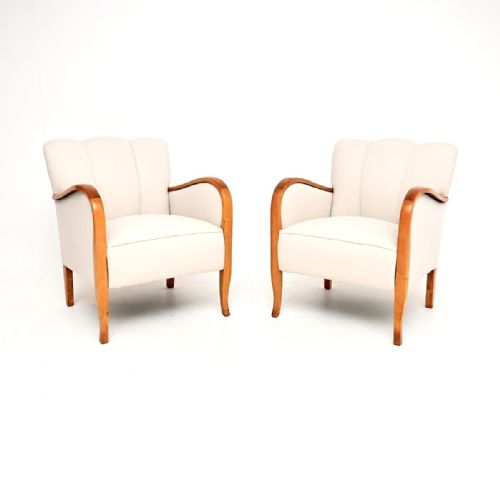
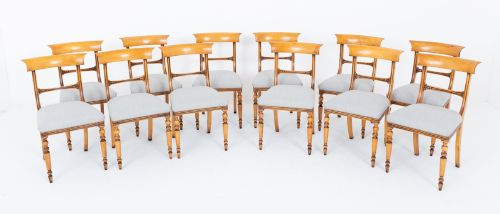
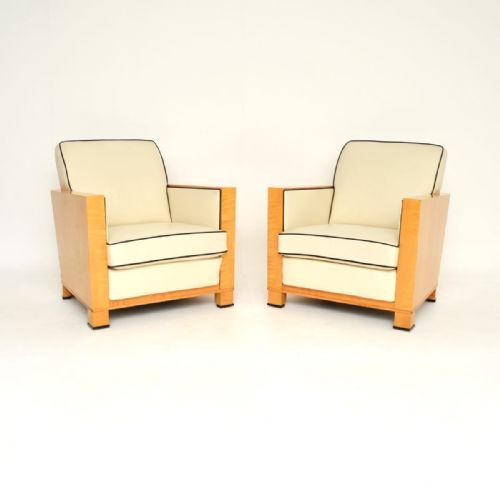
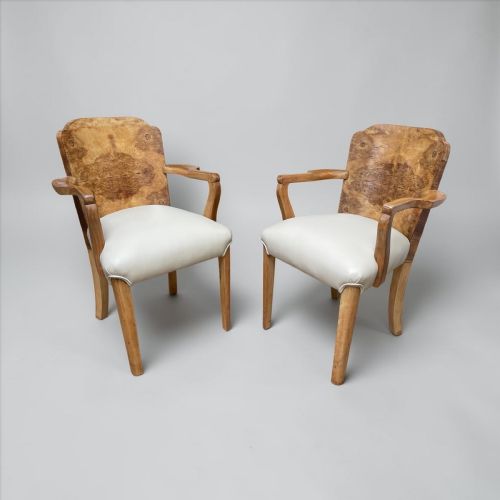
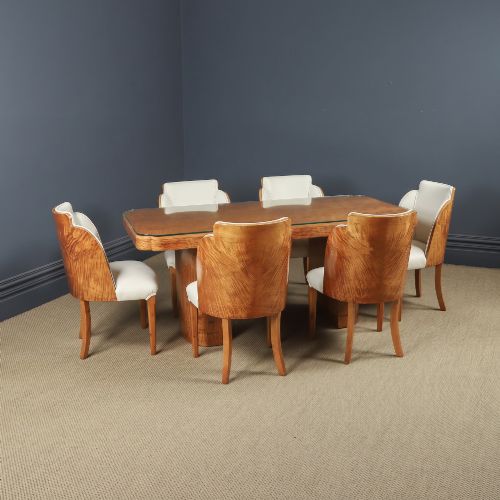
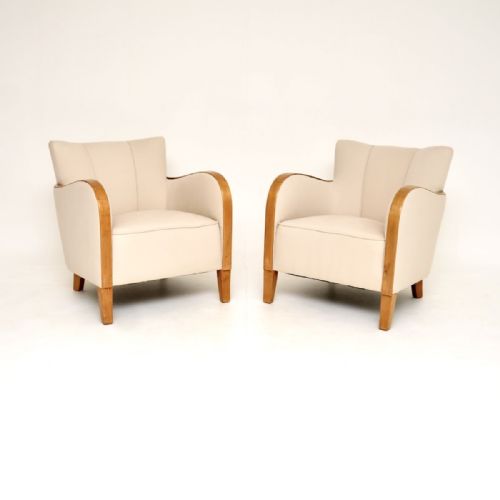
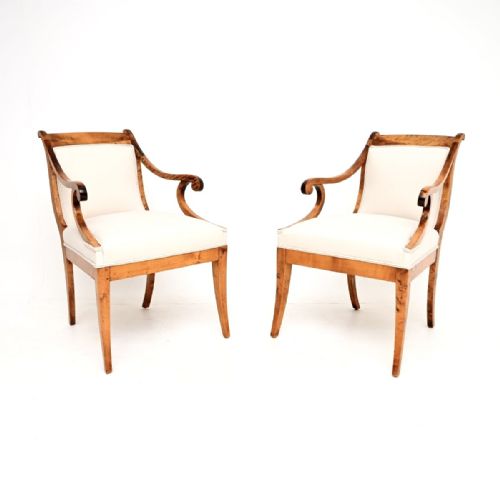
When you search for blonde wood chairs, you encounter seating constructed from pale timbers such as satin birch, maple, satinwood, sycamore, and burr birch. The selection on this page leans heavily toward twentieth-century production, particularly Art Deco pieces from the nineteen-thirties alongside earlier nineteenth-century examples.
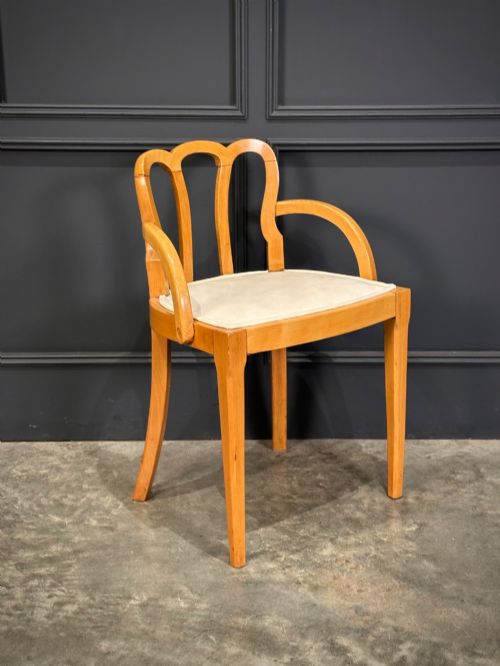
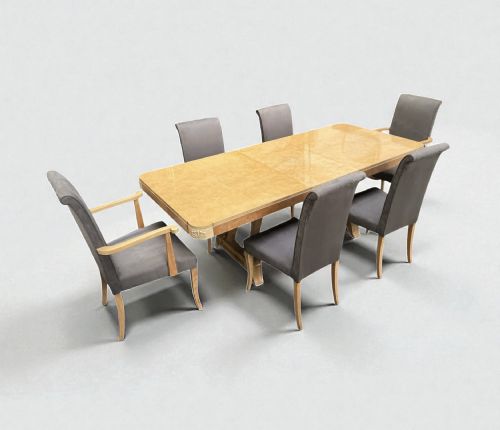
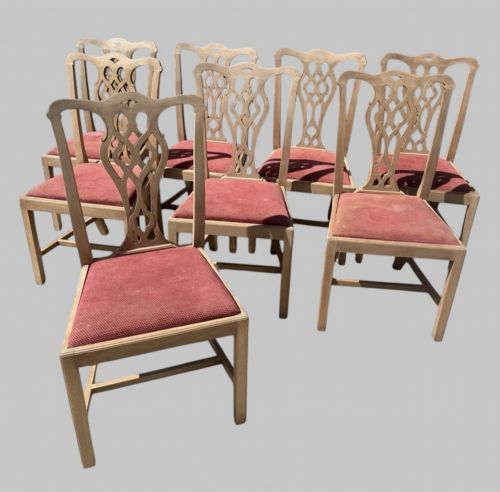
The forms vary widely from single armchairs and bedroom chairs to large sets of dining chairs and complete dining suites. Swedish Art Deco designs and Biedermeier seating appear frequently alongside English dining sets and occasional chairs.
Origins stretch across Europe and Asia, incorporating Scandinavian craftsmanship, English cabinet work, and nineteenth-century Chinese pieces. Dining suites often accompany tables, while armchairs frequently feature upholstered seats in fabric or leather.
Materials and construction
Cabinet makers utilised light-toned veneers and solid timbers, applying satin birch, maple, burr walnut, and bleached mahogany over structural frames. Grain patterns receive emphasis through careful book-matching, particularly on Art Deco armchairs and dining suites.
Upholstery materials include traditional leather and various fabrics, matched to frames built from birch, elm, and sycamore. Joinery methods range from nineteenth-century Biedermeier framing to twentieth-century Swedish manufacturing techniques.
Listings feature pieces spanning the Georgian era up to nineteen-forty, predominantly utilising birch, maple, and satin birch.
Markers of distinction
Quality rests on the choice of timber figure, such as the depth of grain in burr birch or bird's eye maple veneer. Pieces by known makers command attention through precise execution and balanced proportions.
The integrity of the frame and the preservation of original or sympathetic upholstery dictate the standing of each piece. Finer examples display crisp carving, seamless veneer work, and harmonious suite cohesion.
Hille·Hary and Lou Epstein·Heals
The Blonde Wood Chairs Glossary
- Satin birch
- A pale timber with a shimmering, lustrous grain often utilised in Scandinavian Art Deco and Biedermeier furniture. It provides a bright alternative to darker hardwoods.
- Biedermeier
- A central European style spanning the nineteenth century characterised by utilitarian comfort, clean lines, and blonde veneers. Decoration remains restrained to highlight the natural grain of the wood.
- Art Deco
- A design movement from the nineteen-thirties favouring geometric forms, streamlined silhouettes, and striking wood veneers. Pieces from this era frequently employ birch, maple, and sycamore.
- Karl Johan
- A Scandinavian neoclassical style drawing on French empire influences, prevalent in the nineteenth century. Chairs from this period typically exhibit dark-contrasting details against pale birch frames.
- Burr birch
- A knotted growth of the birch tree yielding intricate, swirling grain patterns. Cabinet makers prized this material for decorative veneer panels on tables and armchairs.
Blonde Wood Chairs: Frequently Asked Questions
How do I clean blonde wood chairs?
Dust regularly with a dry, soft cloth to prevent particle buildup on the pale timber surface. Avoid harsh chemical cleaners that strip the original finish and moisture from the wood.
Condition leather upholstery separately using specialist creams while keeping moisture away from vulnerable birch and maple veneers.
Are these chairs comfortable for daily use?
Armchairs and upholstered dining seats offer varying degrees of padding depending on their period and construction. Many Art Deco club chairs provide deep seating designed for relaxation.
Dining chairs focus on upright support, though cushioning varies between vintage sprung interiors and simpler period padding.
How do I date a blonde wood chair?
Examine the styling cues, such as the geometric symmetry of nineteen-thirties pieces versus the curved scrolls of nineteenth-century Biedermeier or Karl Johan furniture. Construction methods and joinery types also reveal the manufacturing era.
Timber choices offer further clues, as specific light woods gained popularity during particular decades like the nineteen-twenties and nineteen-thirties.
Can I mix different blonde wood chairs?
Pairing various pale timbers works well when forms share similar proportions or stylistic periods. Combining an Art Deco dining table with mismatched side chairs creates an eclectic interior.
Matching grain intensity helps unify pieces sourced from different European or Asian origins.