



Blond Wood Hall Table
A blond wood hall table brings pale, figured timber and clean lines into an entranceway, offering a refined surface for daily use.
Blond Wood Hall Table
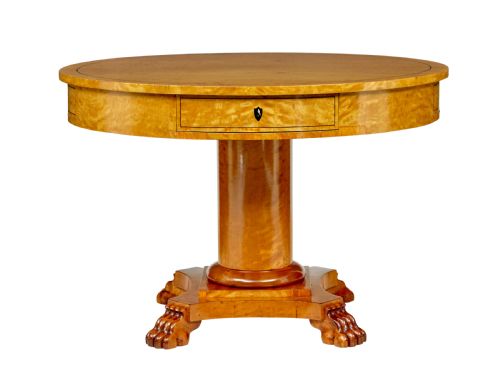
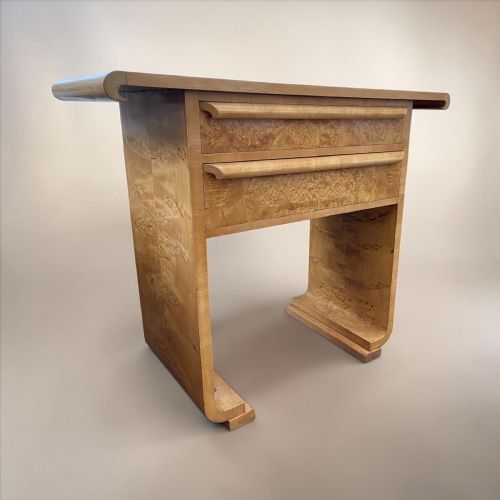
A blond wood hall table is typically found in forms such as console tables, centre tables, and side tables designed for transitional spaces. The selection includes examples from the 19th Century, Edwardian period, and 1930, spanning Art Deco, Victorian, and Biedermeier styles.
Most pieces encountered on this page rely on lighter timbers and pale finishes, favouring clean architectural silhouettes over heavy ornamentation. Console tables and half-round console tables dominate the entries tailored specifically for narrow hallways.
Origins and influences range across Swedish Biedermeier, Empire Revival, and Neoclassical design traditions, providing distinct regional interpretations of pale wood furniture. These forms combine functional surfaces with decorative grain patterns suited to domestic interiors.
How they were made
Construction relies on pale hardwoods and exotic veneers applied to carcases, utilising materials such as maple, birch, satin birch, burr maple, maserbirch, and Hungarian ash. Craftsmen selected these light timbers for their natural figure, often pairing them with contrasting ebonised wood or ebony details.
Surface enhancement includes polished timber veneers and occasional glass inserts, highlighting the varied grain structures of burr and bird's-eye maple. Traditional joinery secures the console, centre, and side table formats across the Victorian, Edwardian, and Art Deco periods.
Blond Wood Hall Table Retail Price Guide 2026
Typical asking prices for blond wood hall table among the pieces listed under this phrase on Sellingantiques today, from the lower quarter to the upper quarter. They describe what is for sale here now, not the wider market.
Listings feature 19th Century, Edwardian, and 1930 periods, incorporating maple, birch, timber, and glass.
What varies in quality
Quality depends upon the choice and matching of veneer figures, where burr maple, bird's-eye maple, and maserbirch display superior natural patterning. The restraint of the cabinetmaker in balancing pale timber with ebonised accents dictates the visual harmony of the piece.
Proportion and form separate standard production from exceptional examples, particularly in curved console tables and circular centre tables. The precision of the joinery and the depth of the polished finish determine the enduring presence of the furniture.
Fortnum and Mason
The Blond Wood Hall Table Glossary
- Console table
- A table designed to stand against a wall, frequently supported by brackets or front legs. These pieces are particularly suited to narrow hallways and entrance spaces.
- Centre table
- A freestanding table intended to be viewed from all sides, usually placed in the middle of a room. Circular and octagonal formats are common within this category.
- Burr maple
- A wood featuring knotty growths that produce complex, swirling grain patterns. This highly decorative material is prized for fine table tops.
- Biedermeier
- A central European style spanning the nineteenth century, characterised by utilitarian comfort and clean lines. It often showcases pale domestic timbers without excessive ornamentation.
- Ebonised wood
- Timber treated to imitate ebony, providing a deep black contrast. Makers utilised this technique to accentuate the lightness of surrounding blond woods.
Blond Wood Hall Table: Frequently Asked Questions
How do I use a console table in a hallway?
Console tables stand flat against the wall, making them ideal for narrow passage ways where floor space is limited.
They provide a convenient surface for placing small everyday items while maintaining clear pathways through the home.
What woods are used in these tables?
Construction involves pale hardwoods like maple, birch, satin birch, and Hungarian ash, often chosen for their distinct grain.
Cabinetmakers sometimes integrated ebonised wood or ebony details to create sharp visual contrast against the lighter surfaces.
How do I identify a Biedermeier table?
Biedermeier furniture dates from the nineteenth century and emphasises functional design, smooth surfaces, and natural wood grains.
These pieces typically avoid heavy carving, letting the beauty of materials like maserbirch define the appearance.