
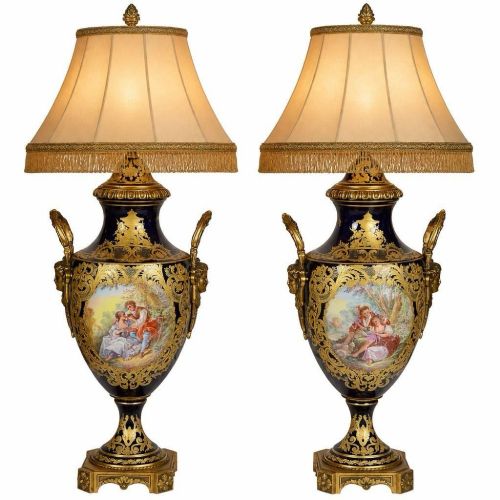


Bleu De Sevres Porcelain
Bleu de sevres porcelain brings rich cobalt blue tones and ornate ormolu mounts to rooms that favour classic French decorative arts.
Bleu De Sevres Porcelain
When you search for bleu de sevres porcelain, you encounter pieces spanning the eighteenth, nineteenth, and early twentieth centuries, though nineteenth-century revival items appear most frequently on this page.
The selection encompasses table lamps, mantel clocks, garniture sets, lidded vases, and decorative trays that reflect French Rococo and Louis XVI revival aesthetics.
Makers and decorators utilised distinctive cobalt blue grounds, often enriched with hand-painted scenes and gilding, mounted in ormolu or gilt bronze.
Materials and production methods
Craftsmen shaped fine porcelain bodies and applied deep blue glazes, frequently known as bleu de roi or bleu celeste, before firing them at high temperatures.
Many objects incorporate cast ormolu and gilt bronze mounts, securing porcelain vessels, clocks, and lamps with detailed metalwork.
Painters added surface decoration in enamel and gold leaf, sometimes depicting classical figures or landscapes within gilded cartouches.
The object forms on this page include lyre clocks, cabinet plates, saucer boats, and monumental lidded urns.
Assessing quality in execution
The fineness of the hand-painted details and the crispness of the gilt bronze or ormolu castings distinguish superior examples from standard production.
Proportion and balance between the ceramic body and the metal mounts dictate the visual harmony of pieces such as garniture sets and lidded urns.
Miroy Frères·Moreaux
The Bleu De Sevres Porcelain Glossary
- Ormolu
- Gilded bronze mounts applied to furniture, clocks, and porcelain vessels. This technique provides decorative framing and structural support.
- Bleu de Roi
- A deep, rich cobalt blue glaze developed at the French ceramic factory. It serves as a dark ground colour for intricate gilding.
- Garniture
- A set of matching decorative vessels, usually numbering three or five pieces, designed to display on a mantelpiece or sideboard.
- Bisque
- Unglazed white porcelain that has been fired once, valued for its matte surface and sculptural detail in portrait busts.
- Comport
- A raised dish or bowl used historically for serving fruit or sweets at dessert, often supported by a decorative stem.
Bleu De Sevres Porcelain: Frequently Asked Questions
What is bleu de sevres porcelain?
It refers to ceramics featuring the distinctive cobalt blue ground associated with the French national factory, alongside revival pieces produced in similar styles.
These items range from eighteenth-century tablewares to nineteenth-century decorative lamps, urns, and clocks mounted in ormolu.
How were these pieces used?
They served as ornamental displays in formal reception rooms, drawing rooms, and dining spaces during the nineteenth century.
Items like garniture sets adorned mantelpieces, while comports and trays held sweetmeats or functioned as centrepieces for formal tables.
How do I date these objects?
Dating relies on stylistic clues, such as the heavy use of Louis XVI revival or Second Empire ormolu mounts characteristic of the nineteenth century.
Marks on the base and the composition of the porcelain and gilt bronze also help distinguish earlier factory output from later nineteenth-century interpretations.
How do I live with them?
These decorative works suit traditional interiors, placed on sideboards, mantelpieces, or designated display tables where their colours can be appreciated.
Care involves gentle dusting of the gilt bronze and porcelain surfaces without abrasive cleaning agents.