



Black Wool Carpet
These black wool carpet examples bring together traditional folk artistry and robust natural textiles to ground a room with deep character.
Black Wool Carpet
A black wool carpet search uncovers a diverse range of floor coverings and flatweaves, spanning styles from Caucasian and Bessarabian to Scandinavian and Tibetan folk traditions. Buyers exploring this category encounter floor coverings originating from the late nineteenth century through the early twentieth century.
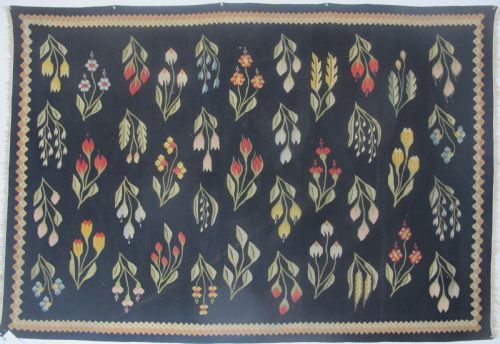
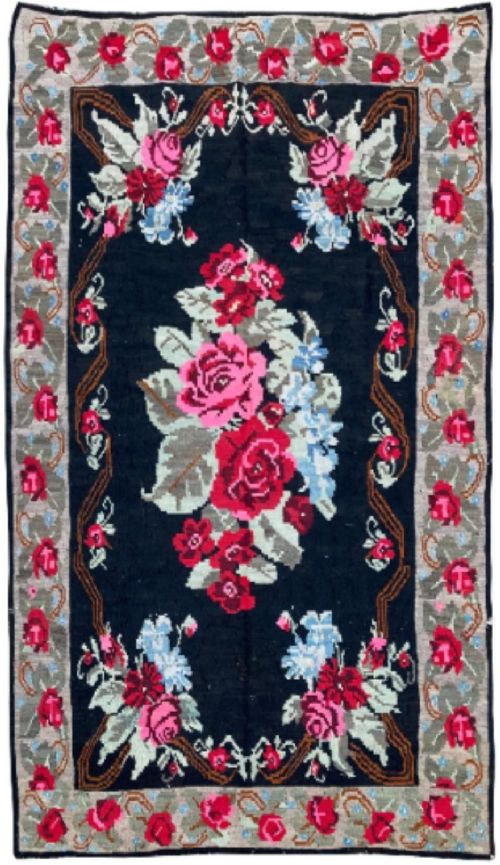
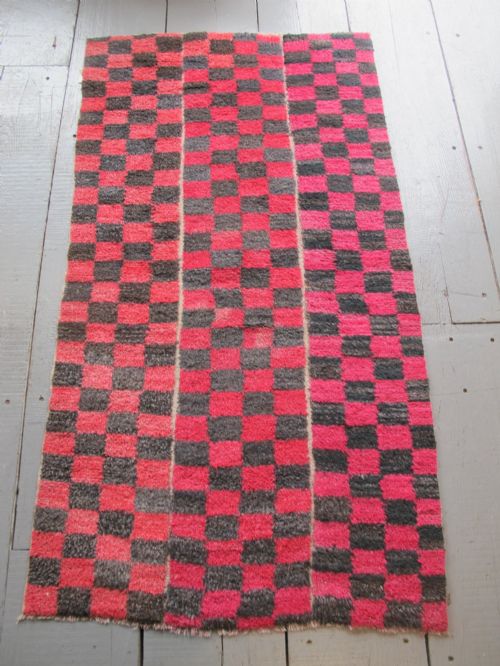
The selection on this page relies heavily on regional flatweaves, including kilims, rya rugs, meditation pieces, and floral tapestries. These objects bring historical craft traditions directly into modern domestic interiors through durable wool construction.
Originating from places as varied as Romania, Ukraine, Moldova, and the Caucasus, these items display distinct regional motifs. The forms range from small square rugs to large floor coverings designed to anchor traditional and contemporary spaces alike.
How they were made
Makers utilised wool as the primary pile or flatweave material, often supported by cotton and linen foundations depending on the regional tradition. The natural fibres were spun and dyed by hand to achieve rich, lasting colour palettes.
Techniques varied from the pile weaving seen in Scandinavian rya and Tibetan meditation rugs to the intricate flatweaving of Bessarabian and Ukrainian kilims. Artisans employed traditional local looms to execute floral patterns, geometric motifs, and folk art compositions.
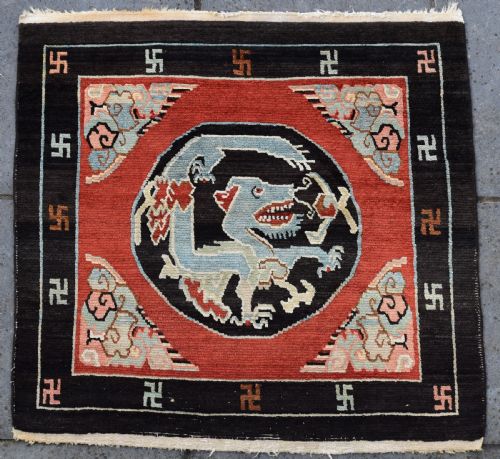
Meditation rugs invite quiet contemplation, reminding us that even the floor beneath our feet once held space for daily mindfulness.
What varies in quality
Quality in these textiles rests upon the fineness of the weave, the tightness of the wool knotting or flatweaving, and the integrity of the structural foundations. Pieces executed with tighter tension and higher density offer greater durability underfoot.
Artistic execution and the complexity of the regional design also divide standard examples from exceptional ones. The skill of the hand in rendering floral tapestries or folk art motifs determines the visual impact of the finished textile.
The Black Wool Carpet Glossary
- Kilim
- A flatwoven textile produced without a pile, traditionally utilised as a floor covering or wall hanging in Eastern Europe and the Caucasus. These pieces rely on slit-weave techniques to create sharp geometric or floral patterns.
- Rya
- A traditional Scandinavian piled rug known for its long, thick pile and decorative folk art designs. Originally utilised for warmth in northern climates, these textiles display substantial wool construction.
- Tapestry
- A form of textile art woven by hand on a vertical loom, often depicting floral or figurative scenes. In this context, they serve as decorative wall or floor elements rooted in regional European traditions.
- Meditation rug
- A smaller format rug originating from Tibetan monastic or domestic traditions, designed for seated contemplation. These pieces feature distinct square or compact proportions suited for specific ritual uses.
- Flatweave
- A textile produced by interweaving warp and weft threads without creating a raised pile surface. This technique allows for lightweight yet durable floor coverings with reversible patterns.
Black Wool Carpet: Frequently Asked Questions
What materials are used in these rugs?
These historical textiles are constructed predominantly from wool, frequently paired with cotton or linen foundations.
The natural animal and plant fibres provide both the structural integrity and the soft surface texture characteristic of traditional regional weaving.
How do I date an antique kilim?
Dating relies on examining the specific weave structure, the composition of the regional motifs, and the natural characteristics of the wool fibres.
Comparison with documented examples from periods such as the late nineteenth and early twentieth centuries helps establish a reliable timeline.
Where were these textiles produced?
The pieces originate from diverse cultural regions including Eastern Europe, Ukraine, Moldova, the Caucasus, Scandinavia, and Tibet.
Each region developed distinct weaving methods, such as Bessarabian floral styles or Tibetan meditation formats, reflecting local folk traditions.
How should I care for a wool flatweave?
Wool textiles require gentle maintenance, including regular light vacuuming without a rotating brush to protect the delicate flatweave or pile surface.
Professional specialist cleaning is recommended for antique carpets to preserve the natural lanolin in the wool and maintain the integrity of the dyes.