

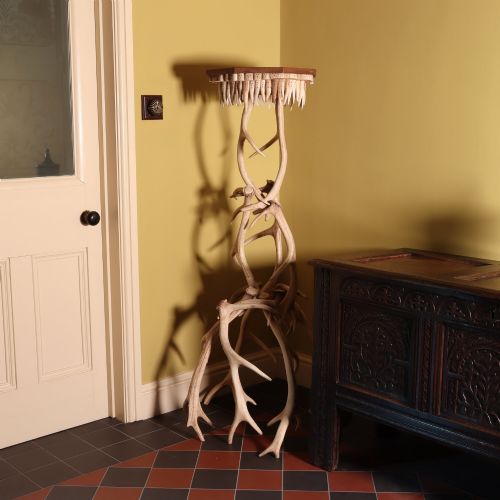


Black Wooden Pedestal Stands
Black wooden pedestal stands elevate plants, lamps and ornaments through carved or ebonised surfaces.
Black Wooden Pedestal Stands
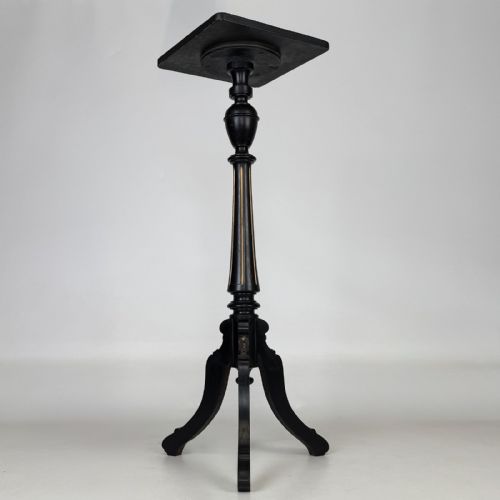
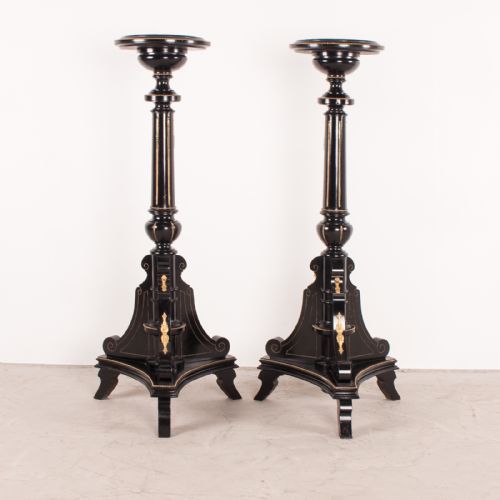
Black wooden pedestal stands include torcheres, plant stands, columns and plinths spanning the eighteenth, nineteenth and early twentieth centuries. These upright display pieces support vases, lamps and figures in domestic interiors.
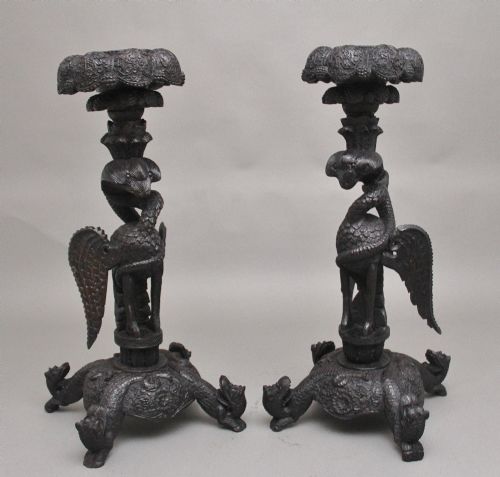
The selections encountered here range from ebonised hardwood and carved Oriental jardiniere stands to Anglo-Indian and Victorian designs. Architectural columns and tripod torcheres dominate the forms available for display purposes.
How they were made
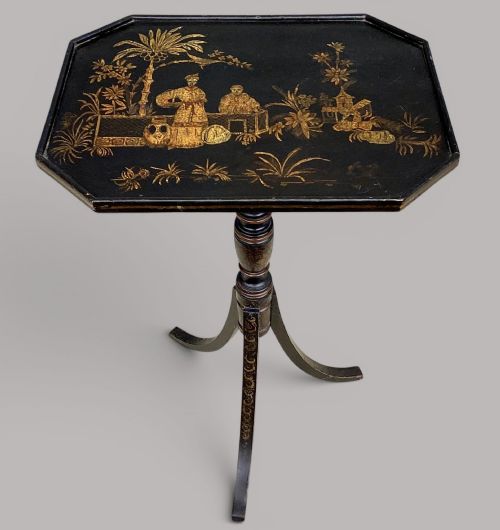
Maker's workshops utilised ebonised wood, carved hardwood and elm, often applying paint, gold leaf or lacquer to the surfaces. Construction combined solid timber turned on lathes with detailed hand carving for figural or botanical motifs.
Joinery methods varied from simple tripod bases to heavy architectural columns designed to bear significant weight safely.
Black Wooden Pedestal Stands Retail Price Guide 2026
Typical asking prices for black wooden pedestal stands among the pieces listed under this phrase on Sellingantiques today, from the lower quarter to the upper quarter. They describe what is for sale here now, not the wider market.
Listings feature periods from the 18th century through to the 1930s, utilising ebonised wood, hardwood, brass and paint.
What varies in quality
Depth and crispness of hand carving distinguish superior examples from plain turned columns. The quality of the ebonising, paint or lacquer finish dictates visual impact across differing workshops.
Proportion and structural stability separate functional display pieces from purely decorative supports.
Liberty of London
The Black Wooden Pedestal Stands Glossary
- Torchere
- A tall stand designed to support a candelabrum, lamp or plant in a room corner.
- Ebonised
- Wood finished with a dark stain or paint to imitate the appearance of ebony.
- Jardiniere
- A decorative pot or stand intended to hold plants and floral displays.
- Plinth
- A heavy flat base or lower block serving to support a statue or column.
- Tripod
- A three-legged stand or support base utilised for stability on uneven floors.
Black Wooden Pedestal Stands: Frequently Asked Questions
What were black wooden pedestal stands used for?
These elevated supports held lamps, heavy porcelain vases and potted plants in nineteenth century drawing rooms and halls. Their height brought decorative objects closer to eye level for better visibility.
They also served as freestanding architectural elements to fill empty corners or display sculptural figures and taxidermy.
How do I style a pedestal stand at home?
Place a single tall torchere in an empty corner with a trailing plant or a heavy bronze vase on top. Ensure the base sits firmly on the floor.
Pair matching torcheres on either side of a fireplace or doorway to create symmetrical balance in a formal room setting.
How do I tell Victorian stands from earlier periods?
Victorian examples often feature heavier carved details, ebonised finishes and diverse stylistic influences including Aesthetic Movement and Anglo-Indian designs. Construction techniques reflect industrial machinery alongside traditional hand work.
Earlier pieces from the eighteenth or early nineteenth century display simpler Regency lines or distinct regional carving traits without Victorian mass production methods.
What materials are common in these stands?
Ebonised wood and carved hardwood form the primary structure for the majority of these display pieces. Artisans frequently added paint, gold leaf and lacquer decorations.
Some examples incorporate brass fittings or elm wood, particularly in Japanese and Victorian side table forms.