
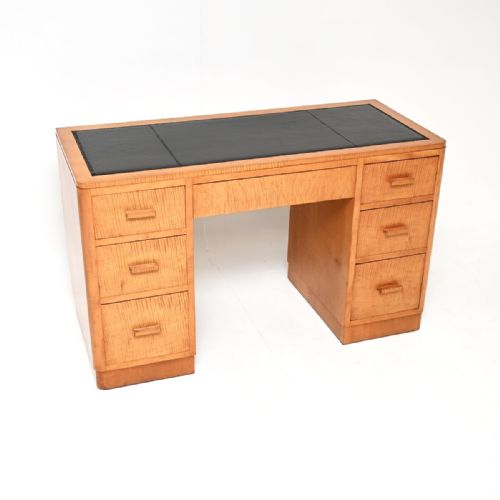
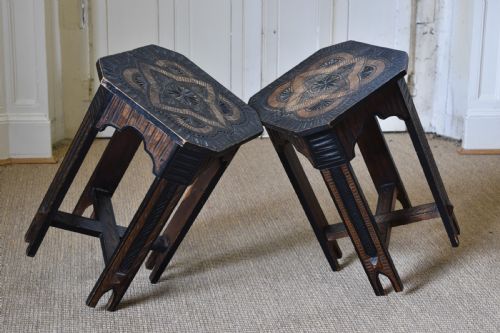
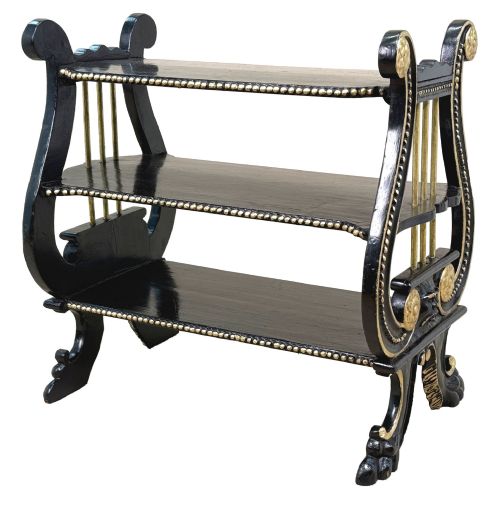
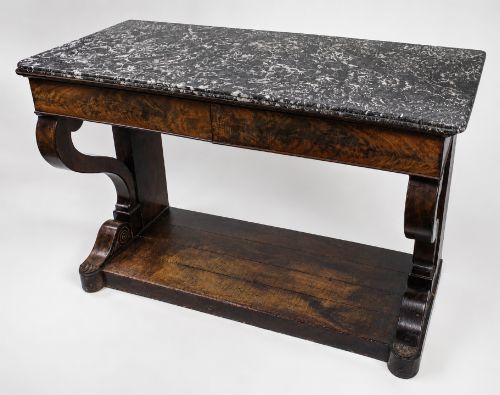
Black Wood Table
These black wood table pieces bring dark, dramatic timber and painted surfaces into a room, offering both bold contrast and historic craft.
Black Wood Table
A black wood table encompasses various dark-finished or naturally ebony furnishings from the eighteenth, nineteenth, and early twentieth centuries. These pieces appear most frequently as occasional tables, centre tables, and side tables shaped by Victorian, Edwardian, and earlier hands.
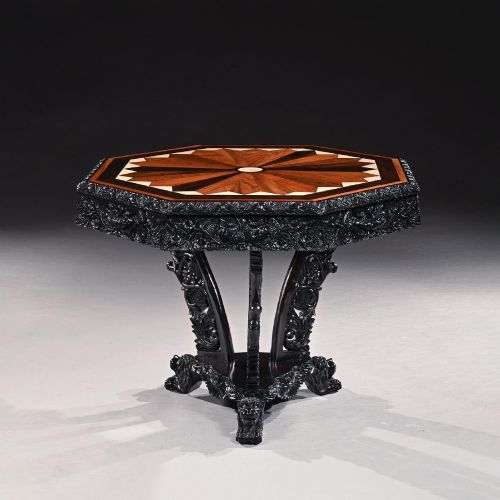
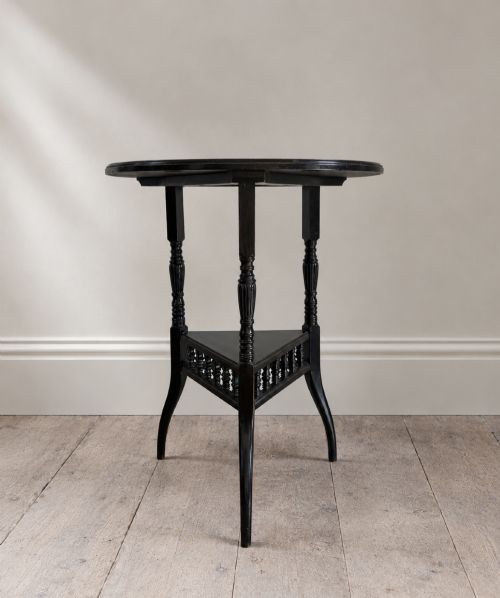
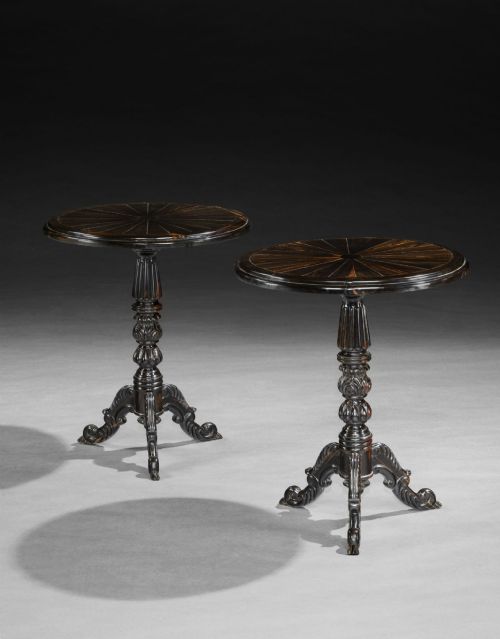
Makers utilised distinct regional traditions, ranging from English ebonised surfaces to Ceylonese ebony and Swiss carved limewood. Buyers encounter forms designed for display or daily utility, including tripod bases, console tables, and nest arrangements.
Materials and construction
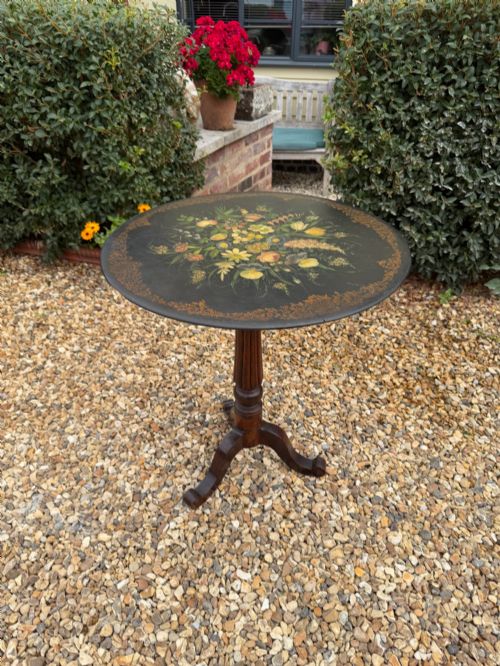
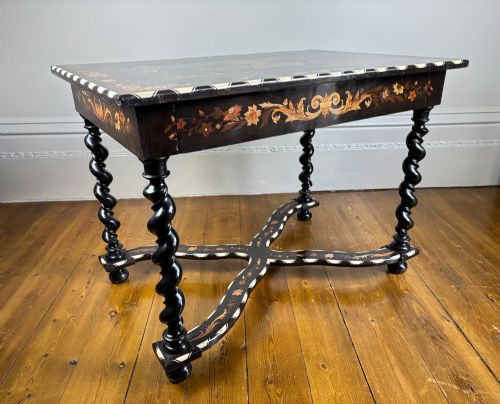
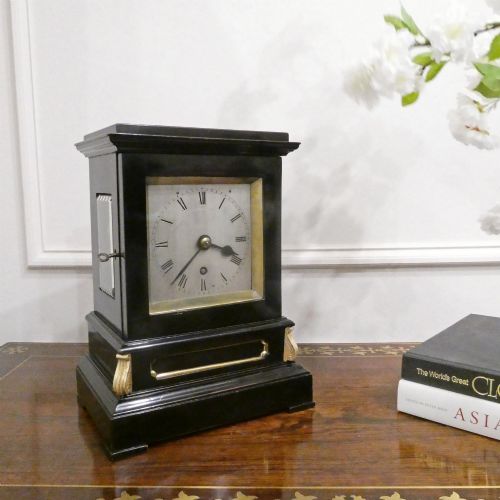
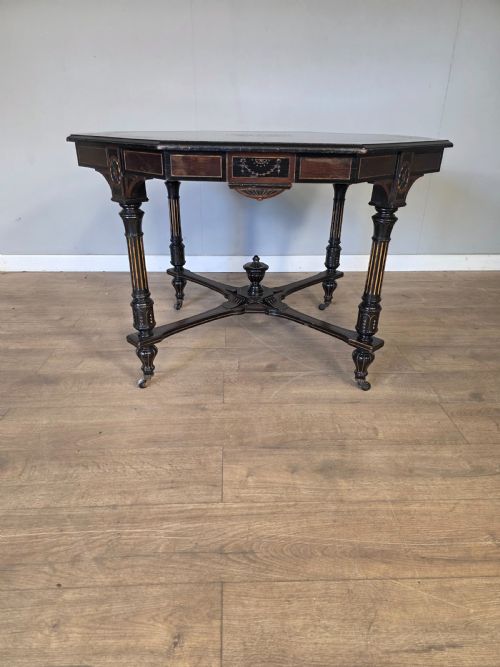
Craftsmen built these items using dense hardwoods, beech, or walnut, applying ebonisation, black paint, or dark lacquer to achieve the desired tone. Many examples incorporate parcel gilding, bone inlay, marquetry, or marble tops set onto the wooden structure.
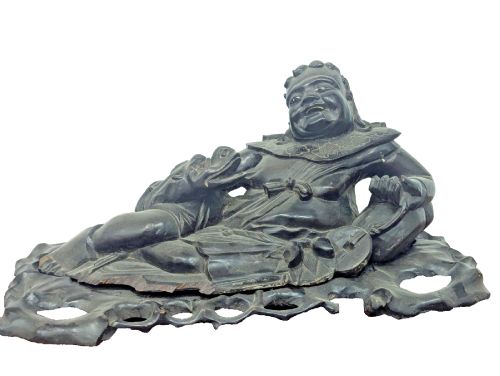
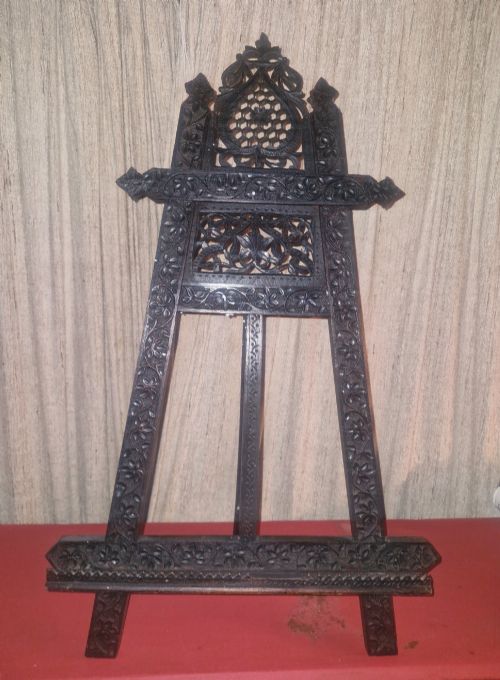
Carving techniques define much of the work, from chip carving and deep relief foliage to smooth turned legs. Joinery relies on traditional methods appropriate to the period, supporting heavy slate tops or intricate pivoting mechanisms.
Listings feature pieces spanning the eighteenth century to the 1930s, using materials including marble, brass, gold leaf, and ebonised hardwood.
Judging execution and finish
Quality rests in the depth of the dark surface treatment and the crispness of any applied carving or parcel gilding. Superior examples show meticulous preparation of the wood beneath the black finish, maintaining sharp details in inlaid bone or marquetry without clumsy repairs.
The integrity of the structural joinery separates standard production from finer cabinetmaking. Well-made pieces balance heavy elements like marble or slate securely upon ebonised legs without leaning or looseness.
The Black Wood Table Glossary
- Ebonised wood
- Timber treated with stain, dye, or paint to imitate expensive ebony. This technique was widespread in nineteenth-century cabinetmaking to create dramatic dark surfaces.
- Marquetry
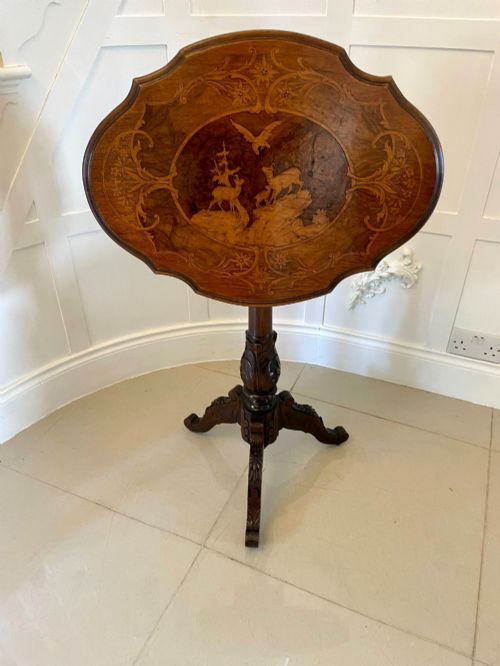
- Decorative veneer patterns applied to furniture surfaces using various wood types and materials. Craftsmen cut intricate pictorial designs to enrich table tops and cabinets.
- Parcel gilt
- The practice of applying gold leaf selectively to specific raised portions of a carved or painted object. It highlights details against a dark background.
- Tripod table
- A small freestanding table supported by a pillar above three spreading feet. These versatile pieces appeared frequently in Georgian and Victorian interiors.
- Centre table
- A freestanding piece designed to be viewed from all sides rather than pushed against a wall. They usually occupied the middle of a Victorian or nineteenth-century room.
Black Wood Table: Frequently Asked Questions
What periods do these dark tables date from?
The pieces span the eighteenth century through the Edwardian era and the 1930s. Victorian and nineteenth-century examples dominate the available selection.
Craftsmanship styles shift across these decades, moving from ornate carved wood towards cleaner twentieth-century geometric lines.
Are these surfaces painted or naturally dark?
Makers used multiple methods to achieve a dark finish. Some pieces utilise naturally dense timbers like ebony, while others feature ebonised wood, dark lacquer, or black paint applied over hardwood.
Each technique produces a distinct visual texture that ages differently with use and light exposure.
How do I style a dark table at home?
A dark timber or ebonised surface creates strong visual contrast against lighter walls and neutral upholstery. These pieces function well as accent surfaces in living spaces, halls, or bedrooms.
Pair them with metallic accessories or contrasting lamps to draw attention to the carved details or marble tops.