


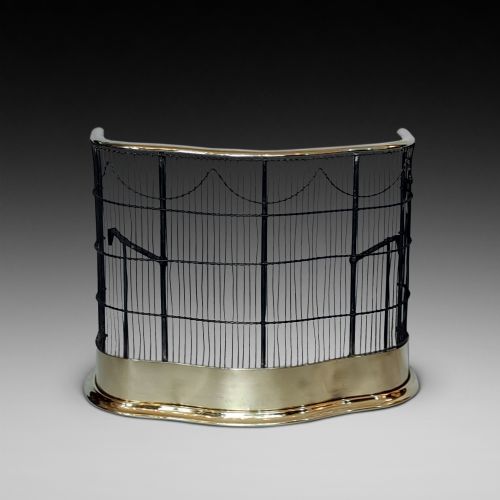


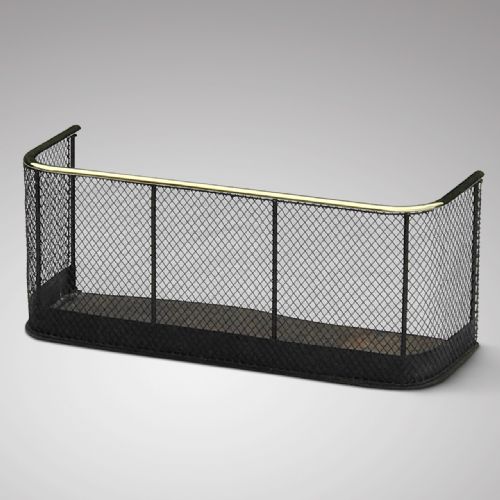
Black Wire Fireplace Screen
These black wire fireplace screen examples bring period utility and brass detail to a hearth, keeping rooms safe from sparks while preserving the view of the fire.
Black Wire Fireplace Screen
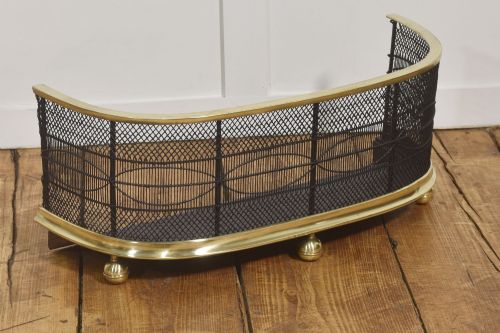
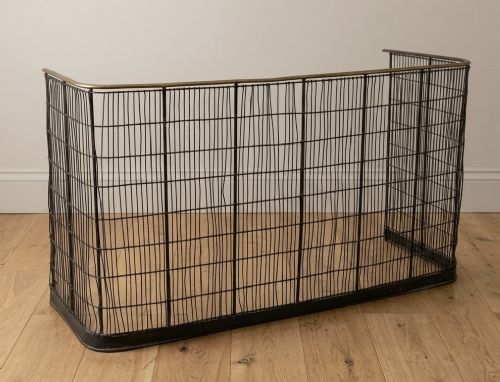
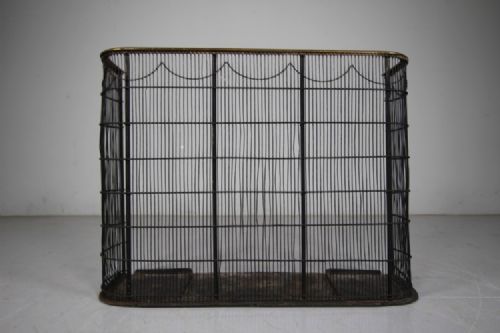
A black wire fireplace screen functions primarily as a nursery fender or spark guard to protect rooms from stray embers. These pieces span periods from the Regency era through the 1920s, with a notable concentration of Victorian examples.
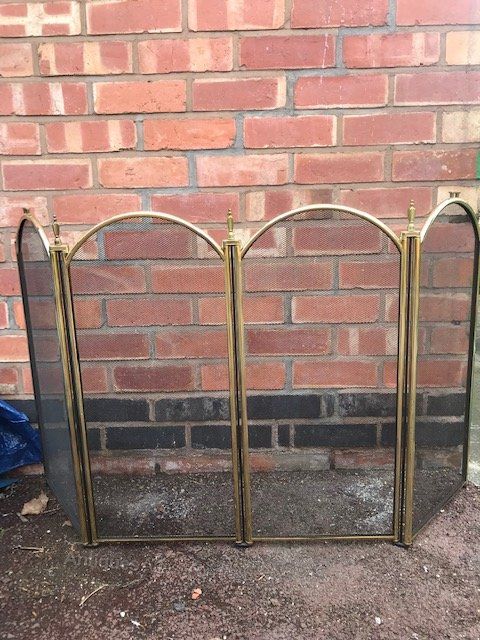
The standard configuration combines a dark mesh body with a polished brass top rail or rim. Some folding variations and nursery fenders incorporate clothes rails or larger proportions suitable for English Country House interiors.
Buyers encounter forms categorised variously as fire guards, fire screens, and nursery fenders. They bridge the gap between practical hearth safety and period decorative hardware.
Materials and construction methods
Makers constructed the primary barrier using woven iron wire, steel wire, or general wire mesh, creating a dark, semi-transparent screen that permitted heat to radiate into the room. This mesh is typically set within a rigid iron or wrought iron frame.
Makers added decorative and structural contrast through the use of brass for top rails, rims, and frames. Finishes range from natural dark iron to applied black paint alongside bright polished metal components.
Materials recorded across these pieces include brass, iron, woven iron wire, steel wire, and wrought iron.
Judging quality and craftsmanship
Quality rests on the integrity of the wire weave and the rigidity of the metal frame. Finer examples maintain an even mesh tension and secure joints where the wire meets the brass top rail.
The sophistication of the brass work distinguishes standard utility guards from finer pieces. Serpentine curves, well-fitted folding sections, and substantial brass rims indicate superior workshop production.
The Black Wire Fireplace Screen Glossary
- Nursery fender
- A low, protective barrier designed to encircle a hearth and prevent children or pets from getting too close to the fire. These often feature an integrated clothes drying rail.
- Spark guard
- A fine wire mesh screen positioned directly in front of the fireplace opening to catch flying embers. They utilise iron and steel wire to withstand high temperatures.
- Serpentine
- A gentle undulating wave shape seen along the top rail or frame of certain guards. This contour softens the rigid geometry of the wire mesh.
- Wirework
- The craft of bending, weaving, and joining wire into structural and decorative objects. In fireplace guards, it provides both ventilation and visibility.
Black Wire Fireplace Screen: Frequently Asked Questions
What is a black wire fireplace screen used for?
These guards serve primarily to contain sparks and ash thrown from open fires. They provide a protective barrier for rooms while allowing heat to circulate freely.
Historically, larger versions known as nursery fenders also prevented small children and pets from approaching too close to burning logs or coal.
How do I date a black wire fireplace screen?
Dating relies on stylistic details, metal combinations, and construction marks. Regency and early nineteenth-century pieces often feature simpler iron framing, whereas Victorian and Edwardian examples frequently combine dark wire mesh with substantial brass top rails.
Folding four-section designs and specific brass finishes tend to point towards later nineteenth-century or early twentieth-century production.
Are these screens safe for daily use?
The robust iron and steel wire construction makes these screens entirely suitable for modern wood-burning and coal fires. The mesh material withstands high temperatures without losing its structural form.
Buyers should ensure the frame sits level on the hearth and that the wire mesh remains securely fastened to the perimeter.
What is the difference between a fender and a guard?
A fender typically encloses the hearth perimeter on the floor, often incorporating a raised brass top rail and sometimes an integrated clothes drying rail. These frequently take the form of low nursery fences.
A guard or screen usually stands upright to cover the hearth opening directly, acting specifically as a barrier against flying sparks.