




Victorian Nursery Fender
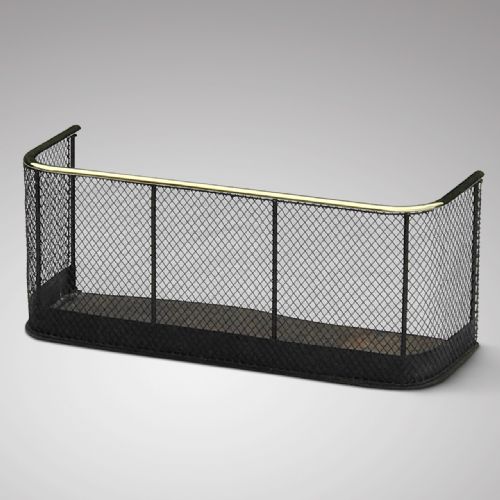
A victorian nursery fender guards the hearth, keeping children safe from stray sparks while bringing solid brass and wirework into the room.
Victorian Nursery Fender
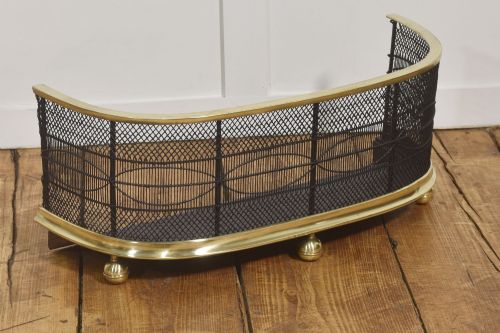
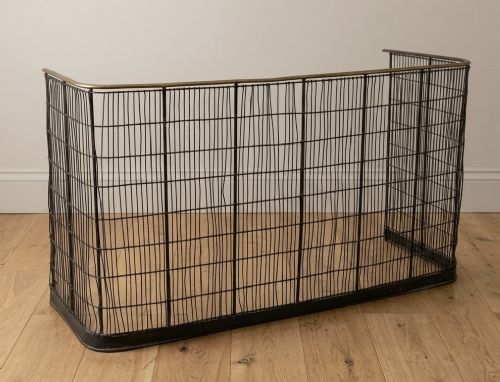
A victorian nursery fender is a substantial safety barrier designed to enclose an open fireplace during the nineteenth century. These pieces stand taller than standard hearth guards to prevent children from getting too close to the flames.
Most examples you will meet combine a heavy metal frame with fine wire mesh or woven iron wire. They appear frequently in Victorian styles alongside occasional Regency and Edwardian variants.
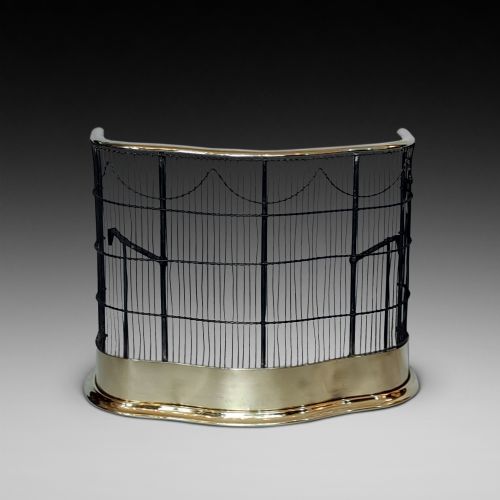
The form ranges from simple rectangular frames to bowed or serpentine shapes fitted with brass top rails. Some versions include integrated clothes rails or form part of a club fender configuration.
Materials and construction
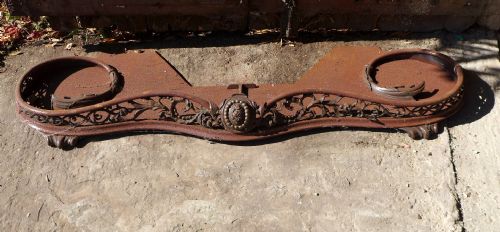
Makers built these guards using structural metals such as cast iron, wrought iron, and steel for the main frames and feet. Brass frames and polished brass top rails appear regularly, providing a strong contrast to the dark metal body.
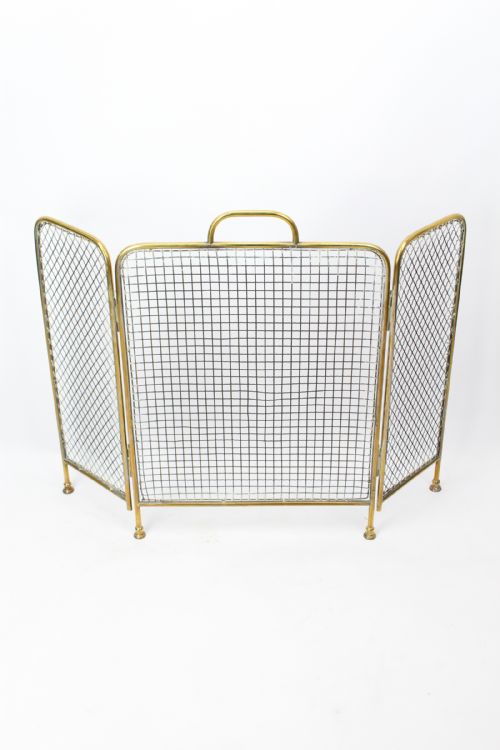
The protective barrier itself consists of woven iron wire, steel wire, or fine wire mesh secured tightly to the metal framework. This combination offered both durability and transparency so the warmth of the fire could still reach the room.
Materials span brass, iron, wire mesh, wrought iron, steel, woven iron wire, steel wire, and cast iron across nineteenth-century and Edwardian periods.
Judging quality in nursery fenders
Quality rests in the weight and integrity of the metalwork, from heavy cast iron bases to tightly woven wire mesh that shows no slack. Superior pieces often feature substantial brass top rails and cleanly cast framing rather than thin, pliable wire.
Proportion and form dictate the distinction between standard utilitarian guards and finer decorative examples. Bowed or serpentine shapes and the inclusion of useful additions like clothes rails demand greater skill in the workshop.
The Victorian Nursery Fender Glossary
- Wire mesh
- A woven metal fabric stretched across the frame to contain sparks and embers. This material allows heat to circulate freely while maintaining a protective barrier.
- Serpentine
- A gently curving shape that undulates in a wave line. This profile softens the rigid geometry of the fireplace surround.
- Top rail
- The uppermost horizontal bar of the guard, frequently fashioned from polished brass. It provides a clean finish to the perimeter of the structure.
Victorian Nursery Fender: Frequently Asked Questions
How were nursery fenders used?
These guards stood firmly around the hearth to create a safe boundary between open fires and small children in nineteenth-century homes.
They allowed parents to heat the room safely without constant worry over stray sparks or tumbling embers.
What metals are most common?
Brass and iron dominate the surviving examples, often paired together in a single frame.
Dark iron or steel provides the sturdy structural base, while bright brass top rims and wire mesh complete the construction.
Are these guards foldable?
Certain examples feature hinged sections designed to fold flat when storage or movement is necessary.
Most traditional nursery fenders remain rigid structures built for permanent hearth placement.
How do I date a fender?
Dating relies on stylistic clues and material combinations recorded across the nineteenth century and into the Edwardian period.
Heavier cast iron elements and specific brass framing techniques help place pieces within the Victorian era.