



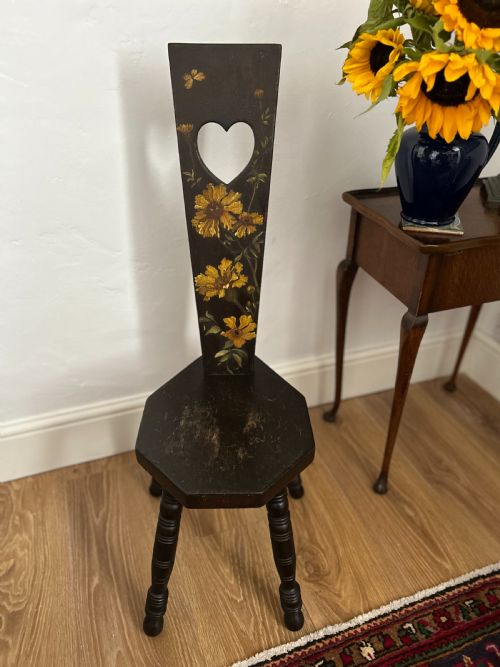


Black Turned Chair
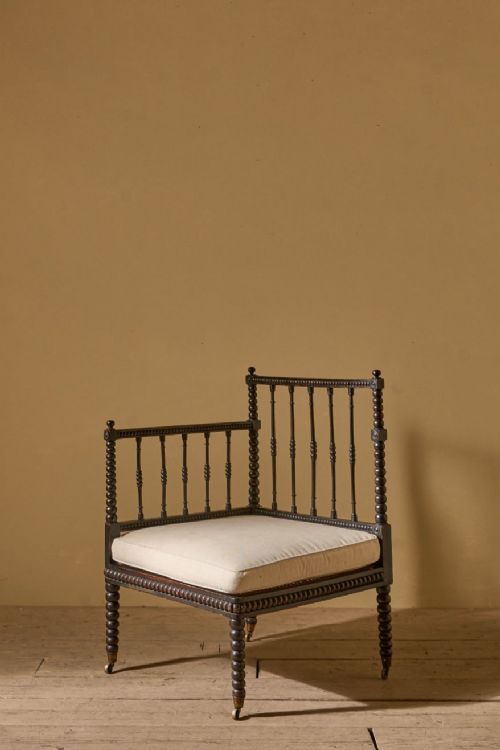
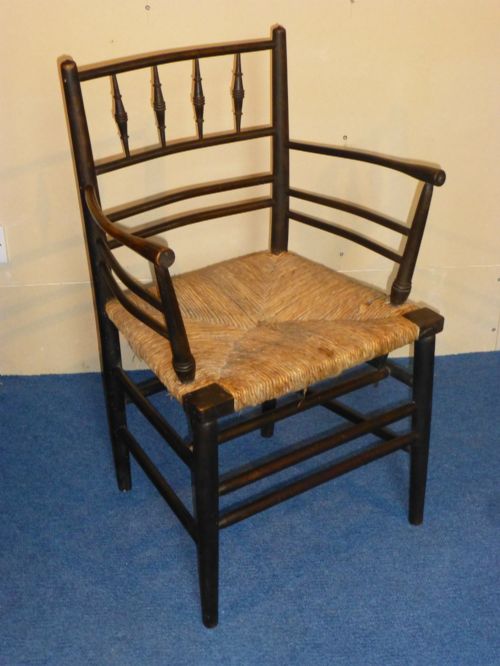
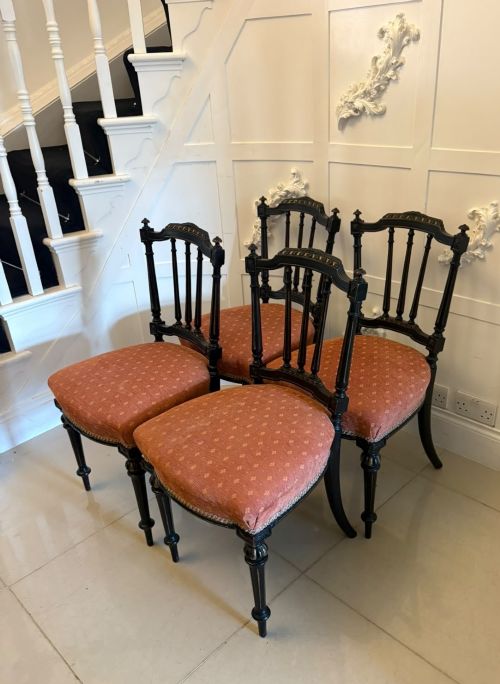
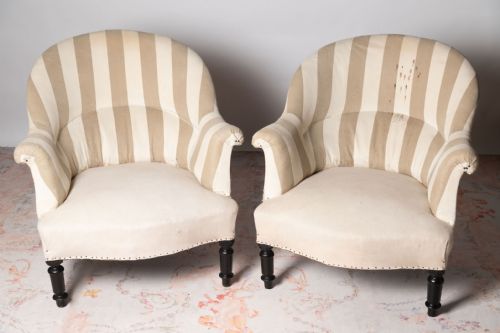
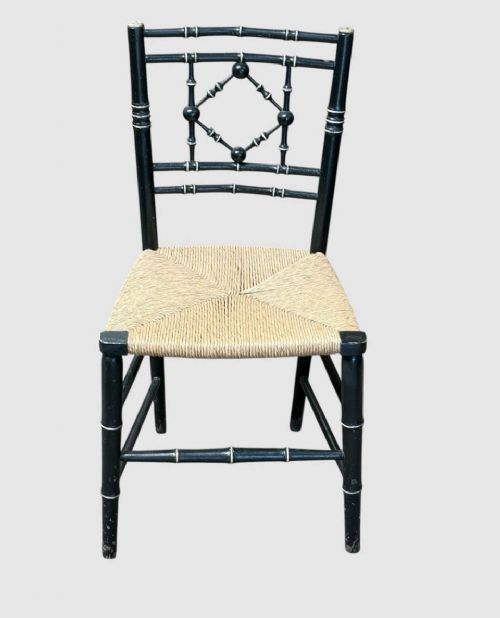
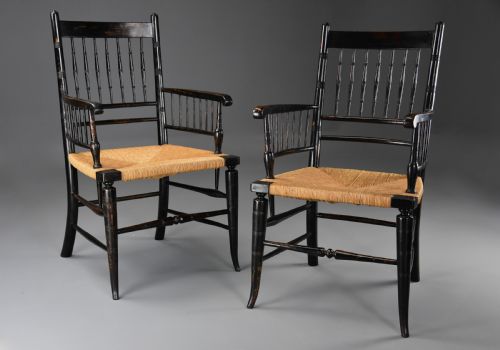
These black turned chairs are solid wood seats shaped on a lathe, most often found here in ebonised finishes from the nineteenth century.
Black Turned Chair
A black turned chair brings together centuries of woodturning traditions, from simple country rocking chairs to sophisticated Victorian seating designed by major makers. When searching for a black turned chair, buyers encounter forms ranging from corner chairs and armchairs to dining sets, often finished in ebonised wood or dark paint.
Nineteenth-century examples dominate the selection, including pieces from the Regency and Victorian periods, alongside Aesthetic Movement and Arts and Crafts designs. The turned elements on these chairs typically take the form of bobbin, spindle, or faux bamboo details that give the frame its distinctive rhythm and outline.
Origins vary from English workshops and Welsh country makers to French and Swedish pieces, reflecting diverse regional interpretations of turned construction. Buyers most frequently meet ebonised corner chairs and armchairs featuring rush or upholstered seats within this specific category.
How They Were Made
The construction of these chairs relies heavily on timber shaped on a lathe, producing uniform spindles, legs, and stretchers that lock together with mortise and tenon joints. Oak, mahogany, and walnut form the structural frames, which are then finished with black paint, lacquer, or ebonisation to imitate more costly ebony wood.
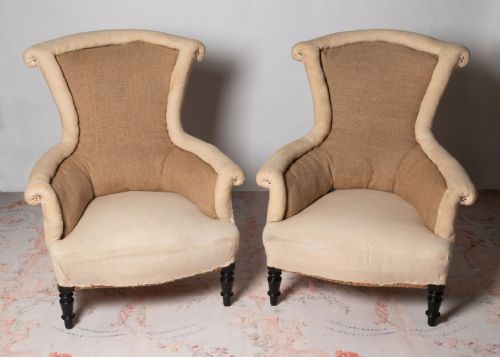
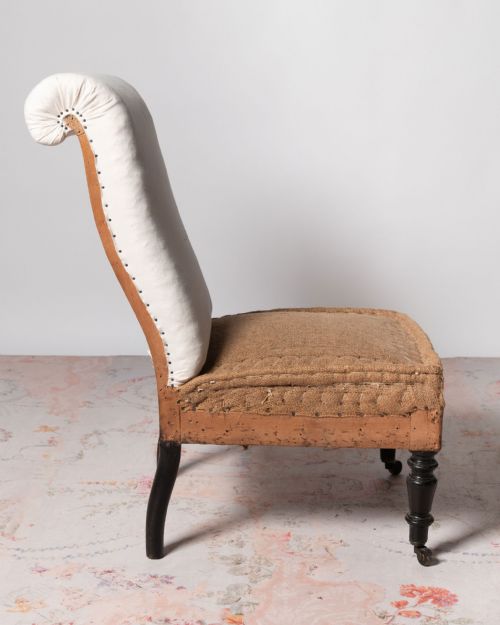
Many of the lighter frames incorporate woven rush for the seating panels, while grander library and dining armchairs employ leather or patterned fabric upholstery over supportive webbing and stuffing. Decorative touches such as gilt highlights, hand-painted details, or intricate carving occasionally supplement the turned woodwork on the more elaborate nineteenth-century examples.
The listings span the Regency, Victorian, and Arts and Crafts periods, utilising woods like oak, mahogany, and ebonised timber.
What Varies in Quality
The distinction between standard commercial production and superior craftsmanship rests on the crispness of the lathe work and the integrity of the joinery. Chairs with tightly fitted turned joints and well-balanced frames retain their structural rigidity far better over time than those with loose components.
Original surface treatments also dictate the standing of a piece, with undisturbed ebonisation, genuine period paint, or authentic patinated lacquer holding greater appeal than later refinishing. The presence of documented workshop designs or attributable maker details elevates certain chairs beyond domestic utility into the realm of collected design.
Morris & Co·Philip Webb·W Williamson & Sons·Gillows·Ford Madox Brown·Liberty of London·Hitchcock
The Black Turned Chair Glossary
- Ebonisation
- A chemical or pigment treatment applied to cheaper timbers such as beech or birch to make them resemble solid ebony. This dark finish became particularly popular during the Victorian and Aesthetic periods.
- Bobbin turning
- A form of lathe work producing a series of rounded wooden spheres or discs linked by narrow cylinders, resembling a string of beads or textile bobbins. It defines many nineteenth-century vernacular and designer chairs.
- Faux bamboo
- A decorative turning technique that carves transverse rings and joint nodes into wood to imitate natural bamboo stalks. This style appears frequently on Regency and nineteenth-century seating.
- Rush seating
- Woven marsh grass or sedge used to form a durable, flexible seat pad stretched tightly across the wooden frame. It is typical of traditional country and Arts and Crafts chairs.
Black Turned Chair: Frequently Asked Questions
What is a black turned chair?
A black turned chair is a wooden seat shaped on a lathe and finished in dark paint, lacquer, or ebonisation. These pieces range from simple vernacular country seating to designer items from the nineteenth century.
They appear in various forms, including armchairs, corner chairs, and dining sets, often featuring bobbin or spindle turned components.
How do I date a turned chair?
Dating relies on examining the timber species, the turning style, and the construction methods used in the frame. Regency pieces often show faux bamboo details, while late nineteenth-century examples frequently reflect Aesthetic or Arts and Crafts movements.
Paint or ebonisation characteristics and original upholstery foundations also help place a chair within its correct nineteenth-century decade.
Were these chairs used at desks?
Some turned chairs were adapted for study or office use, as seen in revolving desk chairs and swivel base models from the Victorian era. Their sturdy wooden frames and supportive arm designs suited prolonged daily seating.
Most variations, however, served as occasional, reception, or dining chairs rather than dedicated office furniture.
How do I care for ebonised wood?
Ebonised and painted surfaces require gentle treatment with a soft, dry cloth to remove dust without abrasive polishes. Avoiding direct sunlight and extreme humidity changes protects the dark finish and underlying timber from fading or splitting.
Regularly checking the stability of the turned joints ensures the frame remains secure during everyday use.