


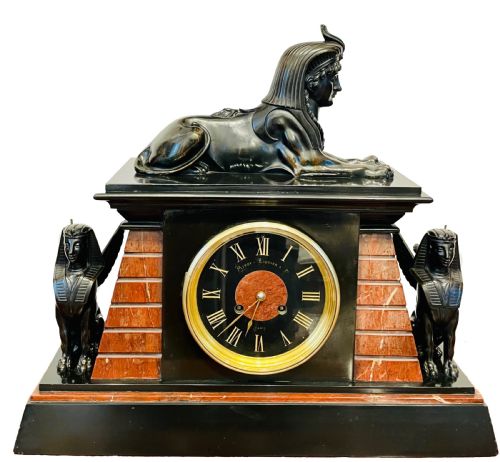


Black Stone Shelf Clock
A black stone shelf clock brings architectural weight and steady Victorian or Art Deco presence to a mantelpiece.
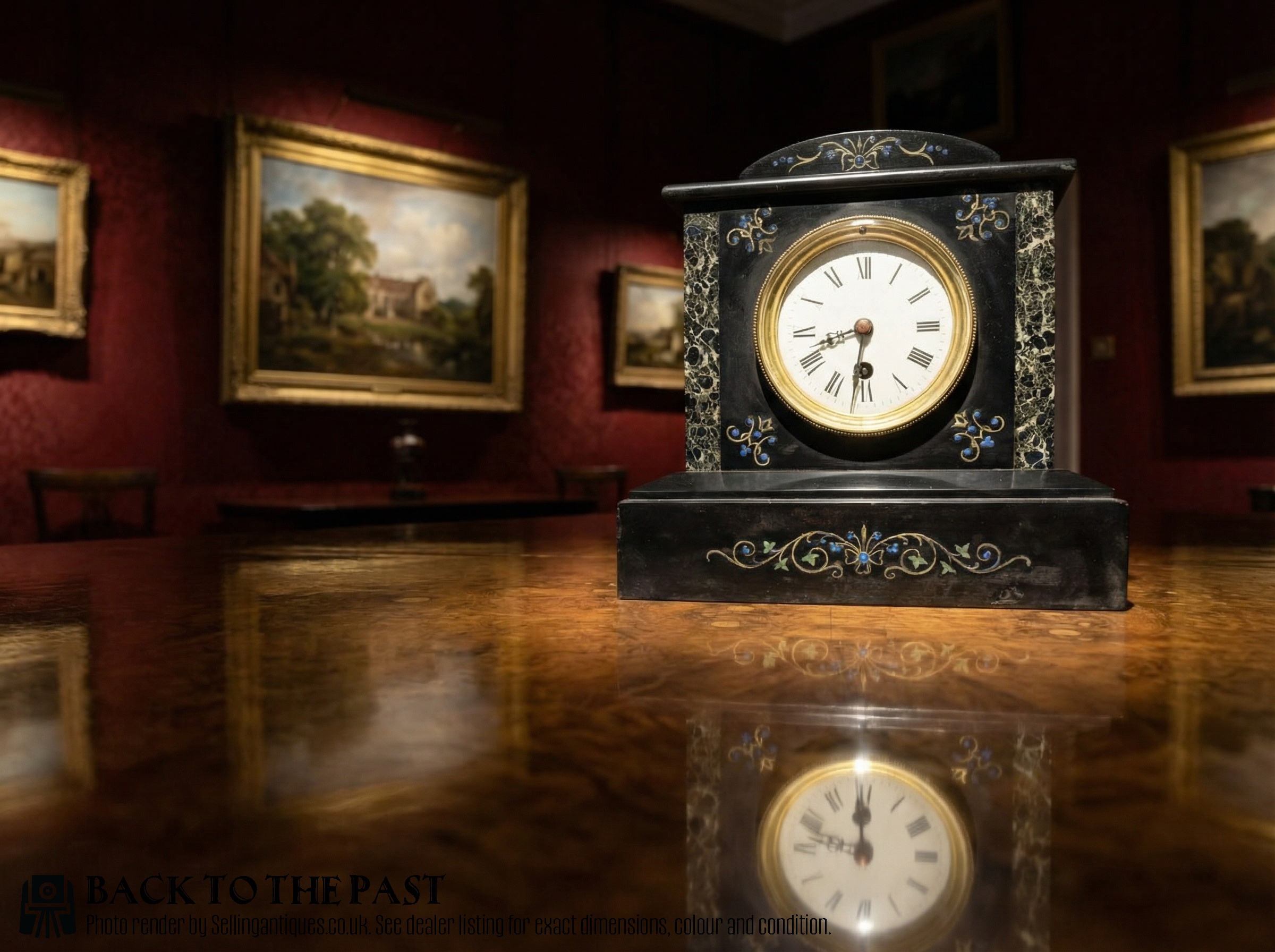
Black Stone Shelf Clock
A black stone shelf clock sits squarely on slate, marble, or polished black stone, designed to anchor a room with heavy, architectural form. The most common examples on this page date from the Victorian period through to the 1920s Art Deco era, often taking the shape of drumheads, portico designs, or classical temple façades.
These clocks draw on classical revival and Egyptian influence styles, incorporating contrasting coloured inlays, brass bezels, and enamel dials. They range from large, imposing architectural structures signed by makers like Philippes Paris to simpler drumhead silhouettes intended for domestic mantelpieces.
How they were made
Makers shaped heavy natural materials such as slate and marble into solid architectural cases, polishing the stone to a smooth, dark finish. They frequently set contrasting marble inlays, brass columns, and alabaster details directly into the stone body.
The heavy stone cases house mechanical movements, often operating on an eight-day cycle, visible behind protective glass and white enamel dials. Artisans embellished the stonework with incised gilt motifs and applied brass bezels to frame the dial.
Some Victorian slate clocks are heavy enough to double as accidental home security measures.
What varies in quality
Quality rests in the architectural ambition of the stone case and the crispness of the applied ornament, distinguishing a simple drumhead from a complex classical revival temple. Finer examples show precise mitres in the contrasting stone inlays and substantial brass mounts rather than thin stamped metal.
The sophistication of the movement and the legibility of the enamel dial also divide the range, alongside the sheer heft and selection of the marble or slate. Well-balanced proportions and harmonious colour contrast in the stone elevate a piece above standard domestic production.
Philippes Paris
The Black Stone Shelf Clock Glossary
- Drumhead clock
- A clock featuring a circular dial housing set atop a rectangular or stepped stone base. This form was popular during the Victorian period.
- Mantel clock
- A domestic timekeeper designed to sit on a shelf or fireplace mantel. These pieces rely on substantial stone cases for stability.
- Enamel dial
- A fused glass surface fired onto metal to create a smooth, white face for the clock numerals. These dials provide high contrast against dark stone cases.
- Egyptian revival
- A design style incorporating motifs inspired by ancient Egyptian architecture and ornamentation. This aesthetic appears on specific Victorian mantel clocks.
Black Stone Shelf Clock: Frequently Asked Questions
What is a black stone shelf clock?
A black stone shelf clock is a heavy domestic timekeeper housed in a case of polished slate or marble. These pieces rely on solid stone construction to provide a stable, decorative anchor for a mantelpiece.
Most examples date from the Victorian period up to the 1920s, reflecting architectural styles ranging from classical revival to Art Deco. They combine utilitarian timekeeping with dark, imposing stone facades.
How do I date a marble clock?
Dating these clocks involves examining the stylistic clues in the stone case and the materials of the dial. Victorian examples often lean towards classical temple forms or heavy incised slate, while 1920s Art Deco pieces show geometric simplification.
The presence of brass bezels, enamel dials, and specific revival motifs helps narrow the decade of production. Makers' signatures on the movement also provide a precise point of reference.
How were these clocks used?
These clocks served as both functional timekeepers and prominent decorative centerpieces in nineteenth and early twentieth-century rooms. Placed on mantelpieces, they helped organise household routines with eight-day mechanical movements.
Their heavy stone and marble bodies also projected stability and substance within domestic interiors. They required minimal moving once set due to their substantial weight.
How do I live with a stone clock?
Living with a heavy stone clock requires a sturdy shelf or mantelpiece capable of supporting significant weight. Regular placement on a stable, level surface ensures the mechanical movement keeps accurate time.
Maintenance involves gentle dusting of the polished slate or marble and occasional professional servicing for the internal eight-day movement. The dark stone integrates easily into both traditional and modern interiors.