


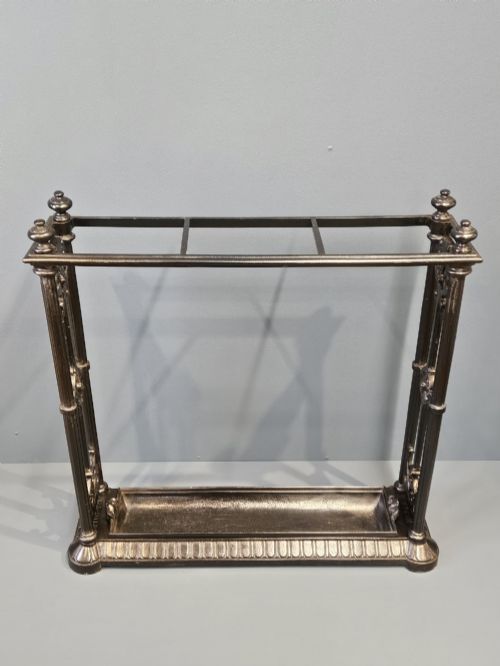

Black Stick Stand
A black stick stand brings immediate character to an entrance hall, combining practical umbrella storage with sculptural presence.
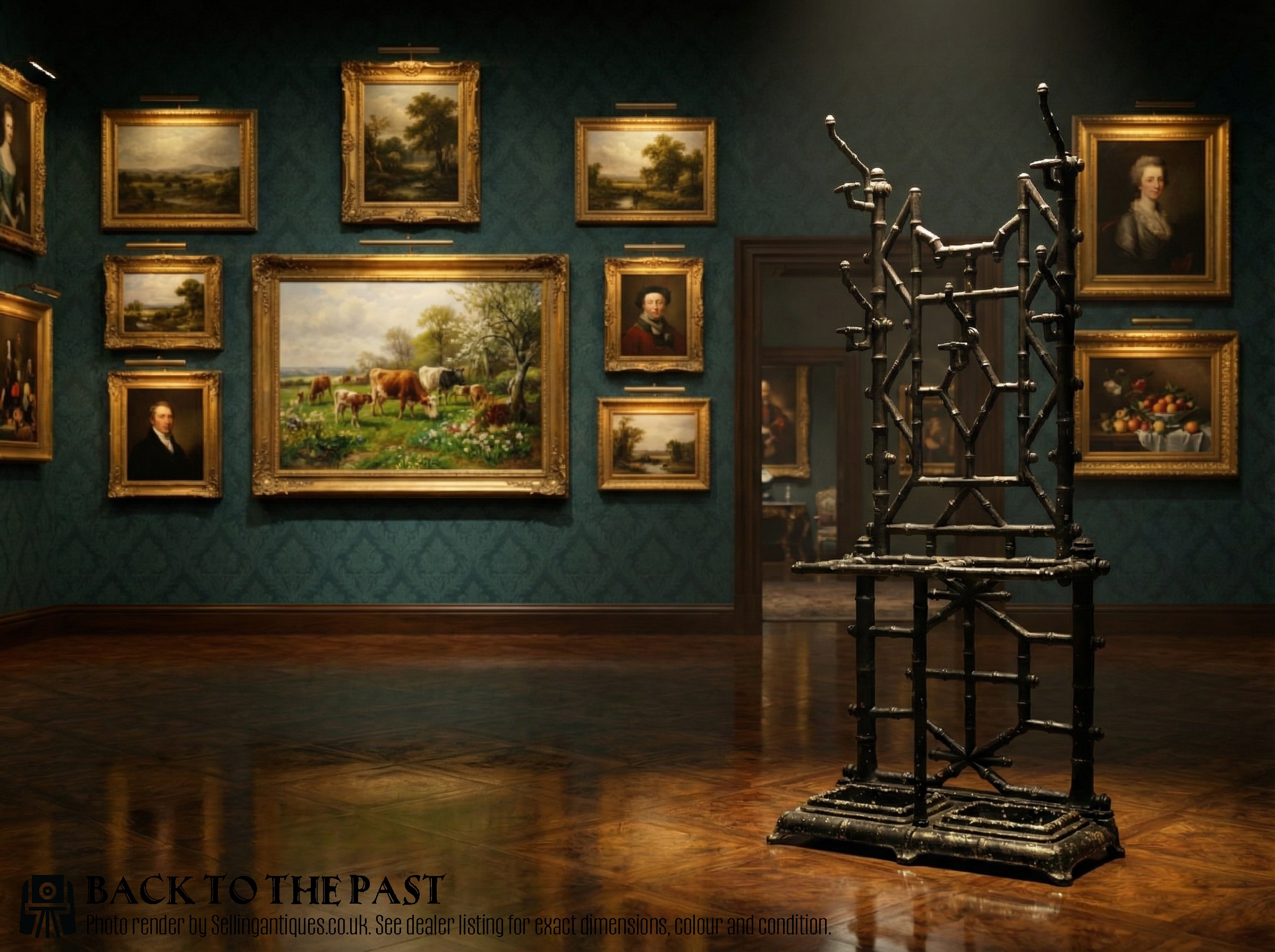
Black Stick Stand
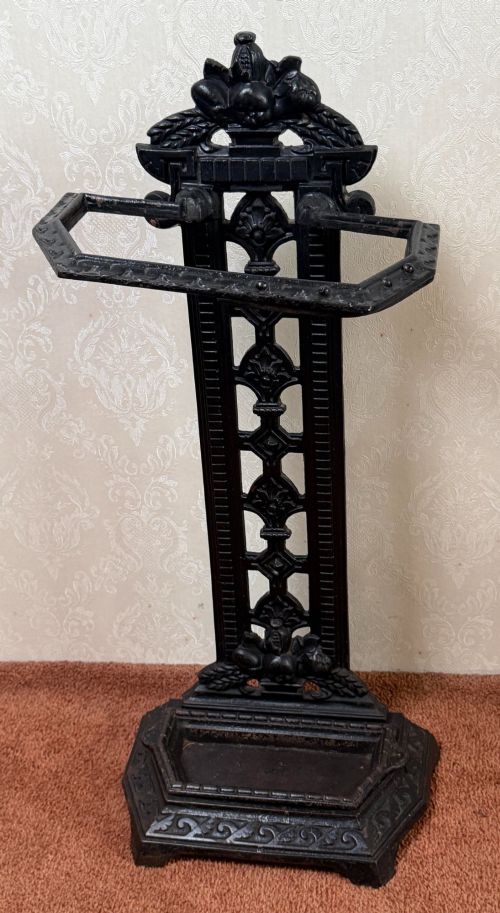
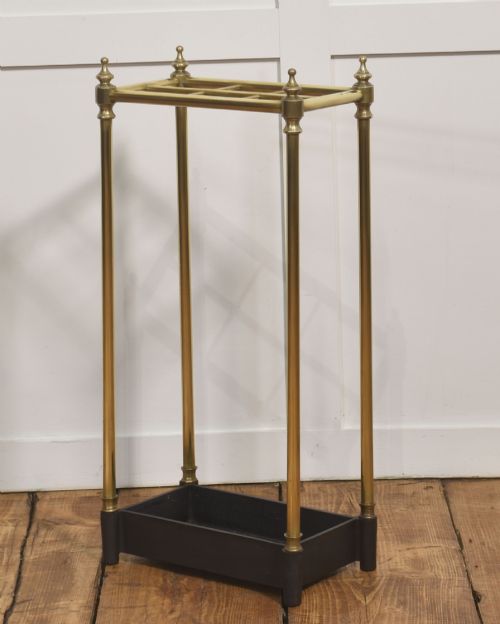
A black stick stand serves as a functional piece of hallway furniture designed to hold walking sticks, canes and umbrellas safely in upright positions. These items emerge primarily from the Victorian period through to the Art Deco era, reflecting domestic needs of the nineteenth and early twentieth centuries.
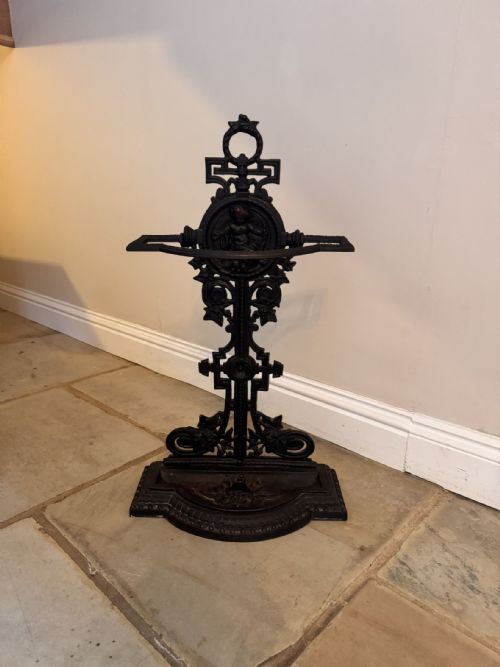
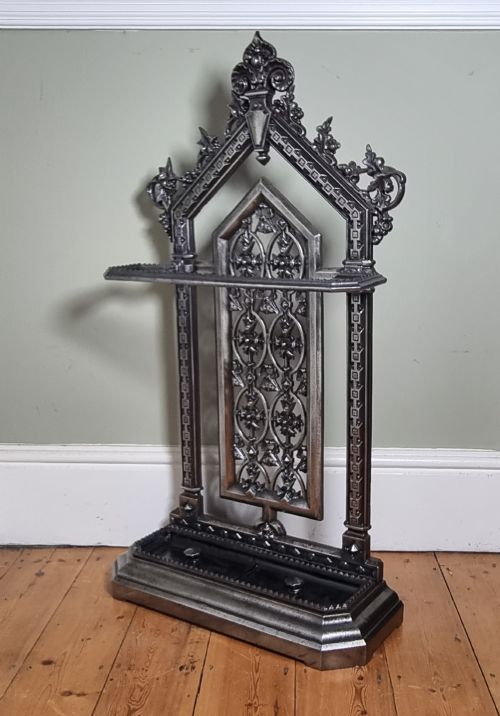
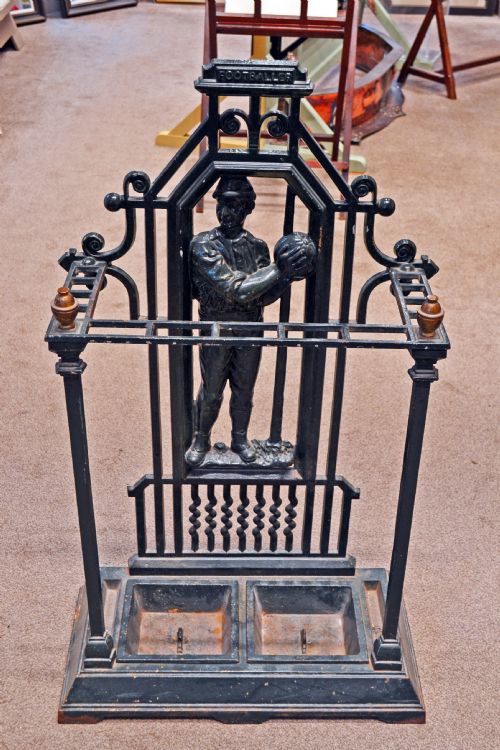
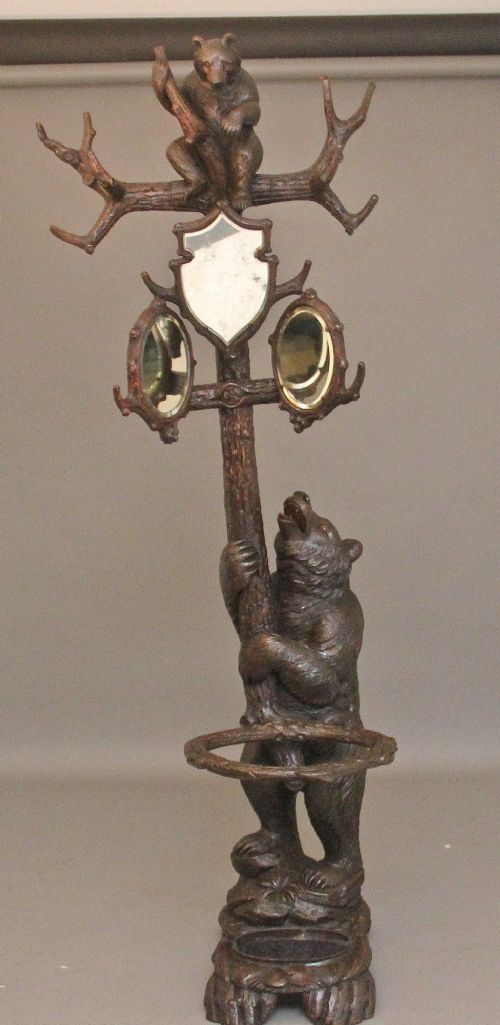
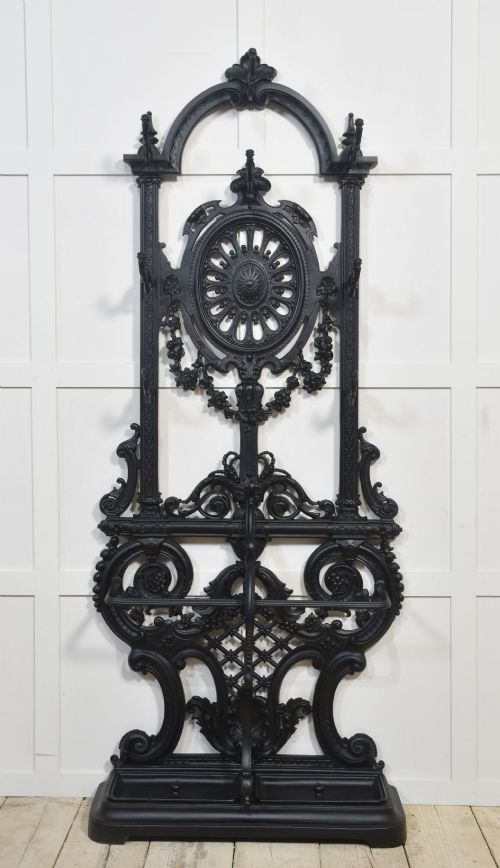
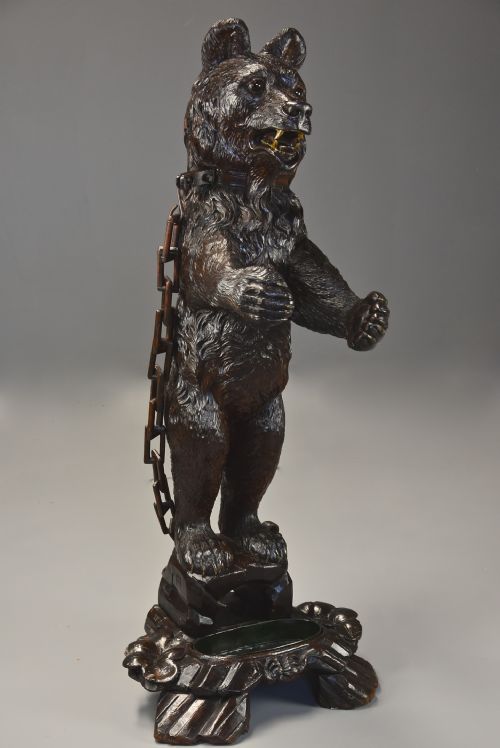
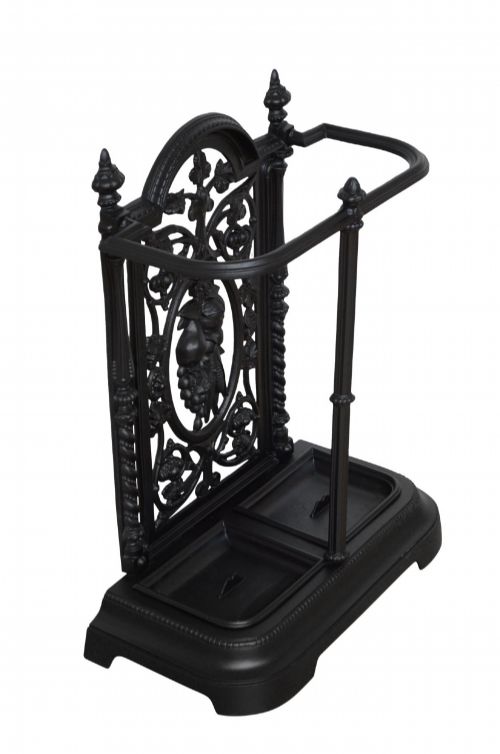
The versions met most frequently on this page fall into two distinct categories: heavy cast iron frames moulded with foliage or figurative motifs, and intricately carved wooden Black Forest figures shaped as bears holding umbrella receptacles. Both types answer the traditional requirement for durable, dark-toned hallway furnishings.
Makers utilised robust materials capable of withstanding daily dampness from wet weather gear, resulting in surviving examples that remain remarkably sturdy. Whether cast in metal or carved from Linden wood, each object establishes a strong visual anchor near the front door.
How they were made
Cast iron examples take shape through traditional foundry work, where molten metal pours into sand moulds to create intricate openwork patterns, registered design marks or structural drip pans. Foundries such as Coalbrookdale and Falkirk applied durable black painted finishes to protect the iron and define the decorative details.
Carved wooden pieces rely on skilled hand woodworking, particularly in the Black Forest tradition where artisans shaped Linden wood and oak into naturalistic animal forms. Craftsmen used chisels and gouges to render realistic fur textures, facial expressions and supporting tree trunks for the umbrella wells.
Several bears stand ready with hollow logs to catch stray walking sticks.
What varies in quality
The distinction between standard utility items and exceptional pieces rests upon the crispness of the casting or the depth of the carving. Superior cast iron stands feature sharp, well-defined relief work and clean openwork without distortion, while finer wooden sculptures display lifelike anatomy and detailed expression rather than generic shaping.
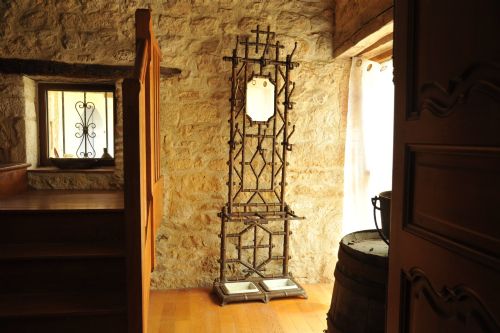
Original components significantly elevate a piece, such as matching removable drip trays positioned at the base to catch rainwater. Evidence of specific foundry stamps or artist signatures further separates mass-produced items from exhibition-quality works.
Coalbrookdale·Falkirk Foundry·P. Ruef
The Black Stick Stand Glossary
- Cast iron
- A strong, hard alloy of iron and carbon poured into moulds to create heavy, decorative furniture. This material forms the durable structure of many nineteenth-century hallway items.
- Black Forest
- A style of ornate wood carving originating from the Swiss and German mountain regions during the nineteenth century. These sculptures frequently depict bears and woodland flora.
- Demi-lune
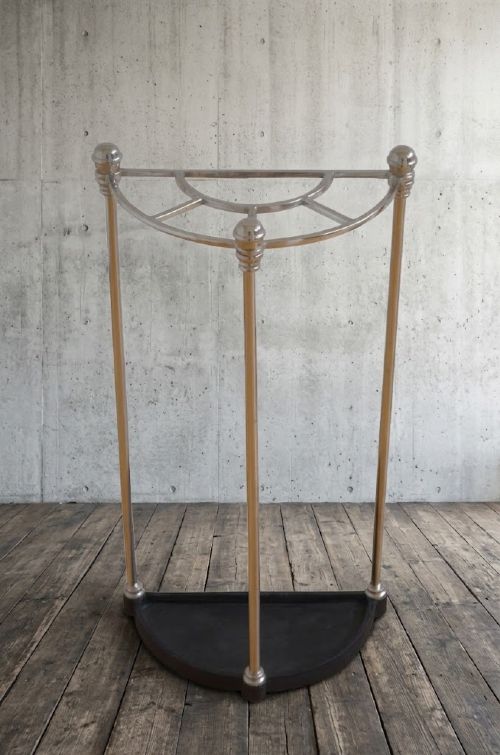
- A half-moon shape used to describe furniture designed to sit flush against a hallway wall. This profile saves floor space while accommodating umbrellas.
- Drip tray
- A shallow metal or ceramic dish fitted at the base of a stand to catch water from wet umbrellas. Original trays are an important feature for collectors.
- Linden wood
- A pale, fine-grained timber favoured by carvers for its softness and reliability. It allows artisans to execute deep, detailed sculptural work without splitting.
Black Stick Stand: Frequently Asked Questions
Where should I place a stick stand?
A black stick stand belongs naturally in an entrance hall, porch or vestibule where guests arrive with coats and umbrellas. Positioning it on a hard floor surface protects surrounding timber from any residual moisture dripping from wet walking gear.
Because these stands possess a strong vertical presence, they also fit well into narrow corridors or dead corners where they add both dark contrast and functional storage.
How do I care for cast iron?
Maintaining cast iron involves keeping the surface dry and dusting the intricate recesses regularly with a soft brush. Avoid using harsh chemical cleaners that might strip the historic black painted finish.
If the metal requires cleaning, a light wipe with a dry or barely damp cloth prevents rust accumulation while preserving the original surface texture.
How do I date an iron stand?
Dating cast iron hall stands relies on registration marks, foundry stamps and stylistic clues such as Aesthetic Movement geometry or Victorian Gothic motifs. Design patent stamps often reveal the exact year an ornament was registered for production.
Examining the construction of the drip pan supports and the finish beneath the paint layers further helps confirm the manufacturing era.