


Black Silhouette Picture
A black silhouette picture captures a sitter's profile in stark monochrome, offering an intimate glimpse into historical domestic life.
Black Silhouette Picture
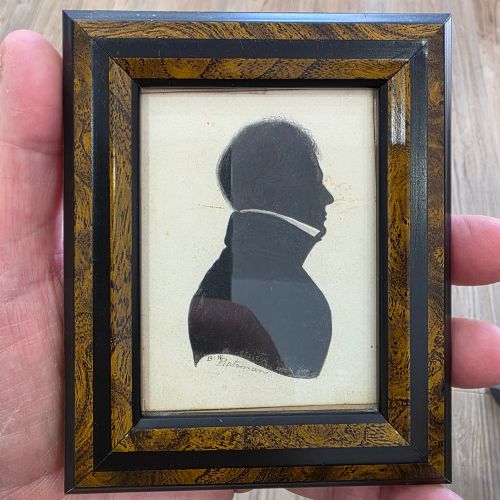
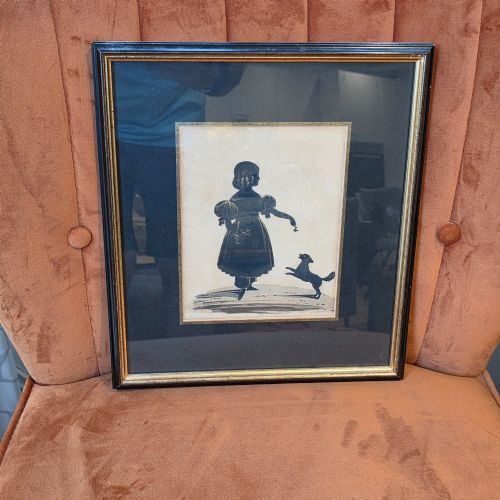
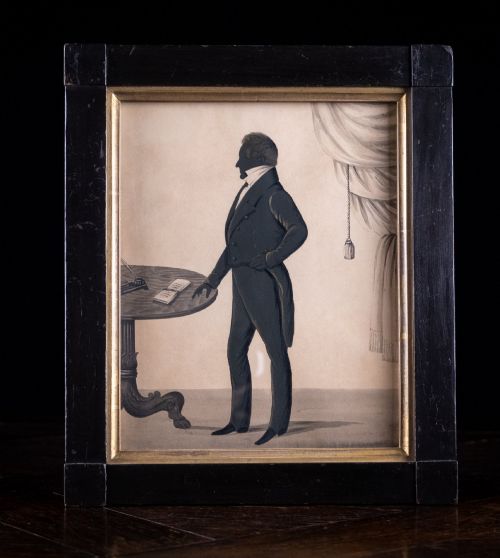
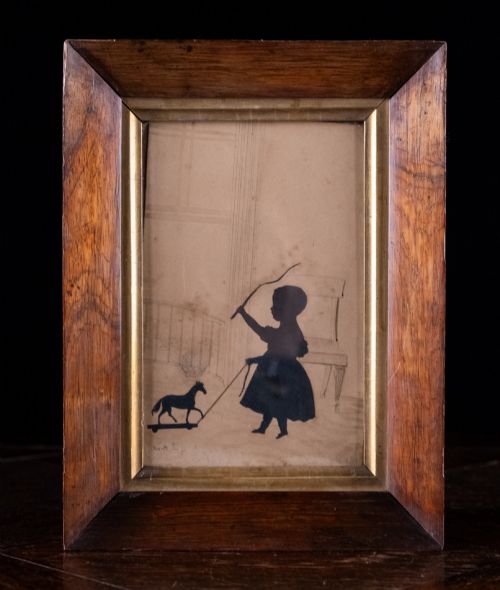
A black silhouette picture records a likeness or narrative scene in monochrome, most frequently encountered in framing from the Georgian, Regency, and Victorian periods. These works appear as single portrait miniatures, conversation pieces featuring multiple figures, and reverse glass paintings depicting animals or riders.
The materials span cut paper, ink, and watercolour mounted behind glass, often housed within rosewood or ebonised wood frames with brass highlights. Surviving examples range from unsigned folk art depictions to signed works by noted profile artists.
How they were made
Makers cut freehand profiles from black paper using scissors, or painted directly onto glass and card with deep black ink. Touches of gold leaf often highlight buttons, lace, and jewellery.
Framing typically involves protective glass held in wooden surrounds made of rosewood, ebonised timber, or papier-mache, sometimes featuring miniature brass hangers.
Listings feature paper, glass, ink, wood, brass, ebonised wood, gold leaf, and papier-mache.
What varies in quality
Quality rests upon the precision of the cutting or brushwork, where deft scissors capture an unmistakable likeness and posture in a single sweep. Finer examples include delicate gilt detailing applied by hand to enhance the costume.
The integrity of the original mount and framing influences desirability, alongside legible signatures or studio stamps on the reverse. Early paper items preserved away from damp retain sharper contrast than faded or foxed examples.
William James Hubard·Augustin Edouart·J. Deacon·John Miers
The Black Silhouette Picture Glossary
- Silhouette portrait
- A profile likeness cut from paper or painted dark against a light background, named after Étienne de Silhouette. These portable works preceded widespread photography.
- Reverse glass painting
- An artwork painted on the rear side of a glass panel and viewed from the front, producing a glossy finish. This technique protects the pigment from dust and handling.
- Ebonised wood
- Timber stained or treated to imitate true ebony, offering a deep black surface. It provides a dark contrast for gilded brass frames.
- Conversation piece
- An informal group portrait depicting family members or companions interacting in a setting. These domestic scenes often incorporate animals and detailed background elements.
Black Silhouette Picture: Frequently Asked Questions
How do I date a black silhouette picture?
Dating relies on the framing materials, the sitter's costume, and any inscribed signatures or gallery labels on the back. Regency examples often feature convex glass in slender rosewood frames, while Victorian pieces tend towards heavier wooden surrounds.
Paper stock and handwriting styles offer further clues to the decade of creation. Examining the backing papers and seals provides additional chronological context.
Are these pictures hand cut or printed?
Most antique pieces are original works created by hand, either through paper cutting with scissors or direct painting with ink and watercolour. Studio artists produced distinct profiles for individual patrons rather than mass-producing identical prints.
Close inspection under magnification reveals the texture of cut paper edges or brushstrokes. Signed works and studio trade labels confirm the hand-rendered nature of these portraits.
How should I display my silhouette?
Display these artworks away from direct sunlight to prevent the black paper and watercolour pigments from fading. Stable indoor humidity protects the paper and prevents the wooden frame from warping.
Use secure wall fixings suited to the weight of antique glass and hardwood frames. Avoid hanging pieces on damp exterior walls.
What is a hollow cut silhouette?
A hollow cut silhouette is created by cutting the profile out of a white sheet of paper, leaving a void. This sheet is then laid over a dark background fabric or paper so the likeness appears through the opening.
Artists often signed their names directly beneath the aperture on the white mount. This technique gained popularity during the late Georgian and Regency eras.