


Black Seat Dining Chairs
Black seat dining chairs bring together robust construction and dark upholstery, offering a practical seating option for the dining table.
Black Seat Dining Chairs
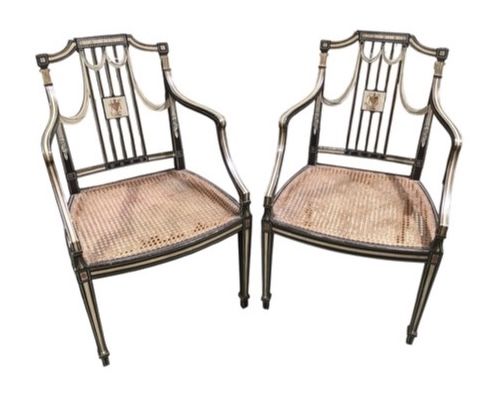
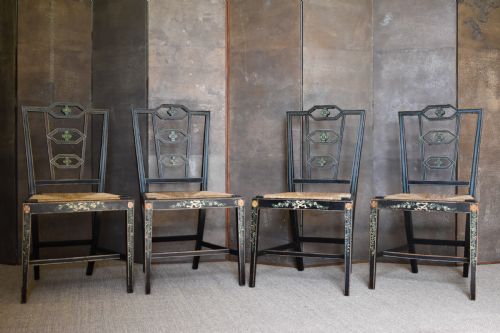
Black seat dining chairs encompass seating designed for dining spaces, featuring dark seating surfaces across various historical periods. The selection spans 18th century, Regency, Victorian, Arts and Crafts, and mid-century styles.
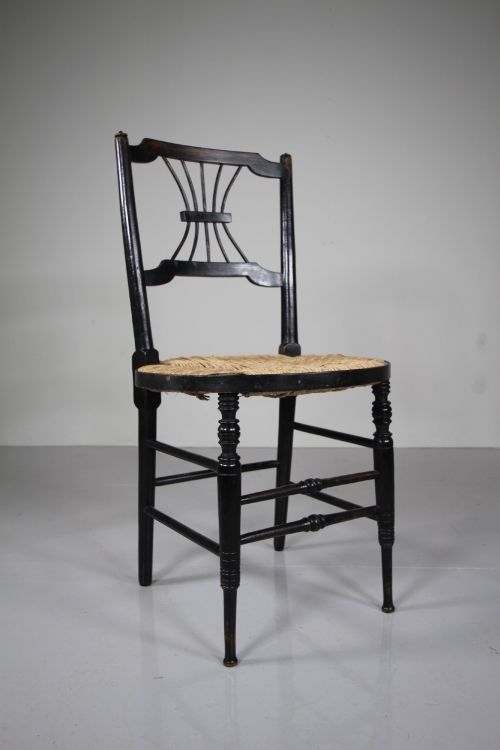
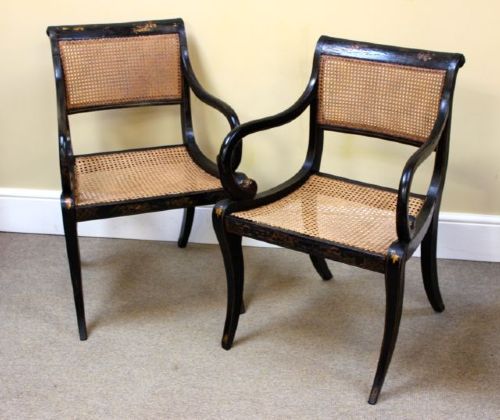
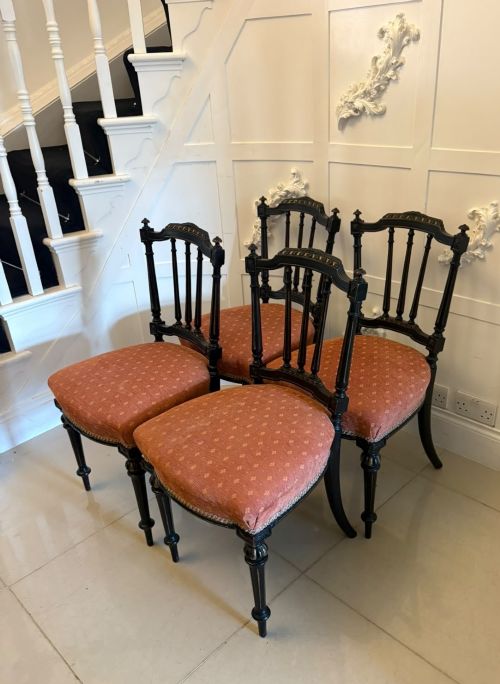
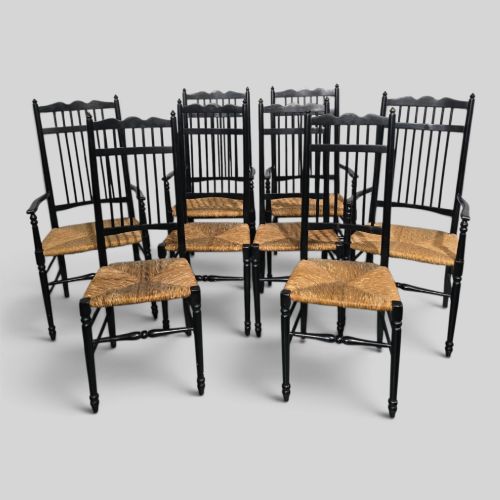
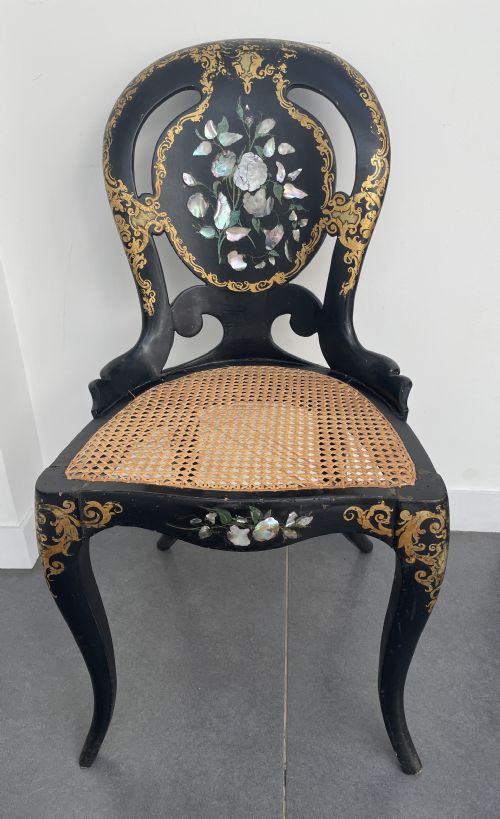
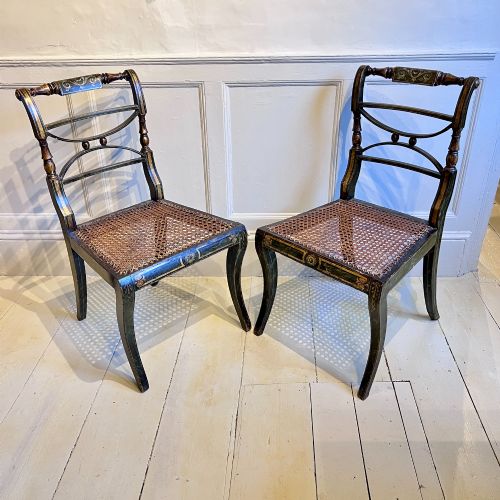
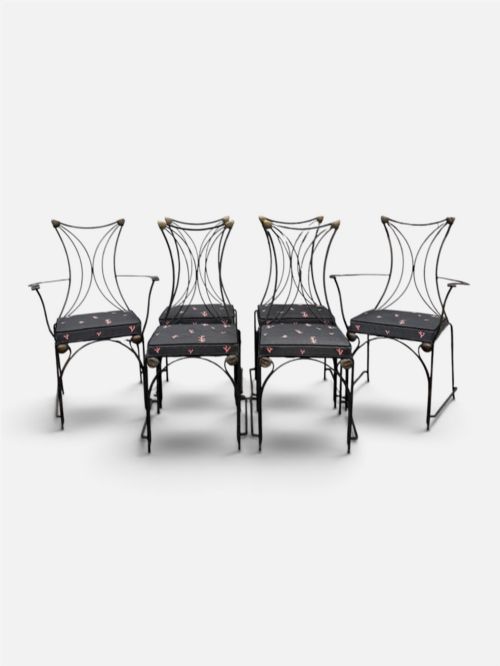
Buyers encounter numerous configurations, from single side chairs and carvers to large matched sets intended for formal dining rooms. Materials such as cane, ebonised wood, leather, and fabric define the appearance of these seats.
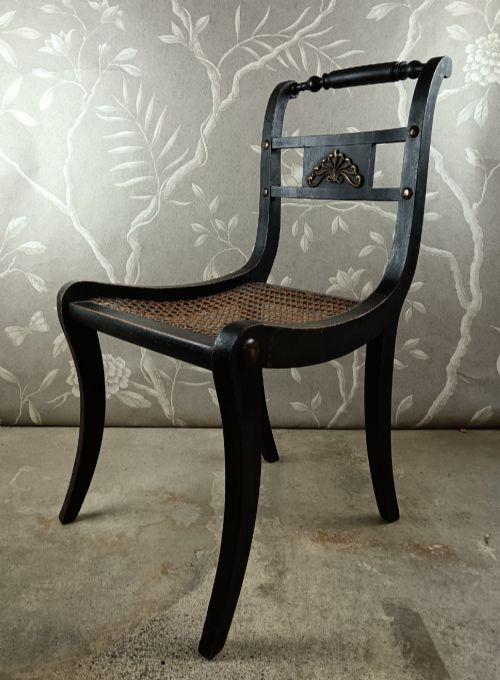
Origins range from English Regency workshops to French cabinetmakers and Anglo-Indian production. Ebonised finishes and painted surfaces recur frequently among the surviving examples.
How they were made
Construction relies heavily on traditional timber framing using woods like mahogany, walnut, oak, and ebonised beech. Joinery techniques secure stability across dining chairs subjected to daily use.
Dark seating surfaces utilise natural materials such as woven cane, applied leather, or textile upholstery. Frame decoration incorporates carving, gilding, marquetry inlay, and brass detailing.
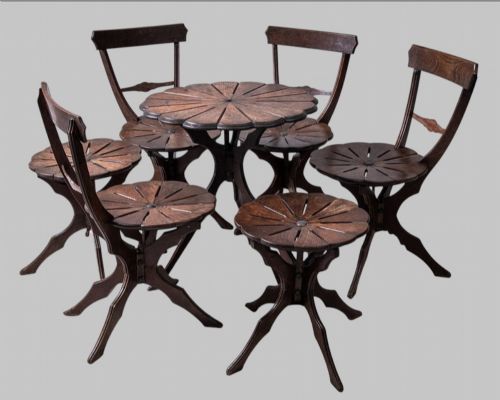
Musical chairs existed outside the party game, exemplified by Swiss walnut examples fitted with internal mechanisms to play tunes.
What varies in quality
Distinctions in quality emerge through the precision of timber selection and the execution of fine details like hand-carved motifs or gilt highlights. Superior examples maintain structural integrity alongside original surface finishes.
Consistency across large dining sets elevates desirability, particularly when sets retain their matching frames and uniform upholstery or cane seats. The reputation of the workshop or designer also influences the standing of individual pieces.
William Morris·Rossetti·Bruce J. Talbert·Philip Webb
The Black Seat Dining Chairs Glossary
- Ebonised
- Wood treated to resemble expensive ebony through staining or painting. This dark finish appears frequently on 19th-century seating.
- Cane
- Woven rattan material used to form resilient seat panels. Caned panels offer light, flexible support.
- Carver
- An armchair designed with armrests, traditionally placed at the head of a dining table. Pairs often accompany sets of side chairs.
- Marquetry
- Decorative veneer applied in patterns to furniture surfaces. Craftsmen utilise contrasting wood types to create pictorial designs.
Black Seat Dining Chairs: Frequently Asked Questions
How do I care for ebonised wood?
Dust regularly with a soft, dry cloth to prevent surface scratching. Avoid harsh chemical cleaners that can degrade the dark finish over time.
Keep wooden chairs away from direct heat sources and significant moisture fluctuations. Application of appropriate wax preserves the sheen of the timber.
Can I mix these with modern tables?
Historic dining chairs integrate effectively with contemporary dining tables through contrasting styles. The dark seats provide a grounding element in mixed-period interior schemes.
Consider seat height and clearance beneath the table surface before combining different eras. Proportions remain the primary factor for comfortable daily use.
How do I identify a Regency chair?
Regency designs often feature classical motifs, saber legs, and ebonised or painted surfaces reflecting early 19th-century taste. Proportions tend to be clean and architectural.
Look for construction details typical of the period, including traditional joinery methods and original cane or upholstered drops.
Are larger sets difficult to find?
Large matched sets from the 19th century or earlier periods require patience to source. Many survivors were split up over generations of use.
Sets of six or eight appear more readily than groupings of twelve or fourteen. Checking the provenance helps confirm if a large set originated together.