
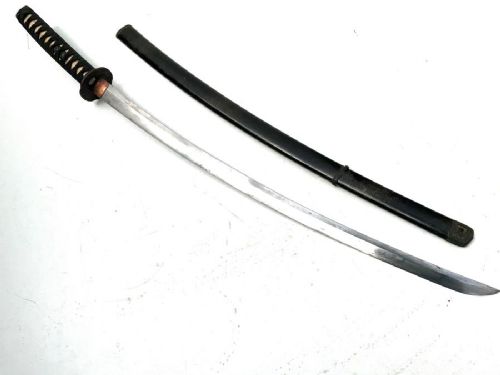
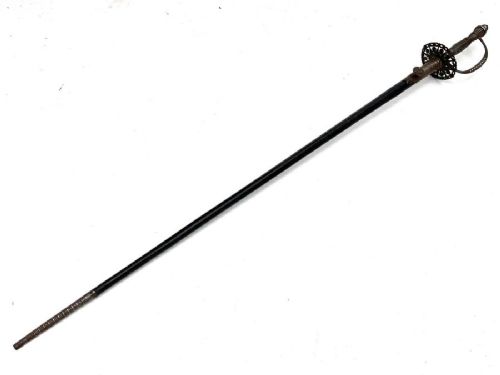
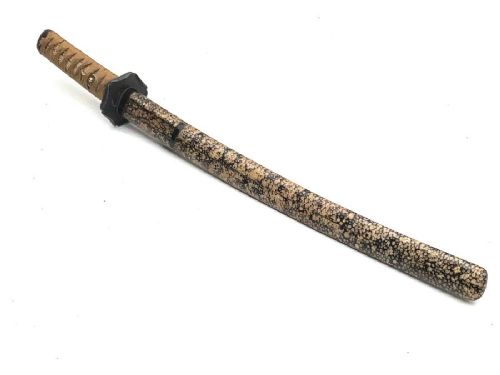


Black Scabbard Sword
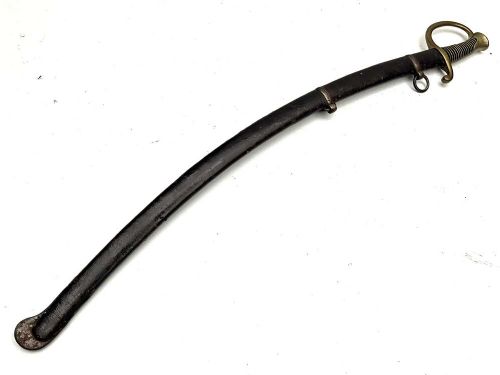
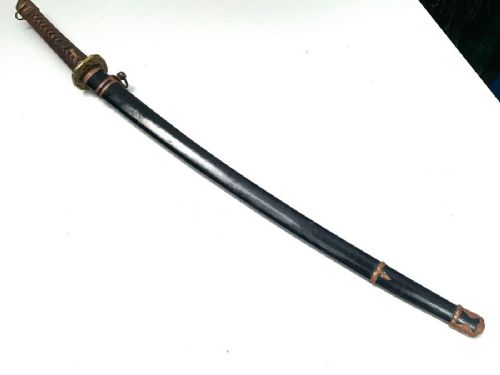
When you search for a black scabbard sword, you are looking for edged weapons housed in dark sheaths, ranging from Japanese samurai tachi to European military sabres.
Black Scabbard Sword
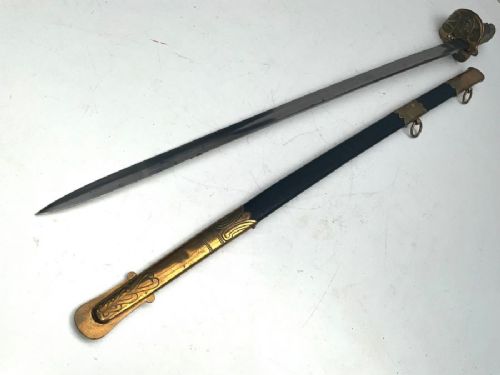
A black scabbard sword encompasses a diverse group of edged weapons designed for military use, ceremonial duties, and personal combat across multiple centuries. When you examine this selection, you encounter forms ranging from 16th century Japanese samurai tachi to Victorian French cavalry sabres and mid-20th century German naval presentation pieces.
The objects span periods from the Muromachi and Edo periods of Japan to European Georgian and 19th century militaria. You are most likely to meet military sabres and Japanese samurai swords, each reflecting the specific martial requirements and officer status of their respective eras.
How they were made
The construction of these weapons relies on durable metals and organic materials combined for practical combat or ceremonial presence. Steel forms the primary blade material, whilst leather, wood, and ray skin frequently encase the scabbards.
Mountings and guards incorporate brass, iron, and gilt brass to secure the hilt and provide structural balance. Lacquer often finishes the exterior of the scabbard, offering both protection and a uniform dark appearance.
Listings span from the 16th century through to the mid-20th century, encompassing Japanese samurai swords, German naval pieces, and British cavalry sabres.
What varies in quality
The distinction between standard military issue and higher echelon pieces rests in the refinement of the metalwork and the grade of the mountings. Swords intended for officers or presentation purposes display superior craftsmanship in the hilt fittings and the precision of the blade geometry.
Materials utilised for the grip and scabbard further differentiate the grade of the piece, with ray skin and gilt brass indicating a higher status than basic leather and iron.
H Wilkinson
The Black Scabbard Sword Glossary
- Sabre
- A backsword with a curved blade intended primarily for cutting, commonly used by cavalry units. Many 19th century examples feature robust steel blades and protective handguards.
- Tachi
- A type of traditional Japanese samurai sword that is longer than a katana and worn suspended edge-down from the belt. Early examples date back to the Muromachi period.
- Scabbard
- A sheath for holding a sword, dagger, or other large blade. These protective housings are constructed from wood, leather, or metal to safeguard the steel.
- Bayonet
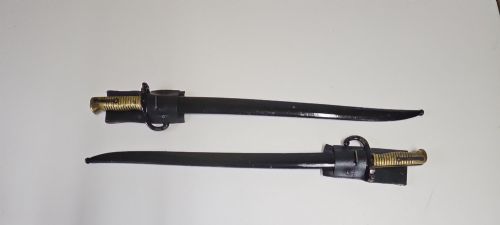
- A blade designed to fit to the muzzle end of a rifle for use in close combat. Victorian military examples demonstrate this secondary form of edged weapon.
- Militaria
- Antiques and collectibles relating to military warfare and soldiers. This category covers swords, sabres, and bayonets from various international conflicts.
Black Scabbard Sword: Frequently Asked Questions
What is a black scabbard sword?
A black scabbard sword refers to an edged weapon housed in a dark protective sheath, encompassing Japanese samurai swords, European cavalry sabres, and naval presentation pieces.
These items bridge military history and traditional craftsmanship, reflecting the tactical demands and officer ranks of periods from the 16th century to the mid-20th century.
How do I date a sword?
Dating a sword involves examining the blade pattern, the style of the hilt, and any associated markings left by the maker or military regiment. Reference points include specific pattern years like the British 1796 pattern or the French 1829 pattern.
Material choices, such as ray skin or gilt brass, alongside construction techniques also help narrow down whether an object originates from the Victorian era or earlier centuries.
How were these swords used?
These swords served active combat roles in cavalry charges, naval engagements, and infantry operations, whilst others functioned as ceremonial or presentation weapons for officers. Their design directly correlates with their intended martial application.
Masonic ceremonial swords and officer presentation pieces were primarily worn for display and formal occasions rather than battlefield combat.
How do I care for antique steel?
Caring for antique steel requires maintaining a stable environment with minimal humidity to prevent oxidation and active rust formation on the blade. Light applications of appropriate museum-grade oil help protect the metal surface.
Leather and ray skin scabbards benefit from similar dry storage conditions to preserve the organic materials without degrading the original finish.