

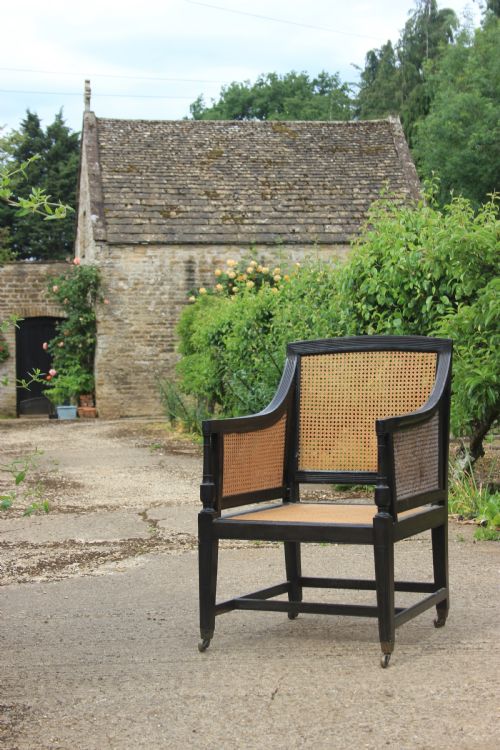


Black Regency Armchair
These black regency armchair examples bring serious presence to a room, offering classic lines and dark finishes that anchor a seating arrangement.
Black Regency Armchair
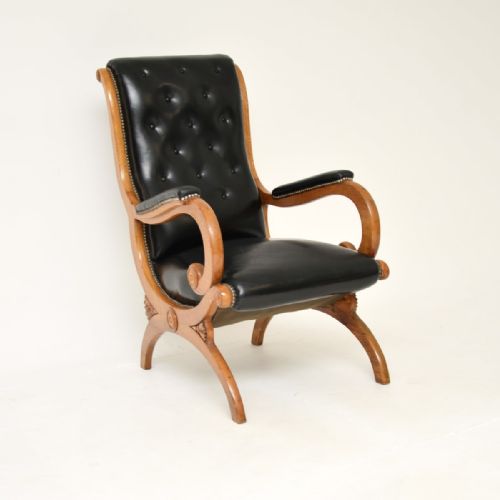
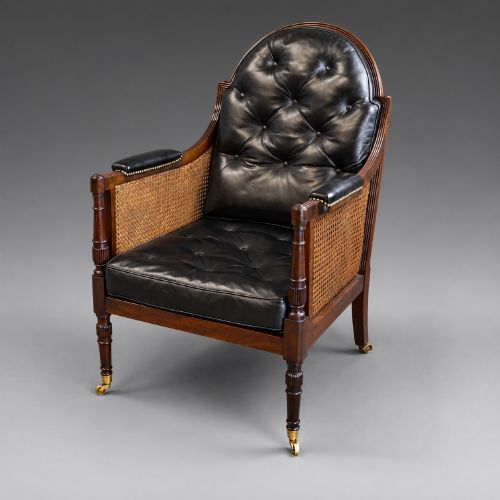
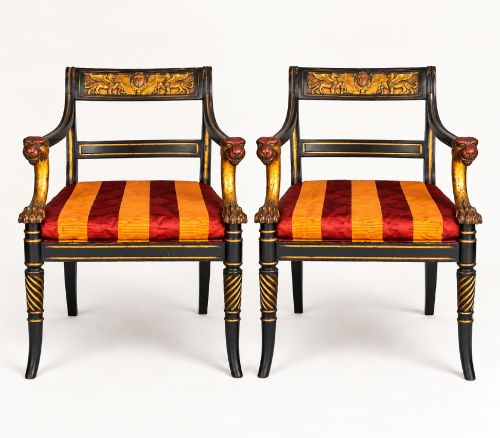
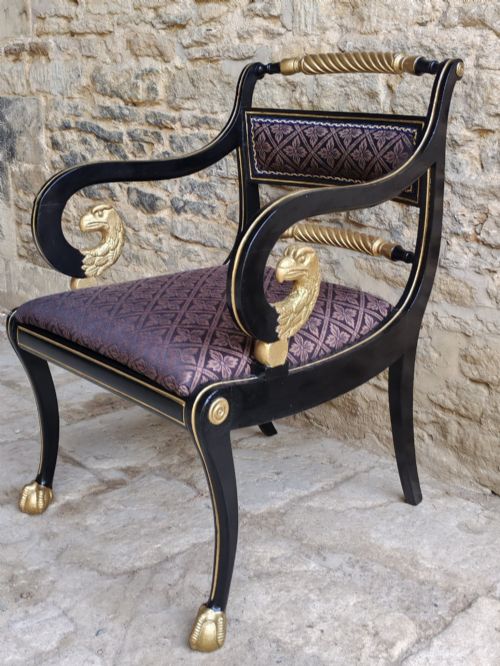
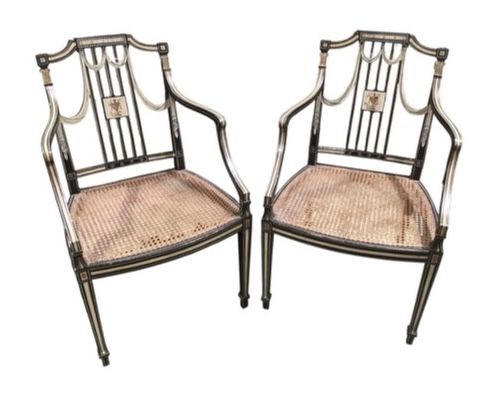
When you search for a black regency armchair, you are looking at seating rooted in the Regency period alongside later Regency Revival pieces from the twentieth century. These chairs appear in forms such as library armchairs, bergères, rocking chairs, desk chairs, and elbow chairs.
The materials span ebonised wood, solid ebony, mahogany, beech, cane, leather, and painted finishes. Alongside canonical British Regency work, the selection includes Anglo-Indian Regency pieces and William IV examples.
How They Were Made
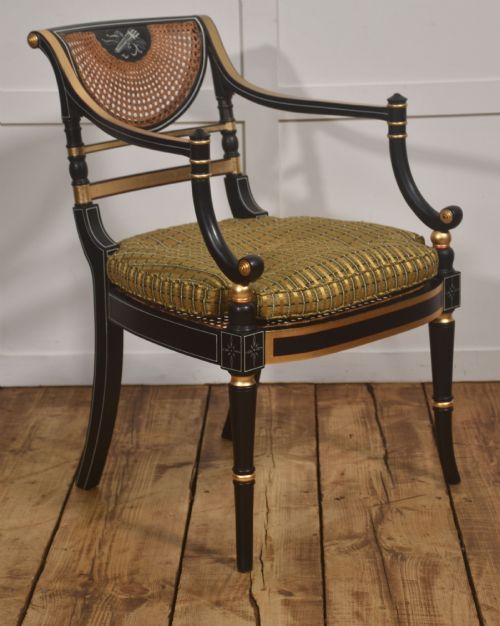
Cabinetmakers constructed these frames using dense timbers like mahogany, beech, and ebony, applying ebonisation, paint, or black lacquer to achieve the dark surface. Many examples incorporate woven cane panels or are fitted with leather upholstered seats, sometimes studded.
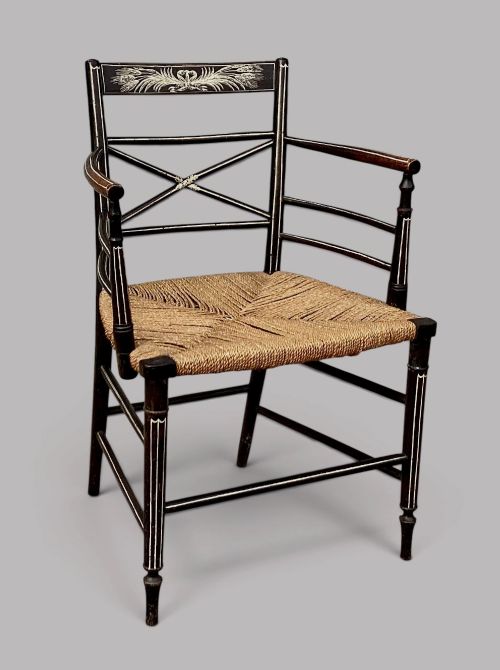
Decorative detailing relies on brass mounts, gilding, and carved elements such as swag or lambrequin back splats, as well as faux bamboo turnings.
Black Regency Armchair Retail Price Guide 2026
Typical asking prices for black regency armchair among the pieces listed under this phrase on Sellingantiques today, from the lower quarter to the upper quarter. They describe what is for sale here now, not the wider market.
Listings for this phrase include materials such as cane, ebonised wood, brass, mahogany, leather, paint, ebony, and beech.
What Varies in Quality
The distinction between ordinary and exceptional pieces lies in the crispness of the carving and the integrity of the timber beneath the black finish. Solid ebony and fine ebonised mahogany carry a different weight and presence than later revival painted beech.
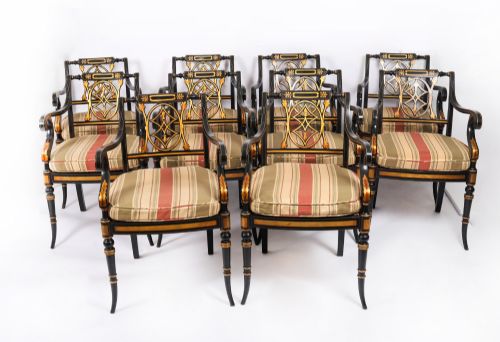
Original surfaces, such as early paint or lacquer, elevate a piece above later re-workings, while matching pairs and large sets maintain greater coherence than single chairs.
Gillows
The Black Regency Armchair Glossary
- Bergère
- An enclosed upholstered armchair with closed sides, often featuring cane panels. This form offers deep, supportive seating.
- Ebonised
- Wood treated with a dark stain or finish to imitate ebony. It provides the characteristic sombre dark tone seen on many Regency frames.
- Carver
- A term for an armchair, typically designed as part of a dining set with open arms. These match side chairs intended for a dining table.
- Lambrequin
- A decorative motif resembling drapery or a pelmet, often carved into the back splats of Regency chairs. It adds architectural rigidity to the upper frame.
- Caned
- Woven canework used for seats or back panels. This technique lightens the visual weight of heavy wooden frames.
Black Regency Armchair: Frequently Asked Questions
Are all black regency armchairs from the Regency period?
Many examples date to the early nineteenth century during the Regency era or the subsequent William IV period. However, the selection also includes twentieth-century Regency Revival pieces that replicate these earlier styles.
Checking construction methods and timber helps distinguish original nineteenth-century items from later revival interpretations.
What is the difference between ebonised wood and solid ebony?
Ebonised wood is typically a timber such as mahogany or beech that has been stained, painted, or polished to achieve a deep black appearance. Solid ebony uses the naturally dark, dense hardwood throughout the structure.
Solid ebony frames are considerably heavier and tend to appear on high-status Anglo-Indian pieces.
How do I use a library armchair in a modern room?
These armchairs work well as standalone reading seats in a study, living room, or bedroom. Their dark frames and upholstered seats provide a strong focal point against neutral walls.
Pairing a single chair with a small side table creates a dedicated spot for reading.
Can I use cane armchairs every day?
Caned panels are resilient, but their longevity depends on the tightness of the weave and the humidity of the room. Original cane requires gentle treatment compared to modern seating.
Adding a loose squab cushion can provide extra comfort and protect the cane surface during daily use.