


Black Paper Silhouette Art
Black paper silhouette art brings centuries of profile portraits, animals and conversation pieces into focus through delicate hand-cutting and framing.
Black Paper Silhouette Art
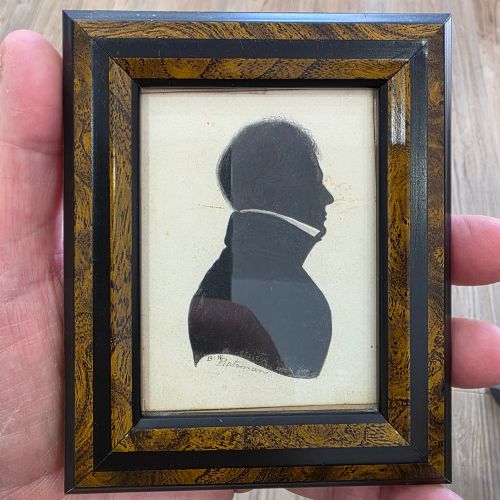
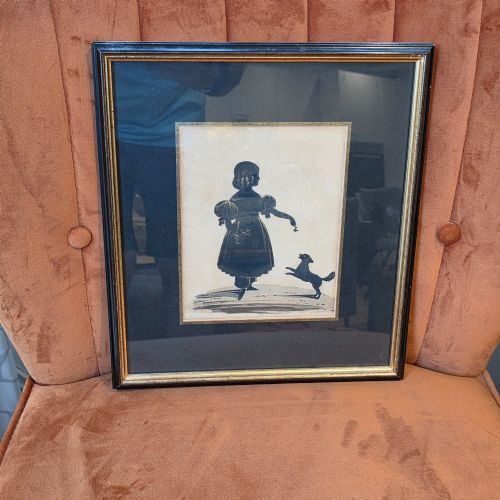
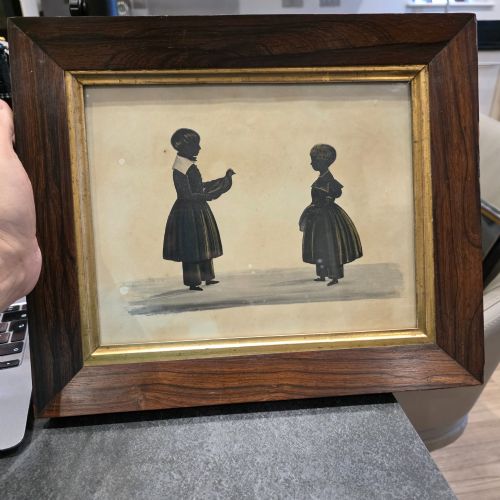
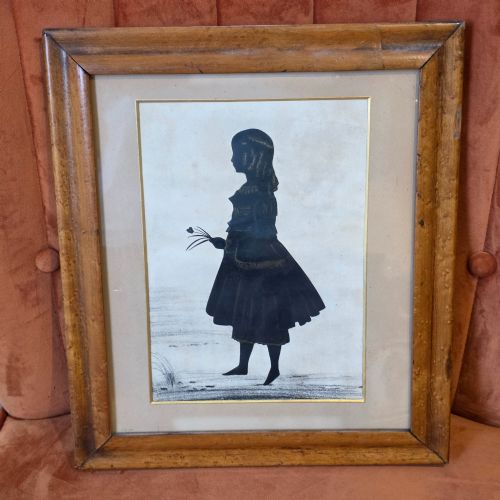
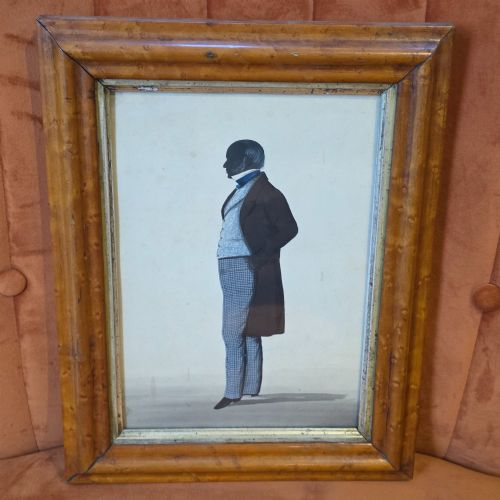
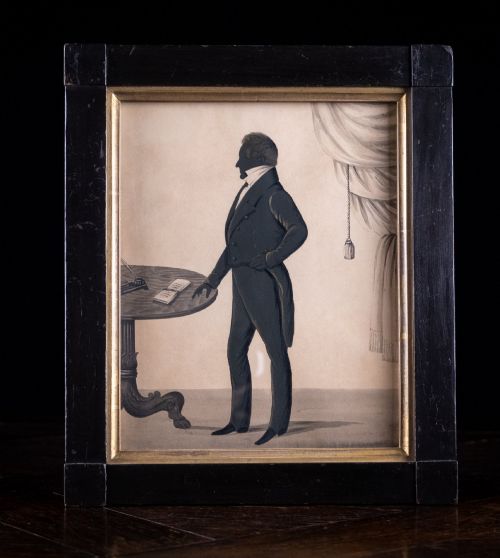
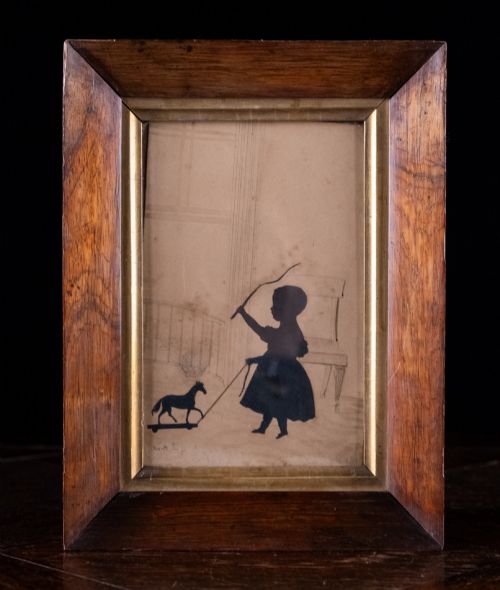
Black paper silhouette art encompasses profile portraits, conversation pieces and decorative subjects rendered in profile, predominantly originating from the Georgian, Regency and Victorian periods. Buyers encounter framed wall art ranging from single portraits of gentlemen and ladies to complex family groups with children, animals and architectural elements.
The versions most frequently met on this page are 19th-century cut-paper portraits housed in period wooden frames, often backed by glass or embellished with gold leaf highlights. Alongside individual likenesses, examples include folk art narratives, botanical subjects like cut paper flowers and literary scenes.
These works capture historical likenesses through silhouette portraiture, offering a direct window into past dress, hairstyle and social decorum. The forms span miniature portraits to large framed wall art, reflecting diverse domestic display traditions across the eighteenth and nineteenth centuries.
Materials and construction
Framing materials characteristically include maple, ebony, or gilt wood housings, frequently protected beneath flat or convex glass. These traditional enclosures preserve the fragile paper and delicate ink work from atmospheric degradation while providing structural depth.
Several profiles immortalise beloved family pets, proving that Victorians loved dogs just as much as we do.
Judging quality
Quality rests upon the dexterity of the cutting and the crispness of the profile lines, where master cutters captured anatomical accuracy, expression and costume detail without preliminary sketching. The integration of secondary media, such as watercolour embellishment or fine gilding, elevates standard profiles into sophisticated works of art.
The harmony between the silhouette, its backing paper and the original period frame dictates desirability. Intact historical provenance, artist signatures or documented gallery attributions further distinguish exceptional pieces from standard anonymous productions.
William James Hubard·Augustin Edouart·Frederick Frith·Alfred Darbyshire·George Atkinson·John Smith of Edinburgh
The Black Paper Silhouette Art Glossary
- Silhouette
- A portrait or image represented as a solid shape of a single colour, usually black, showing the profile of the subject. This method gained widespread popularity in the eighteenth and nineteenth centuries before the advent of photography.
- Conversation piece
- An informal group portrait, typically depicting family members or friends interacting in a domestic or outdoor setting. In silhouette art, these compositions often include multiple figures, animals and landscape details.
- Hollow cut
- A technique where the profile is cut out from a sheet of light paper, which is then laid over a dark background so the portrait appears through the opening. This method was widely used by professional profileists.
- Gilt highlights
- Fine applications of gold leaf or metallic paint used to accent jewellery, buttons, lace or hair on a black paper silhouette. These additions provided depth and richness to otherwise monochrome compositions.
Black Paper Silhouette Art: Frequently Asked Questions
How do I date an antique silhouette?
Dating relies primarily on the style of dress, hairstyles and headwear depicted in the portrait. Framing materials, paper types and written inscriptions or gallery labels on the reverse also provide secure chronological markers.
Changes in silhouette fashion shifted from bust-length Georgian profiles to full-length Victorian conversation pieces. Comparing costume details against documented historical fashion plates helps narrow the production window.
What is a hollow cut silhouette?
A hollow cut involves snipping the portrait likeness out of a piece of white or pale paper rather than cutting out the black figure itself. The resulting sheet is then placed over a dark background fabric so the image emerges in negative space.
This technique allowed artists to sign their work on the remaining mount below the opening. It represents a distinct departure from solid paper silhouettes pasted directly onto card.
How should I display silhouettes at home?
Display these works away from direct sunlight to prevent the fragile black paper and watercolour pigments from fading over time. Maintaining stable indoor humidity protects both the antique wooden frames and the historic paper.
Grouping several pieces together on a wall creates the traditional gallery effect popularised in historic interiors. Smaller framed portraits also suit placement on narrow mantelpieces or dedicated collector shelves.
Are all silhouettes signed by the artist?
Many period silhouettes remain unsigned because itinerant profileists produced them quickly at fairs, galleries or private homes. Studio stamps, handwritten notes on the backing paper or distinctive cutting styles help attribute unsigned works.
Signed pieces by known practitioners command significant interest from collectors. However, anonymous folk art silhouettes hold equal charm through their direct execution and social history.