


Black Paper Cut Miniature
A black paper cut miniature offers a direct window into nineteenth-century life through crisp profile portraits fashioned by hand.
Black Paper Cut Miniature
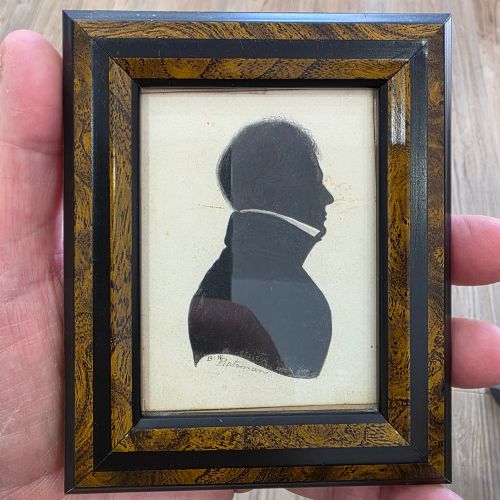
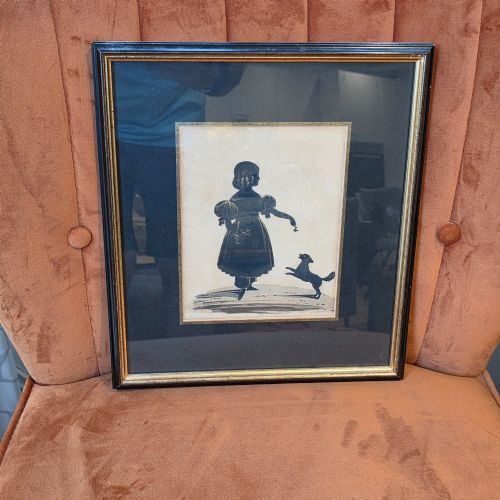
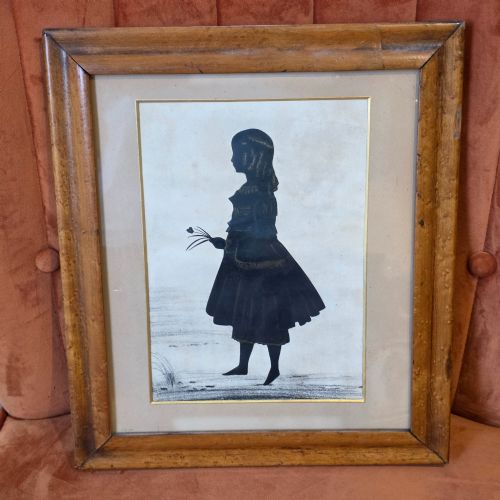
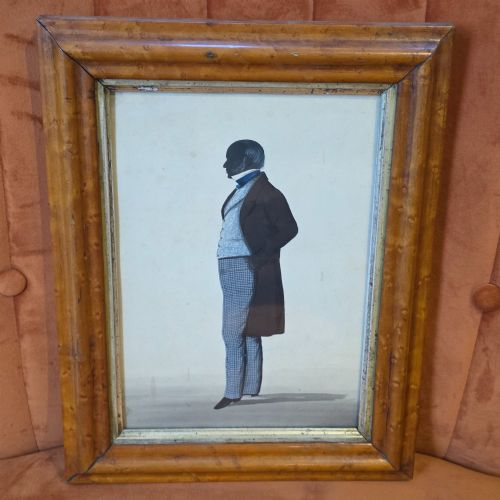
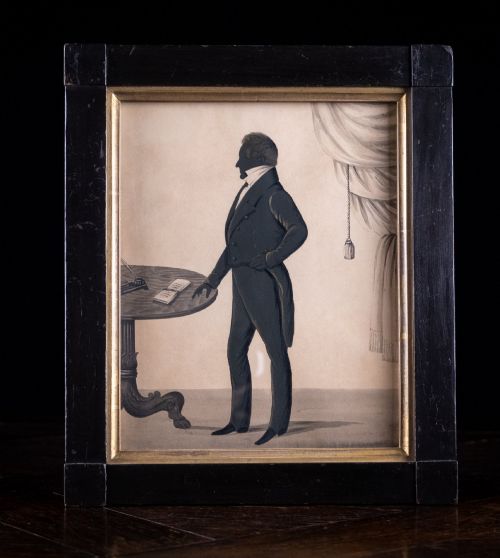
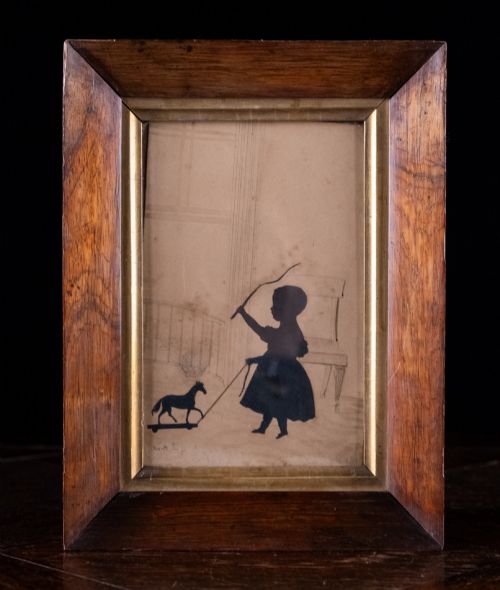
A black paper cut miniature captures the likeness of sitters from the Georgian, Regency, and Victorian periods through delicate scissor work. These framed artworks range from bust portraits of gentlemen and ladies to full-length depictions featuring children, dogs, and horses.
The pieces on this page span the nineteenth century, utilising paper silhouettes often enhanced with touches of ink, watercolor, and gold leaf. Buyers encounter single portraits alongside pairs, housed in wood frames such as maple, gilt wood, or ebony.
Makers and profile artists of the era worked with extraordinary precision to record costume details, from turban caps to high collars. The resulting wall art preserves intimate domestic scenes and individual identities with remarkable economy of medium.
Materials and Technique
Many works incorporate gold leaf highlights to accentuate buttons, lace, or jewellery on the paper figures. Glass protects the delicate paper surface within frames constructed from maple, gilt wood, or ebony, preserving the pieces over centuries.
Nineteenth-century sitters held perfectly still while artists snipped their likenesses in seconds, likely praying their noses did not twitch.
Judging Quality
The distinction between ordinary and exceptional work lies in the dexterity of the cutting and the crispness of the profile outline. Superior examples capture gesture, posture, and anatomical proportion with absolute conviction, while lesser pieces appear stiff or imprecise.
Framing and mounting also dictate quality, as original glass and period frames of maple or ebony maintain the integrity of the artwork. The addition of skilled brushwork, such as subtle watercolor details or fine gold leaf embellishments, elevates a standard silhouette into a striking portrait.
Bateman·William James Hubard·Augustin Edouart
The Black Paper Cut Miniature Glossary
- Silhouette
- A portrait profile cut from black paper or painted onto a solid background, named after the French finance minister Etienne de Silhouette. These likenesses became immensely popular for recording personal portraits before the invention of photography.
- Gilt Wood
- Wood that has been coated with a thin layer of gold leaf or gold paint. Frames utilising this finish were frequently chosen to house Regency and Victorian portrait miniatures.
- Maple
- A dense hardwood commonly utilised for frames during the nineteenth century. Its distinctive grain patterns provide a warm, decorative border for paper silhouettes.
- Ebony
- A dense, dark wood prized for its deep black colour and smooth finish. Frames made from this material offer a stark, elegant contrast to the pale background of a cut paper portrait.
Black Paper Cut Miniature: Frequently Asked Questions
How are these miniatures framed?
Most pieces are housed in period wood frames made from maple, ebony, or gilt wood, protected by glass. These original housings keep the fragile paper secure and complement the aesthetic of the nineteenth century.
Buyers should examine whether the frame appears contemporaneous with the silhouette. Traditional backing materials and old glass help confirm the historical context of the artwork.
What subjects do the silhouettes show?
The artwork depicts gentlemen, ladies, children, and occasionally animals such as dogs and horses. Portraits range from bust views to full-length studies capturing specific contemporary clothing.
Details like turban caps, high collars, and riding attire help identify the social status and fashion of the sitter. These elements provide a tangible link to Georgian, Regency, and Victorian society.
How can I tell the period?
Dating relies on costume styles, framing materials, and occasional signatures or stamps left by known profile artists. Regency pieces often display distinct hairstyles and garments compared to later Victorian examples.
Examining the paper type and mounting style also offers clues to the decade of creation. Written inscriptions on the reverse of the frame occasionally record the sitter's name and date.
Where should I hang them?
These framed silhouettes suit small wall spaces, hallways, or groupings alongside other nineteenth-century artwork. Their compact scale makes them ideal for display in study rooms or intimate interior settings.
Direct sunlight should be avoided to protect the black paper and any watercolor or gold leaf details from fading. Displaying them away from moisture ensures the paper and wooden frames endure.