
Black Painted Furniture
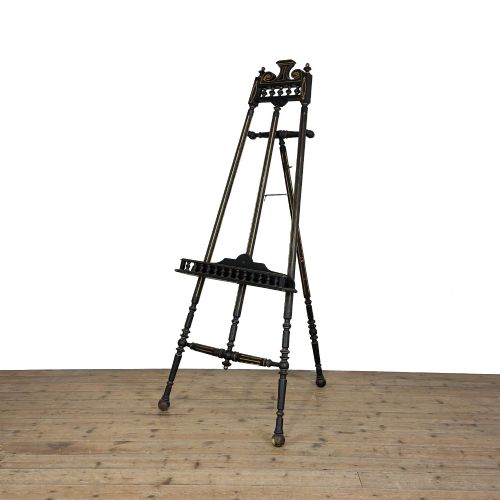
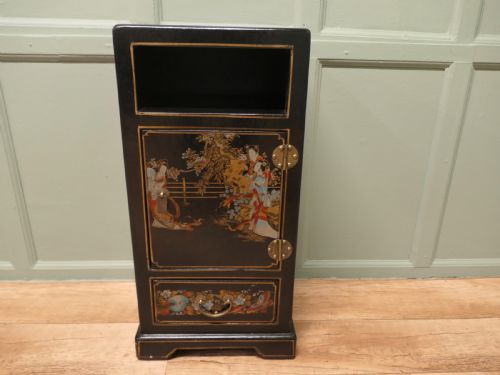
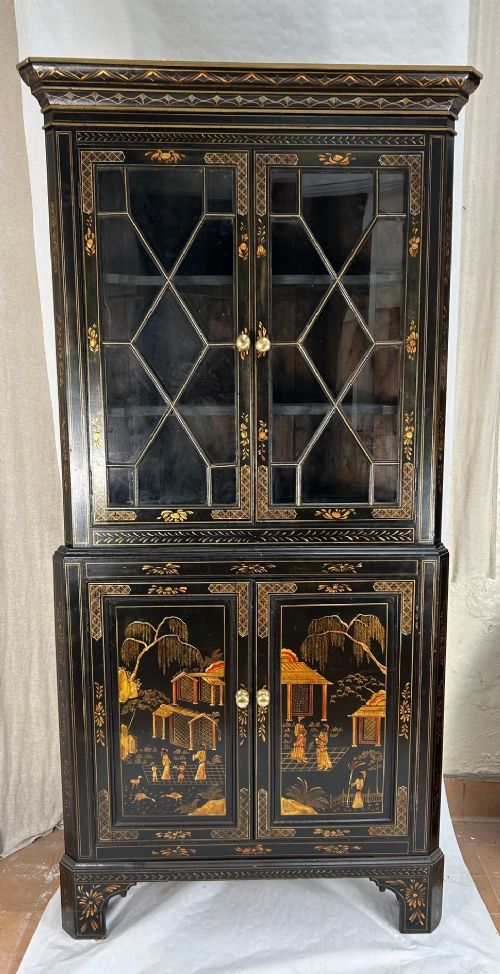
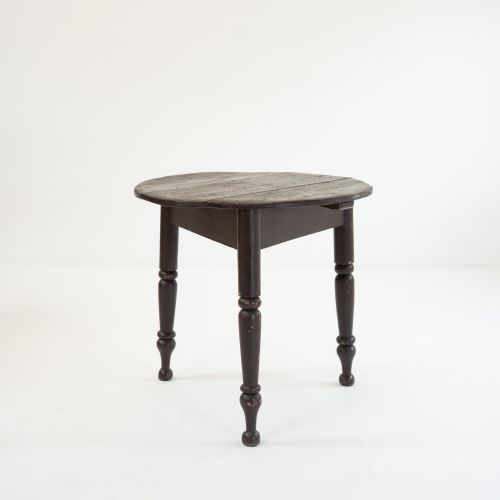
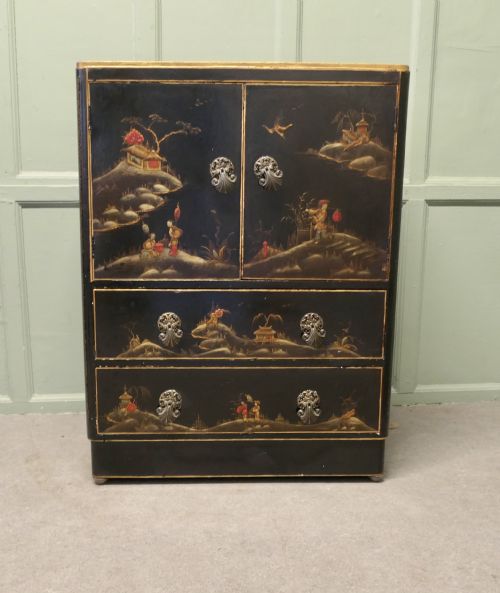
Black painted furniture brings depth and graphic punch to a room, ranging from folk pine chests to gilt-highlighted Chinoiserie cabinets.
Black Painted Furniture
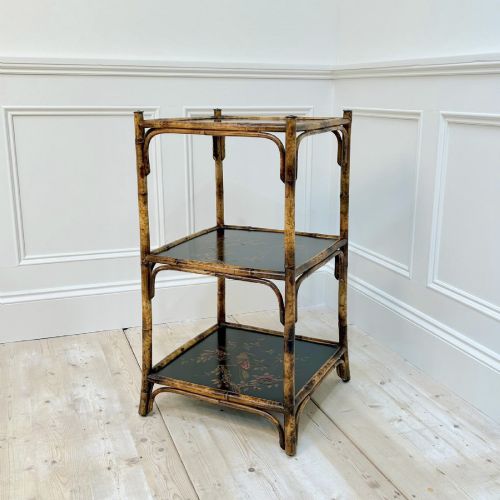
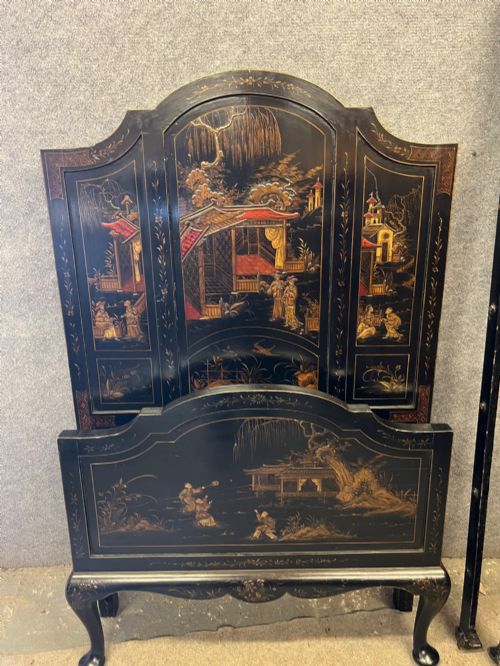
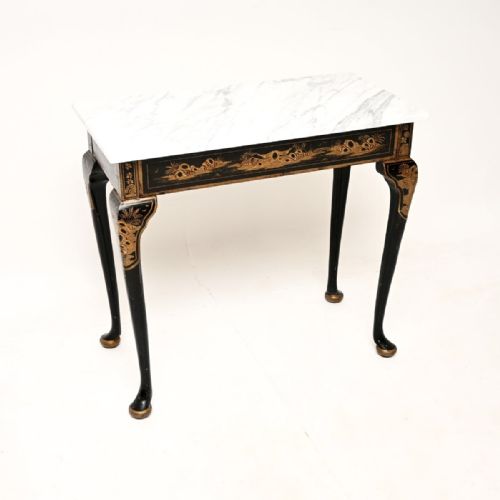
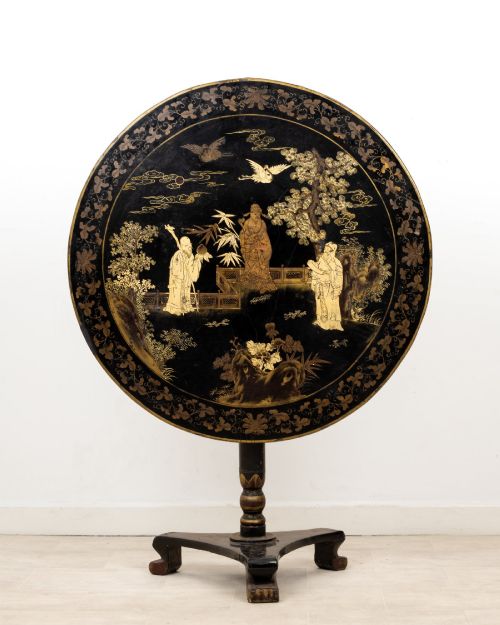
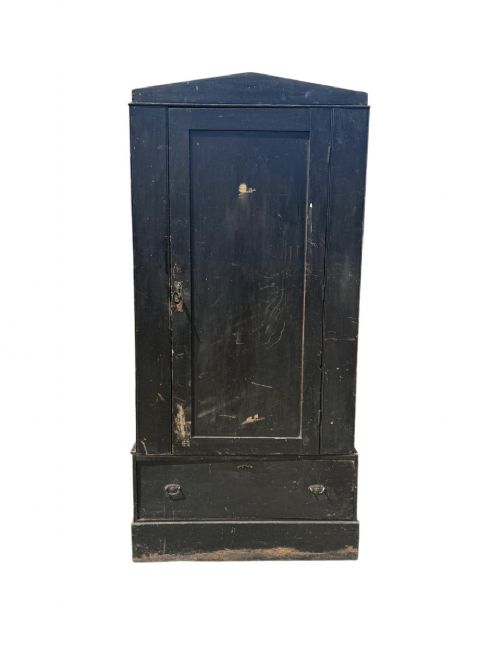
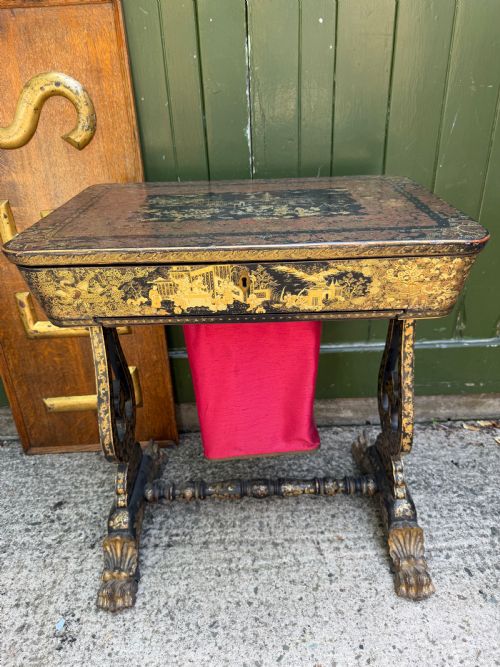
When searching for black painted furniture, buyers encounter a broad sweep of utilitarian pine pieces alongside high-style lacquer items. The selection spans robust Hungarian country benches and chests of drawers through to delicate Chinese export tables and Edwardian corner cupboards.
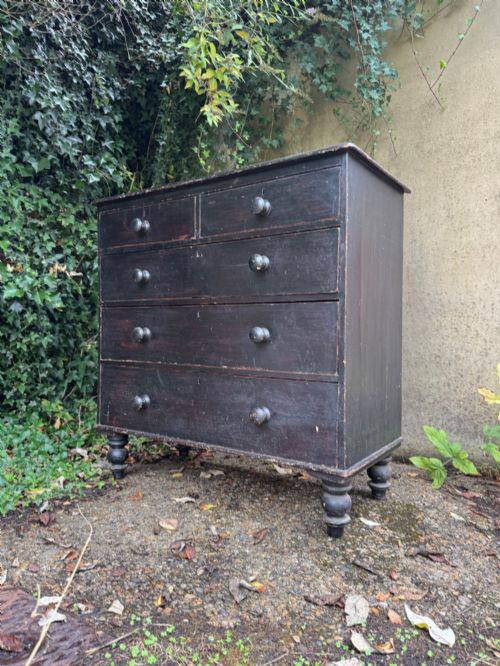
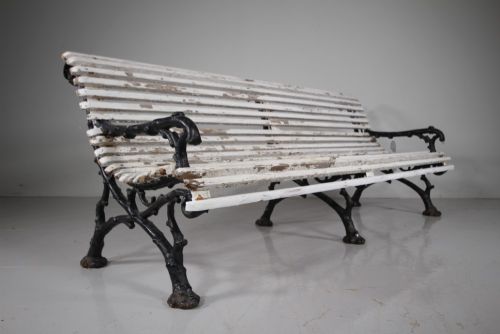
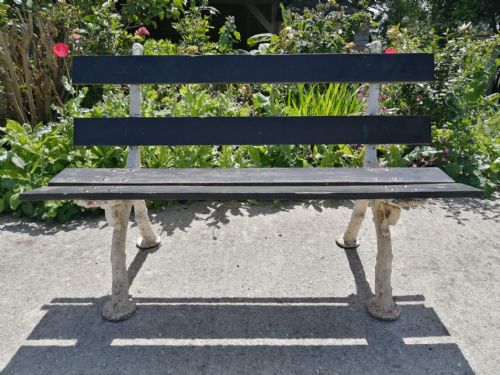
Victorian and Regency examples appear frequently, often finished in ebonised wood or rich black lacquer. Alongside these sit vernacular items like Welsh spinning chairs and rustic garden benches, demonstrating how domestic makers applied dark finishes across various centuries.
Materials and Construction
Carpenters built these pieces using solid timbers such as pine, oak, beech, and mahogany, applying dark paint, lacquer, or ebonising to transform the surfaces. Many incorporate brass hardware, glass panels, and intricate gold leaf or hand-painted details.
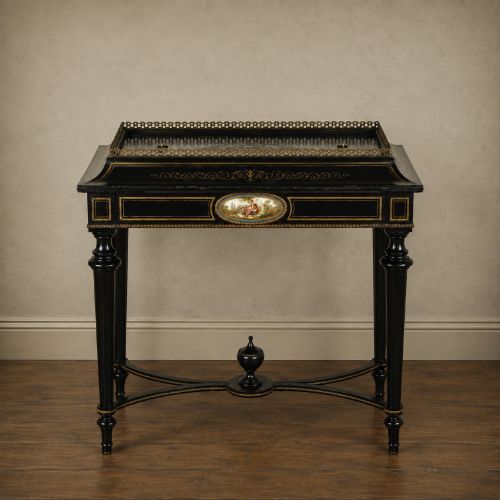
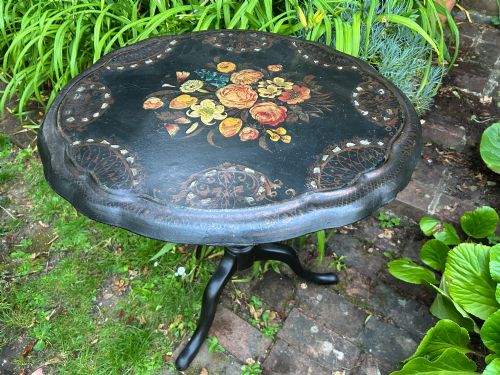
Asian export items utilise layered lacquer techniques, while European pieces often rely on traditional brushwork over pine and beech carcases. Gilt highlights and porcelain plaques occasionally punctuate the dark finishes, particularly on Victorian and French Napoleon III examples.
One cheerful Victorian pine chest bears the hand-sign-written inscription of the Bluecoat School in Liverpool.
Assessing Quality
Quality rests in the integrity of the original surface and the crispness of any applied decoration or lacquer work. Pieces retaining their early paint layer hold greater character than later, unsympathetic re-paintings.
Construction methods also dictate worth, distinguishing heavy dovetoxed drawer carcases and solid timber framing from lighter vernacular builds. The subtlety of gilding and the preservation of hand-painted motifs separate standard utilitarian items from finer decorative pieces.
The Black Painted Furniture Glossary
- Chinoiserie
- European imitation and adaptation of Chinese artistic traditions, typically featuring raised gold motifs on black lacquer grounds.
- Ebonised
- Timber treated with stain, dye, or paint to imitate expensive ebony wood, widely seen on Victorian and Regency pieces.
- Japanned
- European lacquerwork imitating Japanese export goods, created through layered varnish and metallic dust.
- Vernacular
- Everyday domestic objects made by regional craftsmen using local traditions rather than high-style academic designs.
- Vitrine
- A glass-fronted cabinet or display case designed for showing ceramics and small ornaments.
Black Painted Furniture: Frequently Asked Questions
What is black painted furniture?
Black painted furniture encompasses everything from dark rustic country pine chests and benches to refined Chinoiserie lacquer cabinets and Regency ebonised seating. These pieces span multiple centuries, uniting utilitarian domestic items and decorative showpieces under a shared dark finish.
Buyers select these items to anchor a room with strong contrast and historic character. The category bridges formal cabinet-making and regional folk art traditions.
How do I care for lacquer?
Lacquer and painted surfaces require gentle treatment to preserve the delicate finishes and gold leaf decorations. Dust regularly with a soft, dry cloth and keep pieces away from direct sunlight and excessive moisture.
Avoid chemical polishes and abrasive cleaners that can dull or lift the historic layers. Wax should only be used if the specific surface finish permits.
How do I date these pieces?
Dating relies on examining construction joints, timber types, and the composition of the paint or lacquer layers. Regency and Victorian items often show specific turning, hardware, and ebonising techniques distinct from earlier Georgian or later 20th-century work.
Comparing the wear patterns on the black paint with the underlying wood helps determine whether the finish is original or a later addition.
Where were they made?
These items originated across diverse regions, including British workshops, Hungarian villages, and Asian export centres. British vernacular pieces sit alongside imported Chinese lacquer tables and French Napoleon III stands.
Each region brought distinct structural woods and local painting styles to the tradition of dark-finished furnishings.