



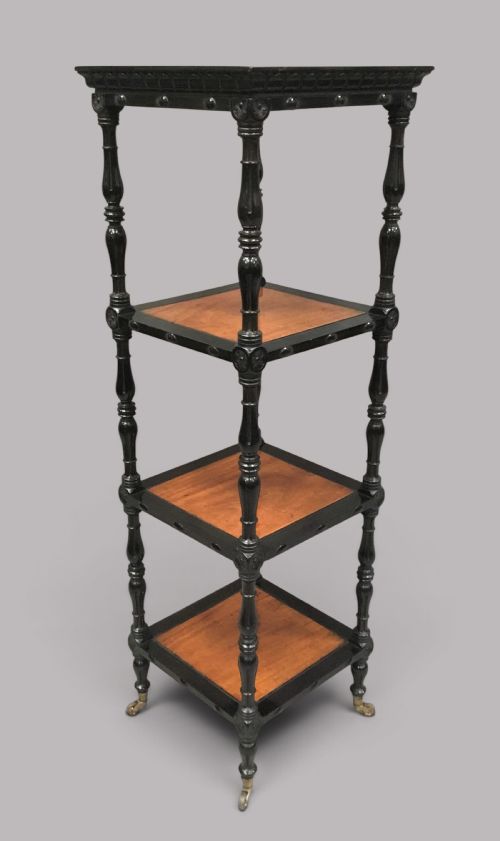


Black Open Shelf
A black open shelf brings dark tone and practical display to a room, ranging from simple Victorian dwarf bookcases to French and Chinese architectural pieces.
Black Open Shelf
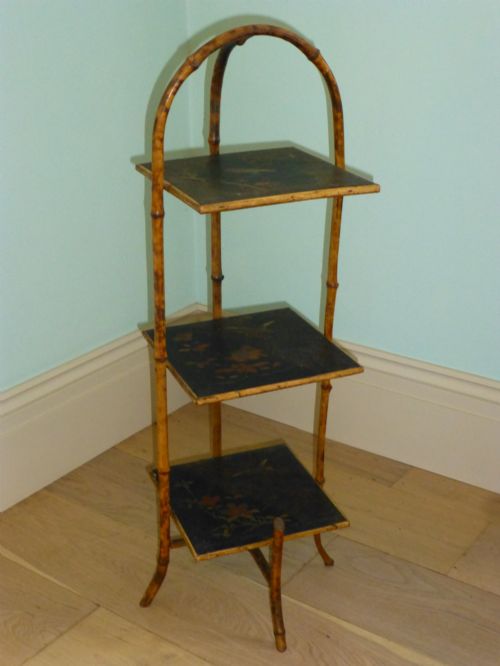
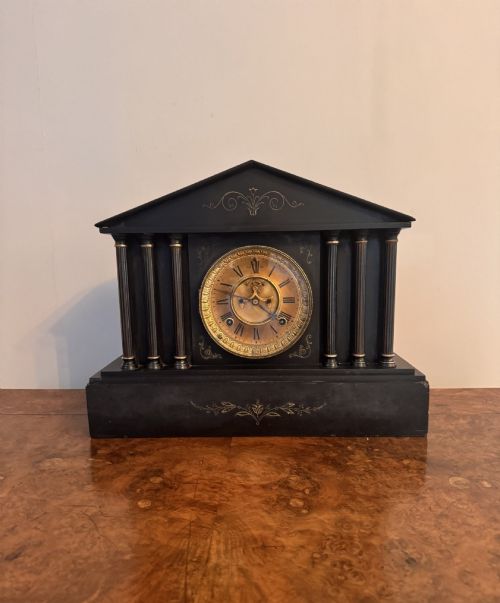
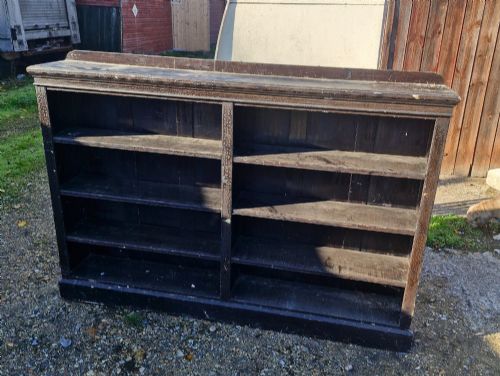
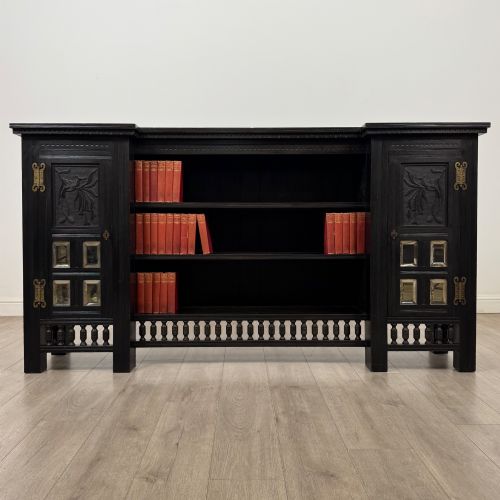
A black open shelf search gathers wall bookcases, low dwarf bookcases, etageres, and tiered stands unified by dark finishes and accessible storage. The pieces you encounter most frequently on this page date from the nineteenth century and utilise ebonised wood or timber.
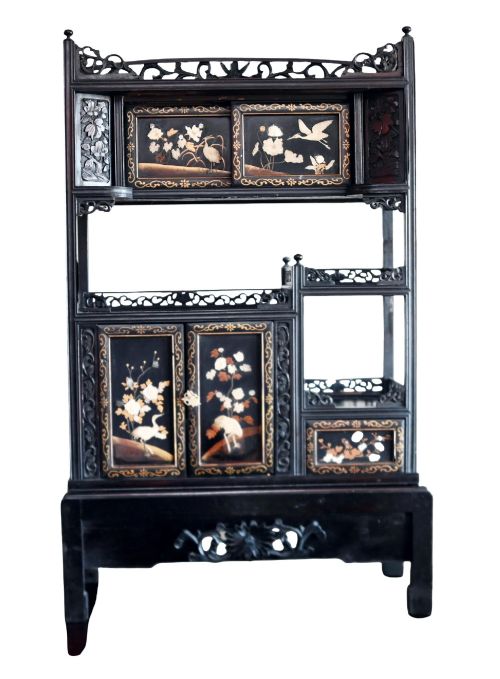
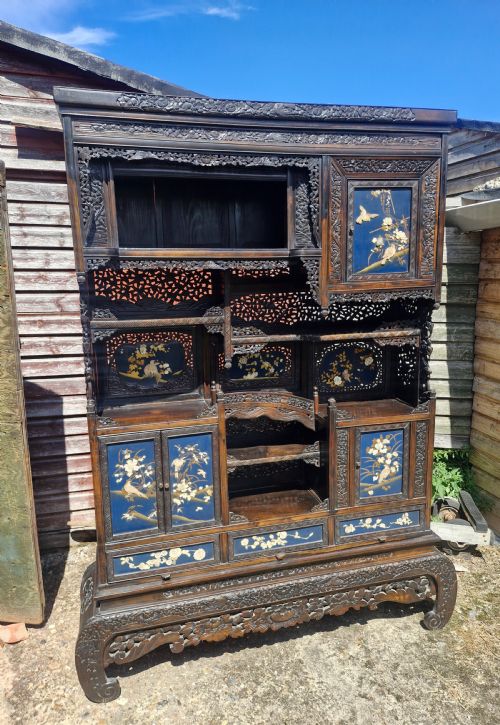
Makers and workshops from different regions applied this dark finish to various forms, from English Gothic revival designs to French Napoleon III brass-mounted furniture and Chinese Qing dynasty cabinets. Buyers seek these items to display books and objects while anchoring a room with a strong silhouette.
The category spans simple utilitarian shelves with adjustable boards to elaborate furniture featuring brass mounts, marble tops, and mother of pearl inlay. Each piece offers an open front that distinguishes it from enclosed display cabinets and sideboards.
Materials and construction
The dominant material in these pieces is ebonised wood or timber, achieved by staining or painting cheaper woods to imitate expensive ebony. Craftsmen also utilised oak, hardwood, brass mounts, and marble tops to add weight and decorative contrast.
Construction methods vary from traditional English joinery to French cabinet making and Asian carving techniques, occasionally incorporating bamboo, lacquer, and inlaid mother of pearl. Brass elements such as gallery rails and corner mounts provide structural reinforcement and visual accent.
Black Open Shelf Retail Price Guide 2026
Typical asking prices for black open shelf among the pieces listed under this phrase on Sellingantiques today, from the lower quarter to the upper quarter. They describe what is for sale here now, not the wider market.
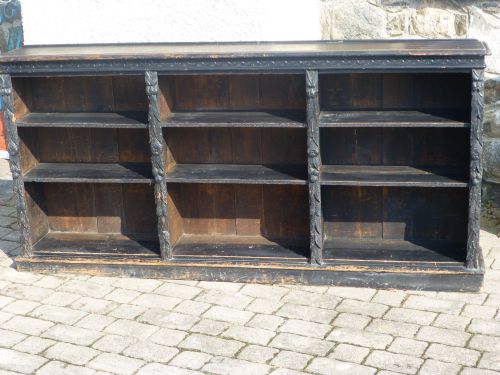
Some nineteenth-century bookcases feature carved green man motifs peering out from the dark ebonised timber to watch over your library.
Distinctions in quality
Quality in a black open shelf rests on the depth of the ebonisation and the crispness of any carved elements, such as green man motifs or scroll-work. Superior pieces employ solid hardwoods beneath the dark finish rather than softer alternatives.
The integration of secondary materials like inset marble tops, brass mounts, and fine inlay separates standard production from exceptional workshop output. Attention to internal details, such as adjustable shelving and clean backboards, marks the work of skilled makers.
George Edmund Street·KRIEGER of Paris
The Black Open Shelf Glossary
- Ebonised
- Wood treated with a stain or finish to imitate true ebony, popular in nineteenth-century cabinet making. This technique allowed makers to create dark, uniform surfaces on alternative timbers.
- Etagere
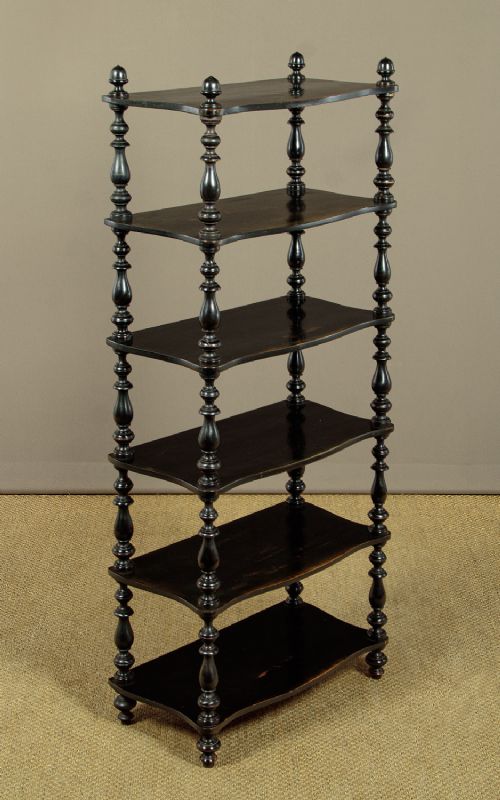
- A piece of furniture consisting of a set of open shelves for displaying small objects or ornaments. These tiered stands often feature slender supports and multiple levels.
- Breakfront
- A piece of furniture whose front projects forward in the centre section. This architectural layout adds visual depth to large bookcases and sideboards.
- Gothic Revival
- An architectural and decorative style drawing inspiration from medieval forms, featuring pointed arches and carved details. Pieces in this style often display heavy ebonised finishes.
- Dwarf bookcase
- A low open bookcase designed to sit beneath window height or against a modest wall space. They frequently include adjustable shelves for practical storage.
Black Open Shelf: Frequently Asked Questions
Where should I place a black open shelf?
These pieces suit living rooms, studies, and hallways where books and decorative objects require accessible display space.
The dark ebonised finish provides a strong visual anchor against lighter walls while maintaining an open feel in smaller rooms.
How do I care for ebonised wood?
Dust the surfaces regularly with a soft, dry cloth to prevent a buildup of particles in carved areas and mouldings.
Avoid placing the furniture in direct sunlight or near heat sources to protect the dark finish and underlying timber from drying out.
How do I identify a nineteenth-century piece?
Nineteenth-century items often show hand-cut joinery, traditional timber selection, and specific period styles like Gothic Revival or Napoleon III.
Examine the backboards, fixings, and interior construction methods to confirm the age and manufacturing techniques of the era.