





Black Open Bookcase
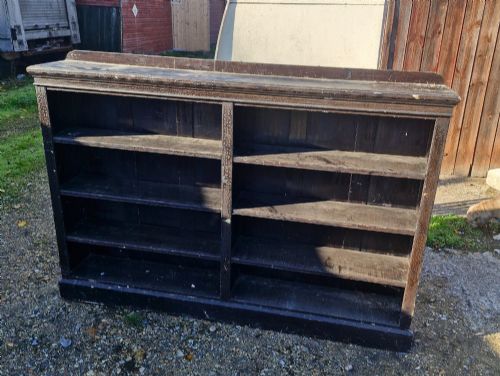
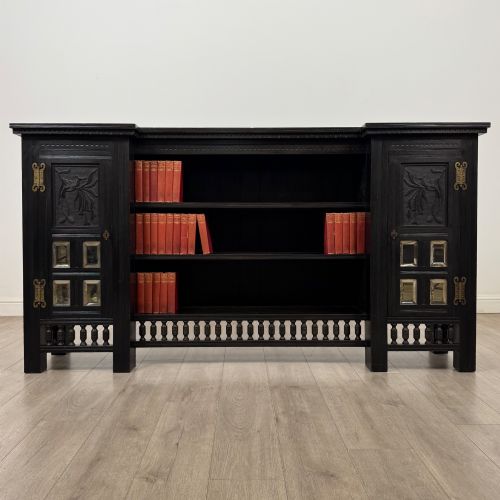
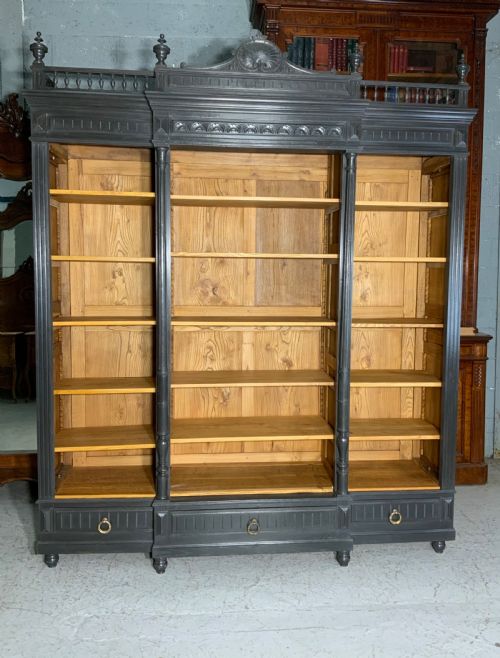
A black open bookcase brings a dark, architectural presence to a room, offering open storage for books and display pieces across Victorian, 19th century, and later periods.
Black Open Bookcase
A black open bookcase groups together dark-toned shelving units designed to hold books and display objects without enclosing them behind doors. Most examples on this page date from the 19th century and the Victorian era, spanning various regional workshops and design movements.
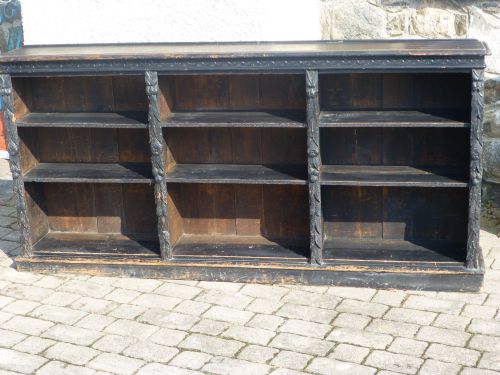
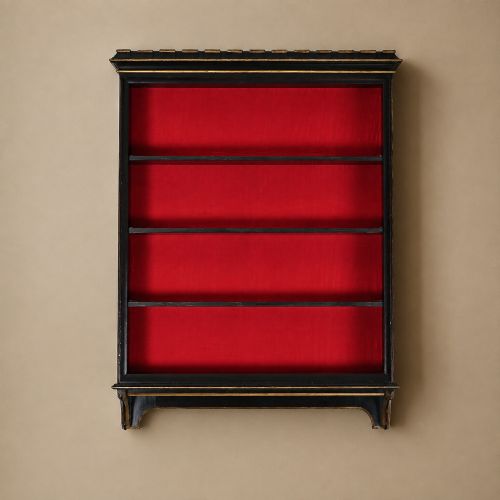
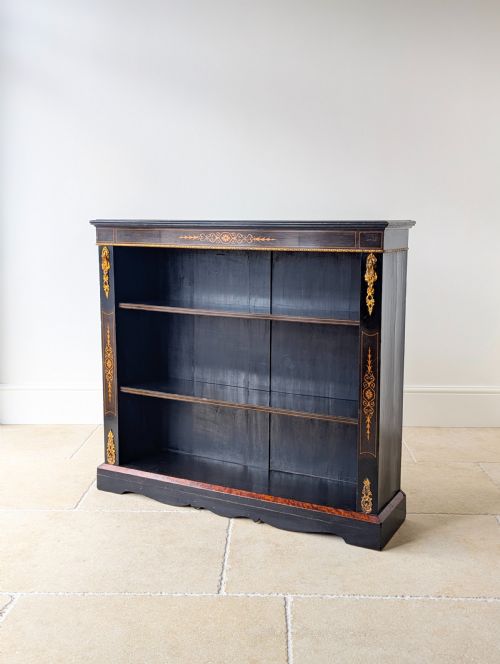
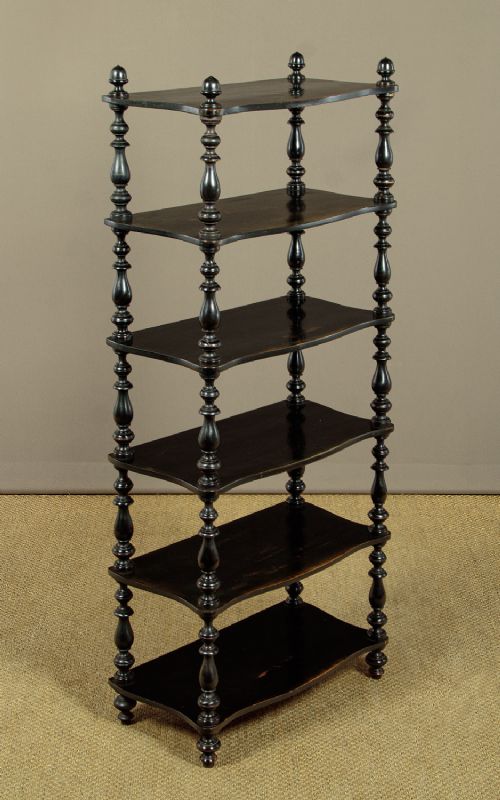
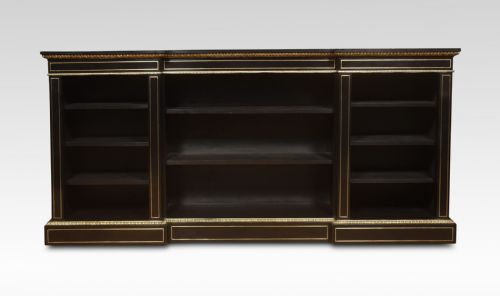
The form ranges from low dwarf bookcases with adjustable shelves to large breakfront open bookshelves and wall-mounted variations. Pieces often incorporate architectural details such as green man carvings, brass mounts, and inlaid surfaces.
Origins stretch from English workshops to French Napoleon III cabinets and Chinese Qing dynasty pieces. This variety means buyers encounter everything from simple painted pine and hardwood to elaborate ebonised timber mounted with bronze or ormolu.
How they were made
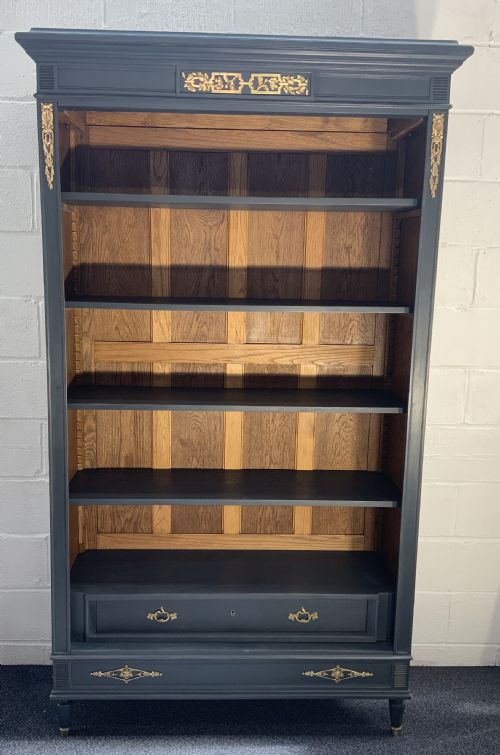
Makers utilised woods such as oak, pine, satinwood, and hardwood, frequently applying an ebonised finish to imitate more costly exotic timbers like ebony. This dark surface treatment was often paired with contrasting materials like brass, ormolu, and mother of pearl inlay.
Construction techniques involve traditional joinery suited to the period, including carved elements and architectural mouldings. Some variants incorporate iron scroll-work or bamboo and lacquer to achieve lighter decorative effects.
Black Open Bookcase Retail Price Guide 2026
Typical asking prices for black open bookcase among the pieces listed under this phrase on Sellingantiques today, from the lower quarter to the upper quarter. They describe what is for sale here now, not the wider market.
A green man carved into dark wood watches over the books.
What varies in quality
Quality rests on the depth of the materials and the precision of the construction, distinguishing standard utility shelving from high-status cabinet work. Superior pieces use solid hardwoods with careful ebonising, refined brass mounts, and intricate hand-carved details.
The integration of secondary decorative elements also sets pieces apart, such as finely inlaid woodwork, Wedgwood plaques, or mother of pearl work. Simpler painted pine or basic iron structures occupy a different decorative tier from grander architectural bookcases.
George Edmund Street
The Black Open Bookcase Glossary
- Ebonised
- Wood treated with stain or paint to resemble heavy, dark ebony. This finish was widely used in Victorian and Napoleon III furniture to create a uniform dark surface.
- Ormolu
- Gilded bronze used for decorative mounts and feet. It provides a bright metallic contrast against dark ebonised wood.
- Breakfront
- A piece of furniture where the central section projects forward from the flanking sides. This adds architectural depth to larger bookcases.
- Dwarf bookcase
- A low shelving unit designed to sit below window height. These pieces often feature adjustable internal shelves.
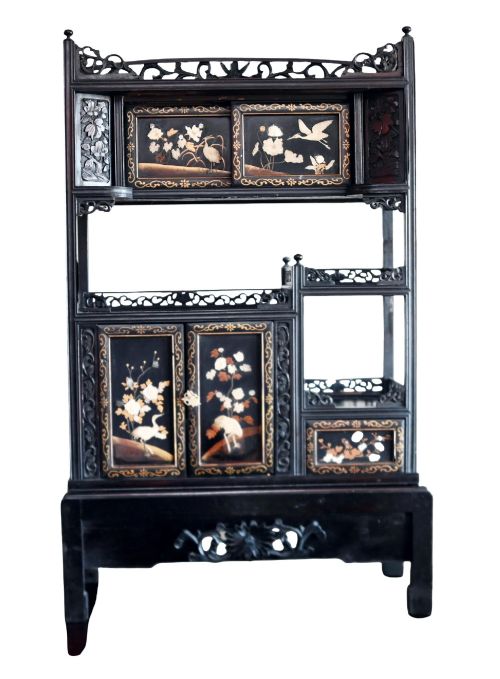
- Etagere
- A set of open tiered shelves used for displaying ornaments. They appear in various materials including bamboo and ebonised timber.
Black Open Bookcase: Frequently Asked Questions
What periods do these bookcases come from?
Most examples date from the nineteenth century, including the Victorian era and the 1890s. Other pieces extend into 1900, 1910, and circa 1930.
Craftsmen across these decades produced designs ranging from Gothic Revival to French Napoleon III and Chinese Qing styles.
What materials are used in ebonised bookcases?
Makers utilised various timbers including oak, pine, satinwood, and general hardwoods. These were frequently given an ebonised finish to create a dark, uniform surface.
Finer examples incorporate brass mounts, ormolu, mother of pearl inlay, and painted details.
How do I style a black open bookcase?
The dark, architectural finish works well against pale walls to create a strong visual contrast. The open shelves allow for a mix of books, ceramics, and decorative objects.
Consider the scale of the room, as low dwarf bookcases offer surface display space on top, while taller breakfront versions draw the eye upward.
Are the shelves adjustable?
Many period bookcases feature adjustable shelves to accommodate books of varying heights. This practical element allows for flexible arrangement of volumes and display items.
Construction details vary by piece, with some traditional units using fixed wooden supports.