


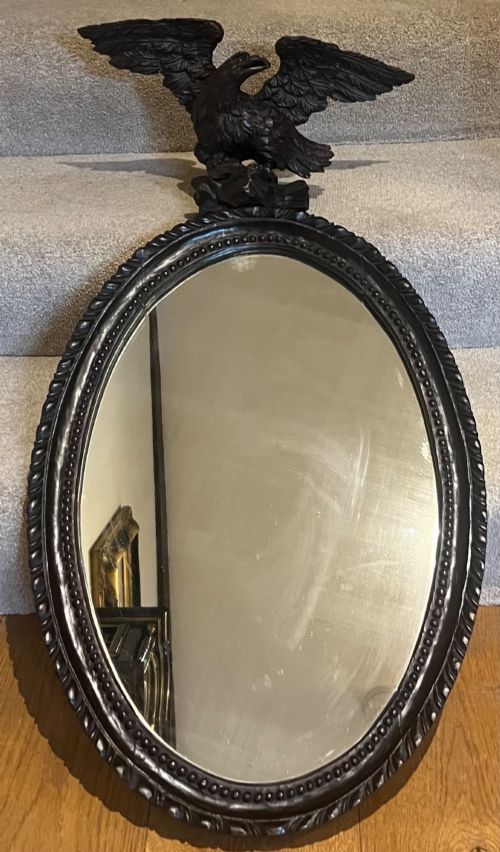


Black Oak Mirror
A black oak mirror brings rich texture and historic depth to an interior, uniting dark timber and reflective glass.
Black Oak Mirror
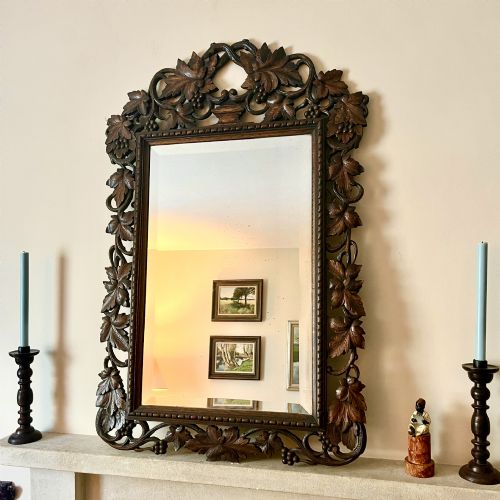
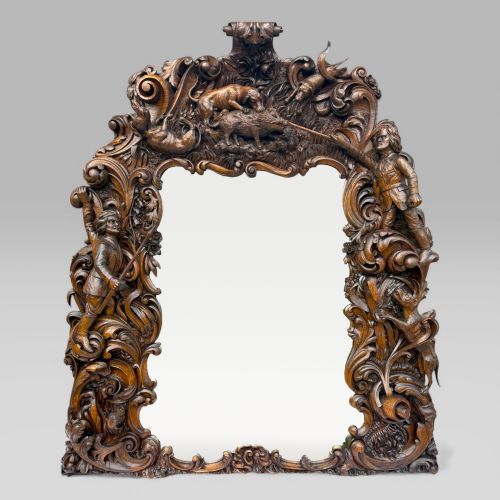
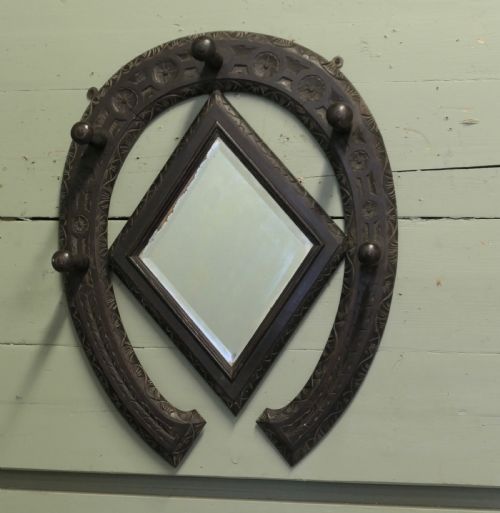
When you search for a black oak mirror, you encounter sturdy wooden frames fashioned in styles ranging from Victorian and Gothic Revival to Black Forest carving. These pieces serve as functional wall mirrors, overmantles, and hall furnishings that command attention in a room.
How they were made
The construction relies on solid oak and ebonised wood shaped through traditional joinery and intensive hand carving. Craftsmen utilised chisels and gouges to render intricate foliage, animal heads, and architectural motifs directly into the dense timber.
Reflective surfaces consist of heavy mirror glass set securely within rebated frames, often complemented by brass fixings and carved wooden brackets. The dark finishes were achieved through staining, ebonising, or polishing the natural grain of the oak.
Black Oak Mirror Retail Price Guide 2026
Typical asking prices for black oak mirror among the pieces listed under this phrase on Sellingantiques today, from the lower quarter to the upper quarter. They describe what is for sale here now, not the wider market.
Listings feature pieces spanning the nineteenth century through the 1930s, utilising oak, ebonised wood, brass, and mirror glass.
What varies in quality
Quality rests upon the depth, sharpness, and ambition of the carving rather than the mere presence of decoration. Superior examples display crisp undercut details in the foliage and figures, whereas lesser pieces rely on shallow surface stamping or machine routing.
The integration of the frame and the choice of secondary materials also dictate standing. Finer items exhibit careful selection of figured oak grain, substantial brass hardware, and heavy bevelled glass that holds its silvering securely over generations.
Garnett & Sons
The Black Oak Mirror Glossary
- Oak
- A hard, heavy timber native to temperate regions, prized for its durability and prominent grain pattern. It forms the structural foundation of these frames.
- Ebonised wood
- Timber treated with a chemical stain or pigment to imitate ebony. This dark finish creates a sleek, formal appearance popular in nineteenth-century design.
- Black Forest
- A style of wood carving originating in Germany, characterised by naturalistic depictions of animals and foliage. These works often feature deeply carved oak leaves and game animals.
- Gothic Revival
- An architectural and decorative style drawing inspiration from medieval forms. It introduces pointed arches, tracery, and heavy mouldings to mirror frames.
Black Oak Mirror: Frequently Asked Questions
What distinguishes Black Forest mirrors from standard Victorian pieces?
Black Forest mirrors feature deeply undercut carvings of natural subjects such as deer heads, birds, and oak foliage. They celebrate rustic, three-dimensional imagery rather than formal architectural revival motifs.
Standard Victorian pieces tend towards geometric mouldings, ebonised surfaces, or structured Gothic Revival tracery.
Where should I place a dark wooden mirror in a room?
Position the frame opposite a window to bounce natural daylight back into the space and contrast against lighter wall colours. The dark timber acts as a focal point above mantles, sideboards, or in narrow hallways.
Ensure the surrounding decor allows the heavy grain and carved details to stand out without visual clutter.
How do I care for ebonised and carved oak surfaces?
Dust the deep recesses of the carving regularly with a soft brush to prevent particle buildup in the grain. Apply a suitable wax polish sparingly to nourish the wood without clouding the dark finish.
Keep the piece away from direct heat sources and sudden humidity changes to protect the timber and the mirror plate.