


Black Marquetry Table
A black marquetry table brings dark elegance and intricate inlay into a room, offering a functional surface layered with fine historic detail.
Black Marquetry Table
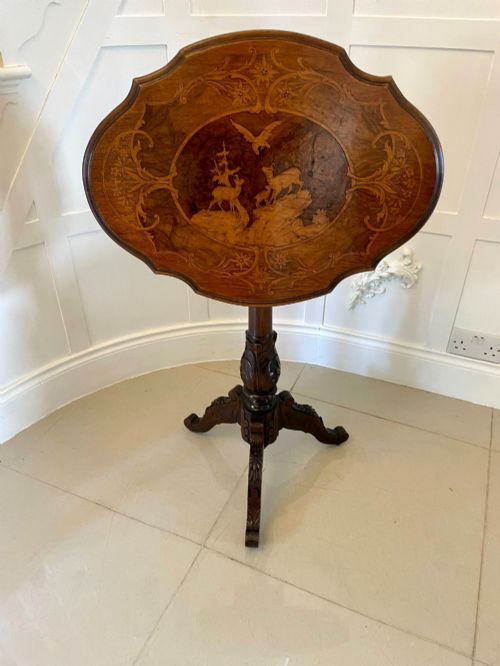
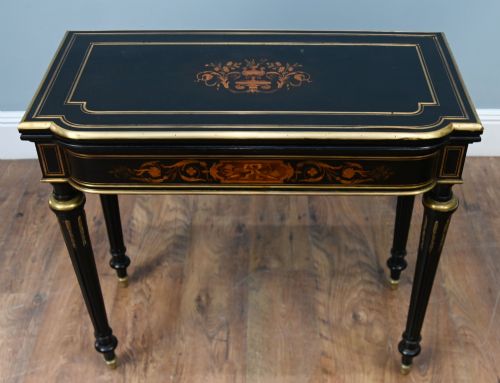
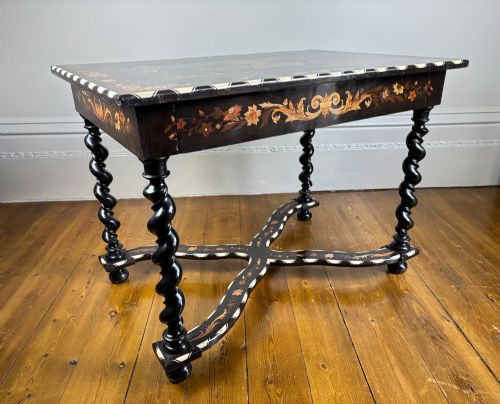
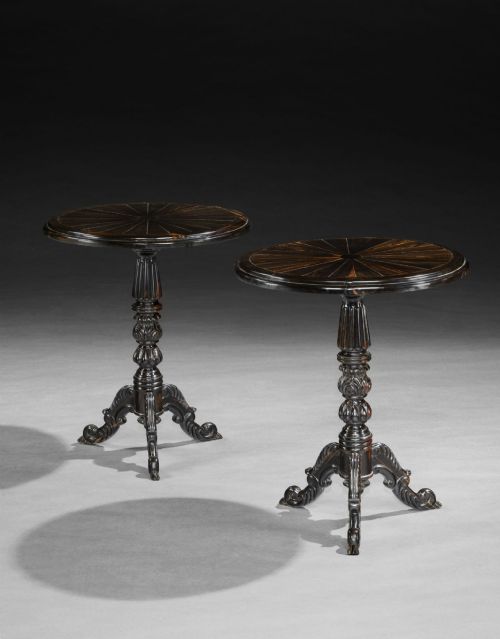
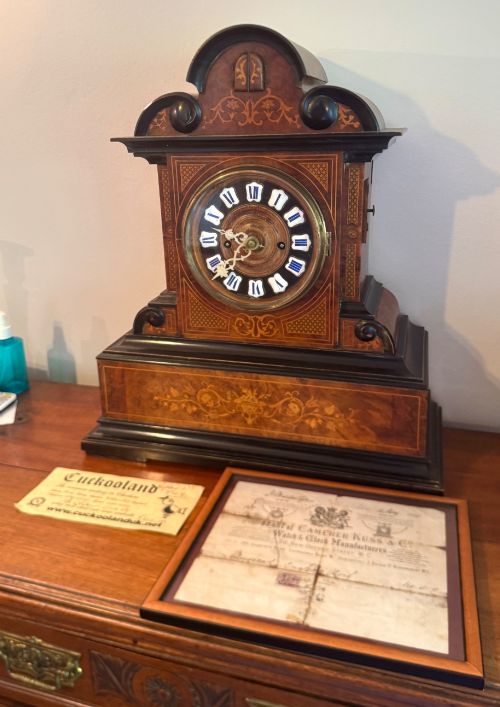
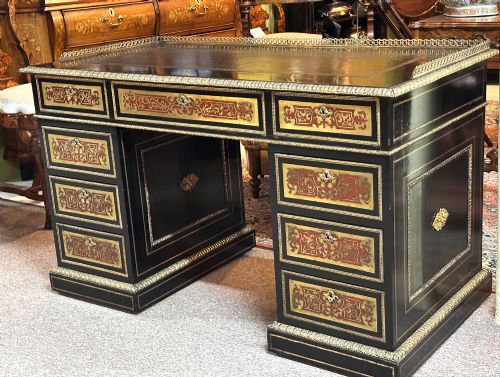
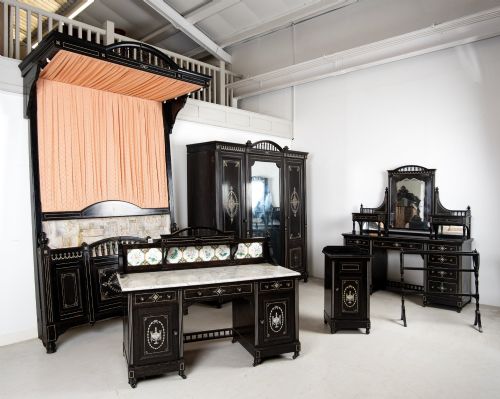
A black marquetry table typically presents a dark ebonised wooden ground contrasted with detailed floral or geometric veneer work. These pieces surface most frequently from the nineteenth century, spanning Victorian, French Napoleon III, and Black Forest styles.
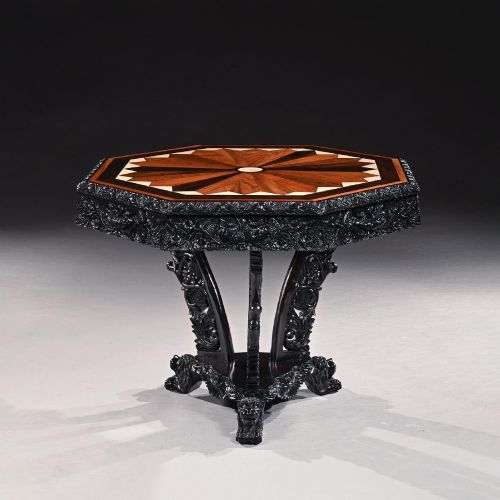
Forms vary from compact occasional and card tables to larger centre and side tables, often incorporating materials such as brass, bone, and walnut inlay. They serve as striking focal points in a drawing room or hallway, combining display surfaces with functional design.
Materials and construction
Craftsmen built these tables using foundational timbers like walnut, satinwood, and ebony, applying ebonisation to achieve a deep black finish. Marquetry inlay utilised contrasting woods, bone, and brass to create complex pictorial or botanical motifs across the surface.
Metal mounts in ormolu and intricate carving frequently reinforced the structure, particularly within French Napoleon III and Black Forest traditions. The combination of precision sawing and hand-fitting of veneers defined the standard of construction.
Some nineteenth-century Black Forest tables double as musical boxes, hiding mechanical tunes inside their intricately carved walnut frames.
Assessing quality and execution
Quality rests in the crispness of the inlay work and the precision with which disparate materials like bone, brass, and wood fit into the ebonised ground. Finer examples display minimal shrinkage gaps and maintain tight, flush surfaces across complex curves or serpentine shapes.
The sophistication of the secondary timbers and the presence of signed mounts or maker stamps elevate a piece above standard workshop production. Carved elements, such as those found on Swiss Black Forest pieces, show superior depth and anatomical accuracy in the hands of skilled makers.
Maison Millet·Thomas A Paris
The Black Marquetry Table Glossary
- Ebonised
- Wood treated with stain, dye, or paint to imitate expensive ebony. This dark finish creates a uniform, high-contrast backdrop for lighter inlay materials.
- Marquetry
- The art of applying decorative veneer pieces to a structure to form intricate patterns or pictures. Craftsmen cut these from various woods, shell, and bone to fit tightly together.
- Ormolu
- Gilded bronze used for decorative mounts and furniture trimming during the nineteenth century. It adds metallic highlights to ebonised and marquetry surfaces.
- Serpentine
- A furniture shape characterised by a line of alternating convex and concave curves. This contour appears frequently on the edges and tops of better nineteenth-century tables.
Black Marquetry Table: Frequently Asked Questions
What is a black marquetry table?
A black marquetry table is a historic surface featuring an ebonised wooden structure decorated with contrasting inlaid veneers, brass, or bone.
These pieces primarily date from the nineteenth century, encompassing styles from Victorian English workshops to French Napoleon III salons.
How do I care for ebonised wood?
Protect ebonised surfaces from direct sunlight and excessive moisture to prevent the dark finish from fading or lifting.
Dust regularly with a soft, dry cloth and avoid harsh chemical polishes that can degrade the historic polish.
What styles include black marquetry tables?
These tables appear in Victorian, French Napoleon III, Dutch Baroque Revival, and Black Forest aesthetic traditions.
Each style employs distinct motifs, ranging from formal floral scrolls to carved rustic elements and geometric bone inlay.
Where were these tables used?
They functioned as occasional, card, or centre tables in nineteenth-century drawing rooms, halls, and parlours.
Their decorative tops made them suitable for displaying objects or serving as focal points in reception spaces.