




Black Marble Table Clock
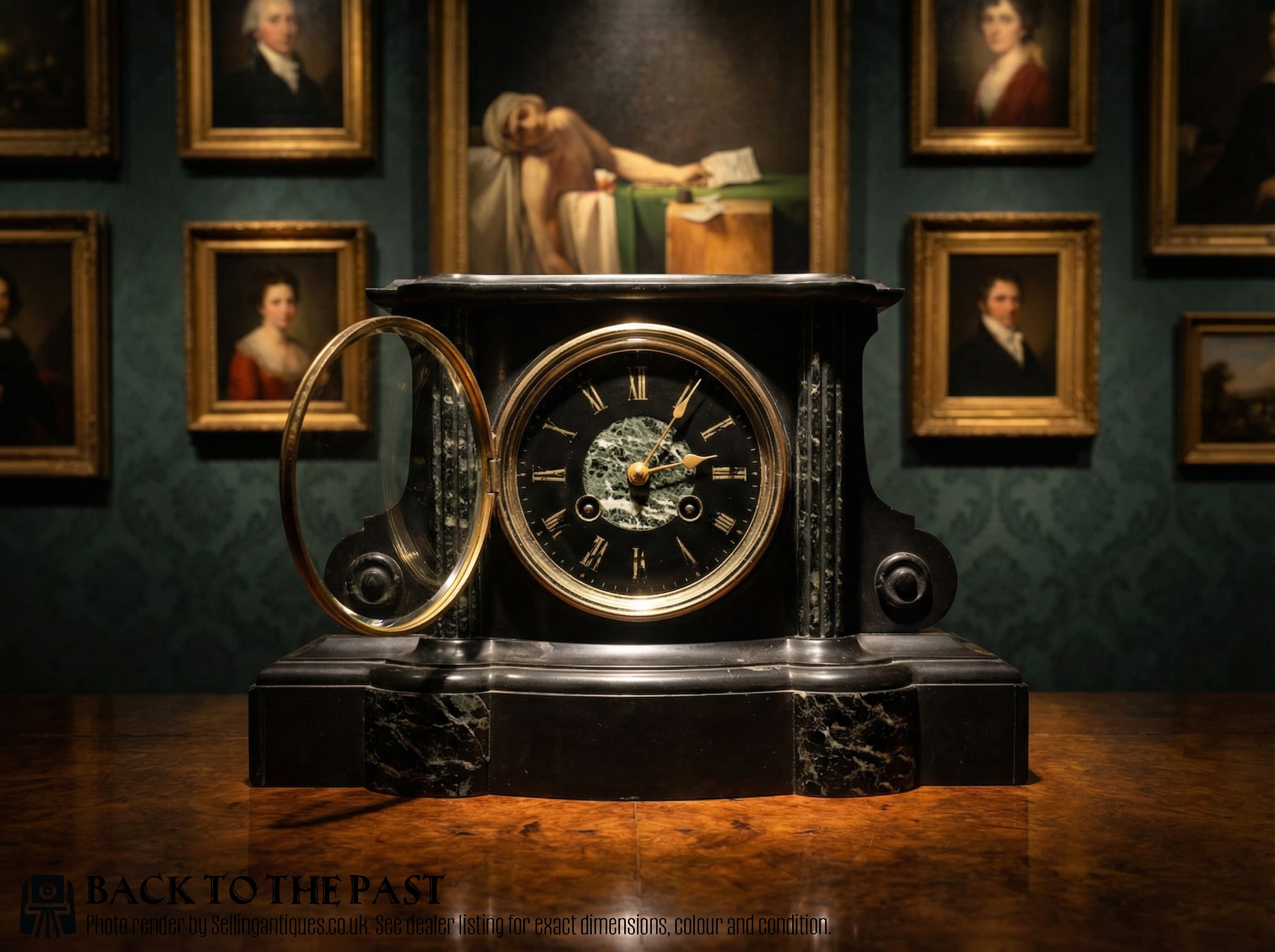
A black marble table clock brings heavy stone presence and precise mechanical movement to a mantelpiece, rooted primarily in Victorian and later styles.

Black Marble Table Clock
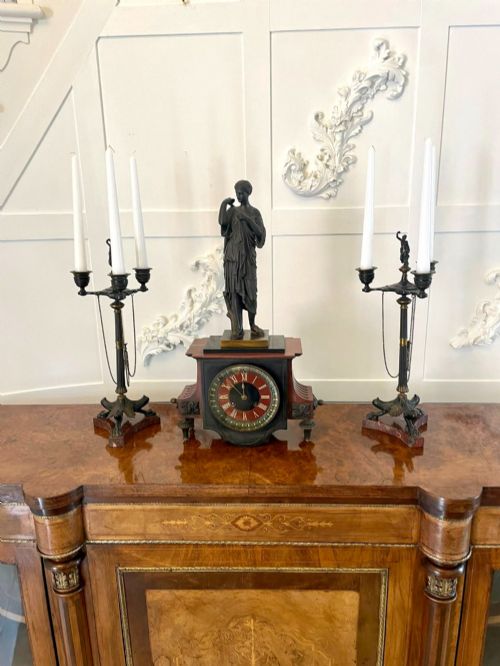
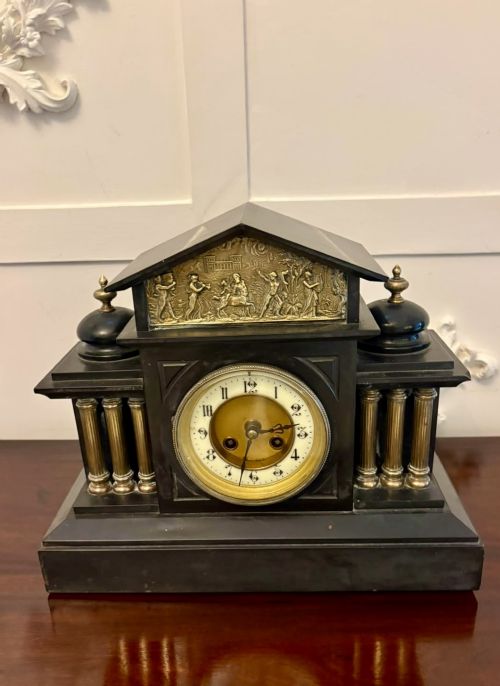
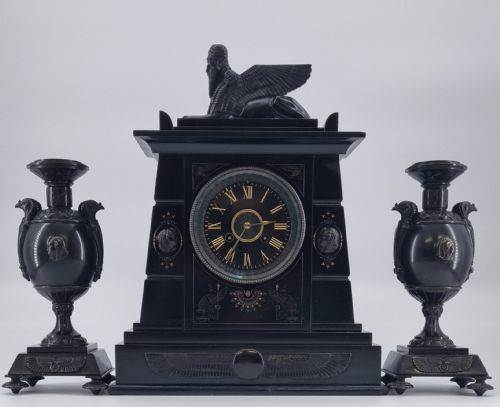
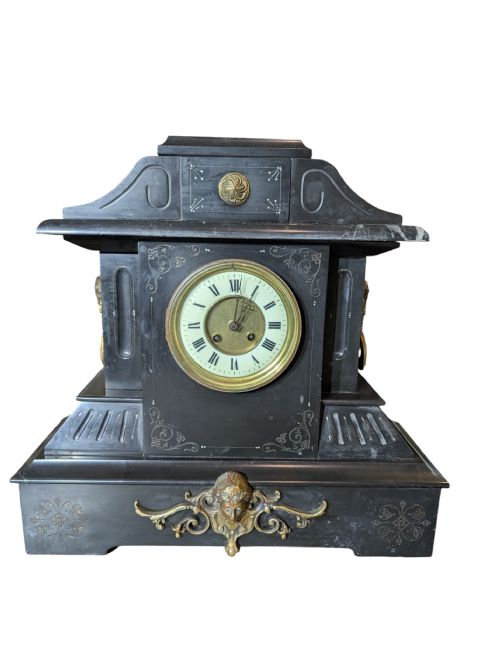
A black marble table clock serves as a substantial timepiece designed for domestic interiors, frequently appearing in Victorian architectural forms and garniture sets. These objects combine dense stone bodies with contrasting dials, often accompanied by matching side ornaments or urns.
The prevailing examples on this page date from the nineteenth century, spanning periods from the 1860s through to the 1920s with Art Deco expressions. Buyers encounter various designations including mantel clocks, desk clocks, and desktop compendiums constructed from slate and marble.
Materials and construction
Makers utilised black marble, black slate, and occasional faux marble surfaces, pairing the heavy stone bodies with brass, gilt brass, bronze, and glass components. Enamel dials and cast metal details complete the structural composition of these timepieces.
Movements incorporate mechanical systems such as eight-day durations, chain fusee mechanisms, and perpetual calendars. Exterior assemblies employ architectural detailing, inlay work, and patinated metal ornamentation fixed securely to the stone chassis.
Black Marble Table Clock Retail Price Guide 2026
Typical asking prices for black marble table clock among the pieces listed under this phrase on Sellingantiques today, from the lower quarter to the upper quarter. They describe what is for sale here now, not the wider market.
Listings feature black marble, slate, and brass across Victorian and Art Deco periods.
Gradations of quality
The refinement of a black marble table clock depends upon the precision of its stone cutting, the crispness of its bronze or gilt brass mounts, and the complexity of its internal movement. Architectural models with integrated garnitures or calendar functions demonstrate higher levels of workshop execution.
Material selection and decorative treatment also differentiate examples, where inlaid stone work or sculptural bronze figures elevate the piece beyond standard domestic timekeepers. The inclusion of signed dials or specialised mechanisms indicates superior production standards.
Philippes Paris·Sacre·Baby and Jannings·D. Munsey of Cambridge·Barraud and Lund London·Pinchon Fils Paris·Henry Berkeley Square London·Brocot
The Black Marble Table Clock Glossary
- Garniture
- A set consisting of a central clock flanked by matching decorative objects such as urns or vases. These matched groups were designed to sit symmetrically on a mantelpiece.
- Fusee
- A conical pulley used in clock movements to maintain even driving force as the mainspring unwinds. This mechanism improves timekeeping accuracy across the power reserve.
- Slate
- A fine-grained metamorphic rock utilised widely as a heavy base material for nineteenth-century clocks. It is often finished to resemble black marble.
- Architectural
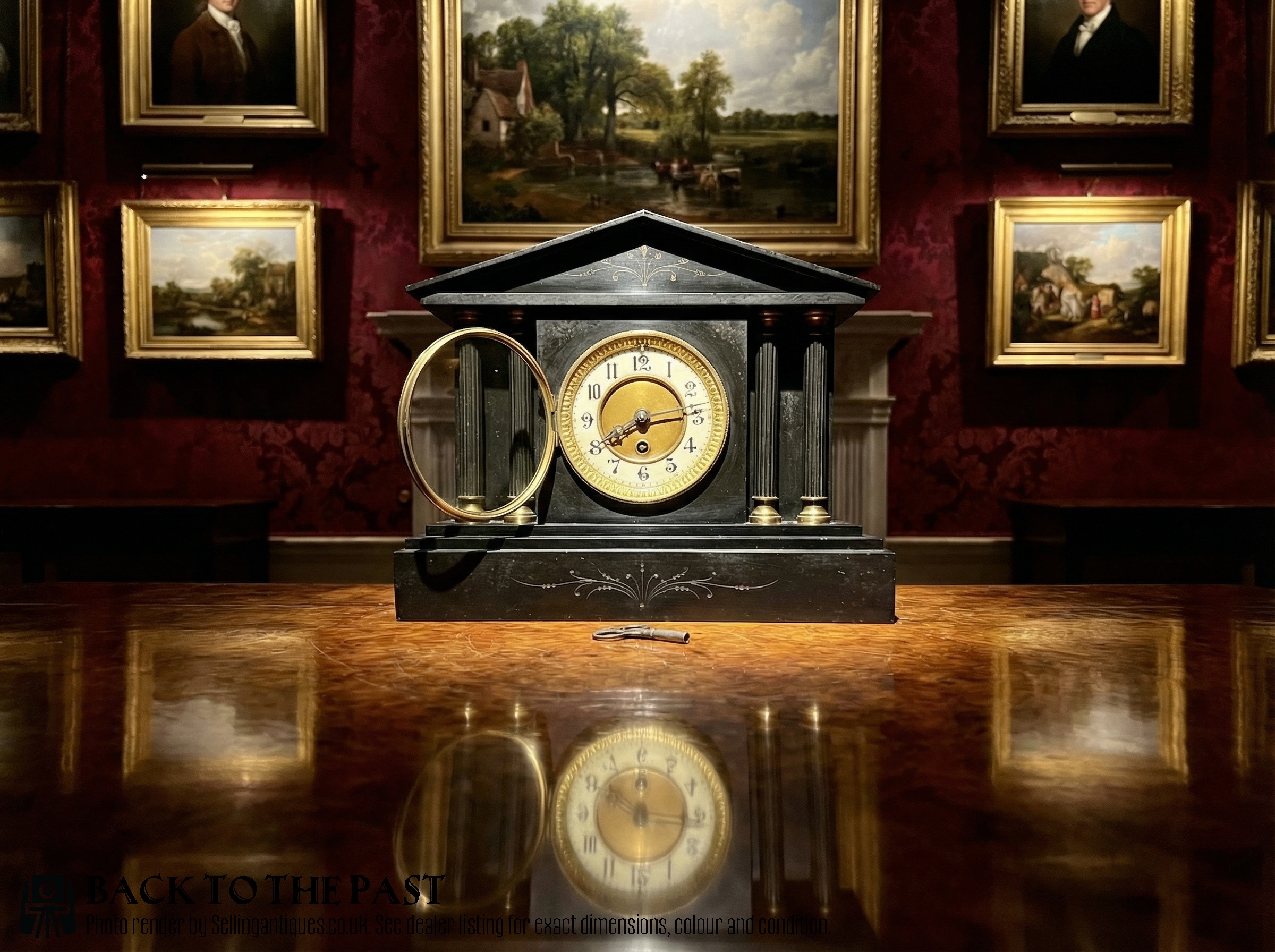
- A style of clock case modelled after classical buildings or facades, featuring columns, pediments, and stepped cornices. These designs reflect prevailing nineteenth-century revival movements.
- Perpetual calendar
- A mechanism that automatically adjusts for the varying lengths of months and leap years. Such complications represent advanced horological skill in table timepieces.
Black Marble Table Clock: Frequently Asked Questions
How do I wind a mechanical table clock?
Winding requires inserting a dedicated key into the appropriate winding holes on the dial face and turning it gently until resistance is felt.
Care must be taken not to overwind the mainspring, as this can damage the internal gearing and compromise the movement's accuracy.
Where should I place a heavy stone clock?
These dense timepieces require a level, stable surface capable of supporting considerable weight, such as a sturdy mantelpiece, sideboard, or desk.
Placing the clock on an uneven surface can disrupt the delicate balance of the escapement and cause the movement to stop.
How do garniture sets function?
Garniture sets consist of a central clock accompanied by two matching side pieces, such as decorative urns or bronze sculptures, arranged symmetrically.
They were designed as a unified decorative scheme to anchor the visual display of a principal room or fireplace surround.